
Film
The Holy Mountain
- Mythological fantasy
- Strange
- Slow-burning
Jodorowsky's baroque fever dream of a film: a thief, a general, a woman-shaped void, and four others are gathered by an alchemist to shed their earthly selves and climb toward enlightenment. Gorgeously grotesque, ferociously weird, operating on pure symbol and sensation. For people willing to abandon logic at the gate.
Should you watch it?
Watch it if you love films that trade plot for a barrage of surreal, blasphemous imagery and want to be provoked as much as entertained, with the sensibility of a mad, devout visionary.
Skip it if you need narrative momentum or a steady emotional throughline, since this one is episodic, deliberately repellent in places, and often more interested in shock than in making sense.
What it asks of you: A loose, unhurried ride of nearly two hours where images pile up faster than they explain themselves, so you must surrender to its ritual rhythm rather than wait for it to settle.
Not sure? Find tonight's pick in a minute.
If you liked this
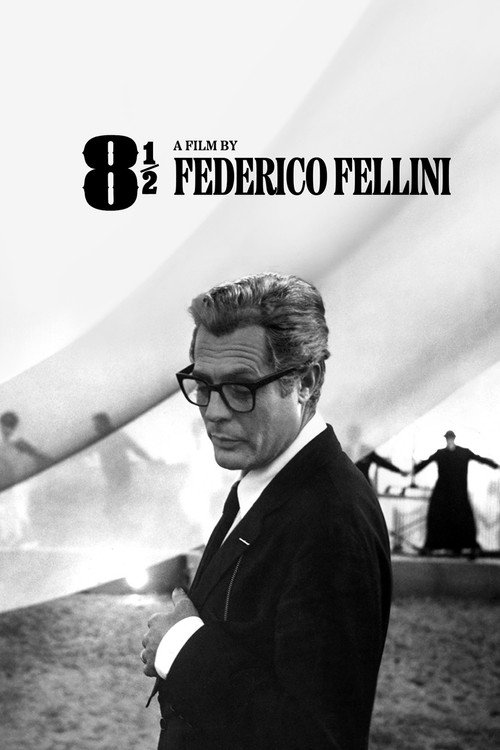
8½1963
Fellini's director confronts his own creative exhaustion through hallucinatory sequences and carnival imagery. Like The Holy Mountain, it's simultaneously personal and cosmic, blending reality with symbolic dreamscape.
But It's 138 minutes of Italian cinema that meanders deliberately. If you need plot momentum, you'll find it frustratingly shapeless.
Synecdoche, New York2008
Kaufman constructs nested realities where a theatre director becomes obsessed with building a life-sized reproduction of his world. Both films dissolve the boundary between self and symbol, between the mundane and transcendent.
But The emotional density is suffocating and the structure is deliberately confusing. Some find it pretentious rather than profound.

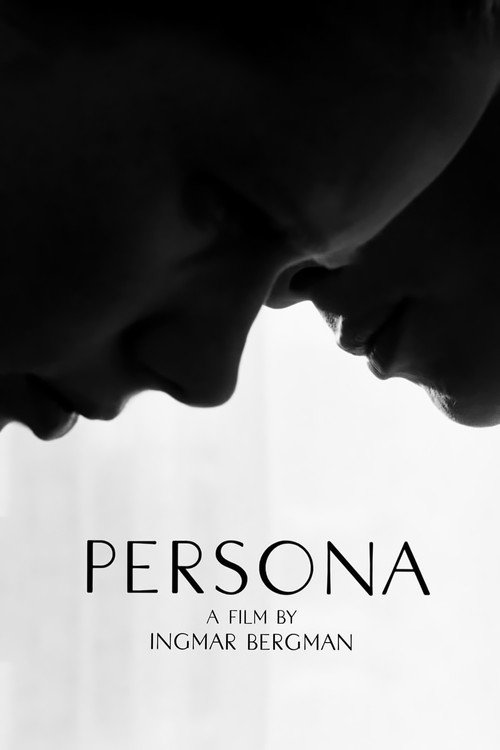
Persona1966
Bergman strips cinema to its essence: two women, silence, identity dissolving. Like Jodorowsky, he uses striking visual language and symbolic abstraction to explore the self shedding its masks.
But It's austere and glacially paced. Long stretches demand your full attention and offer no comfort in return.
Not sure tonight? Get a pick in a minute, starting from The Holy Mountain
The wildcard
Something you would not have found on your own.
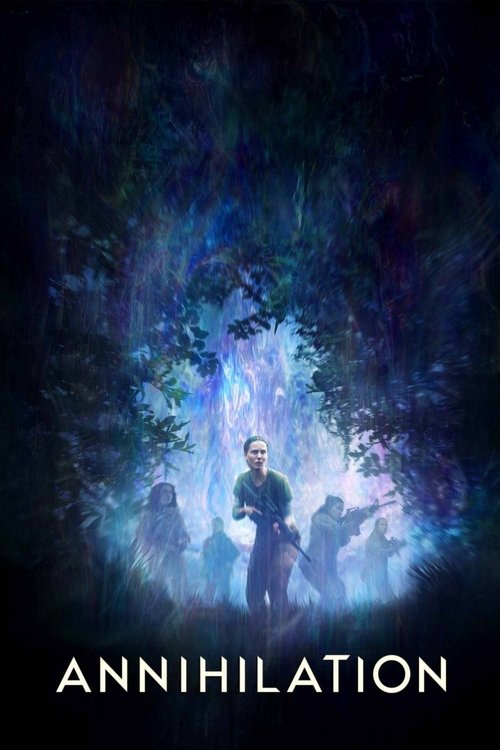
Annihilation2018
Both are about a group moving through a transcendent space where the fundamental laws of self dissolve—but Annihilation achieves that dissolution through scientific language rather than mystical language.
Garland's sci-fi meditation on ecological horror and bodily dissolution dressed in rational genre clothes. Like The Holy Mountain, it's about venturing into the impossible to be transformed at a cellular level.
But It's a mainstream film playing by contemporary rules. Viewers expecting Jodorowsky-level strangeness will find it compromised and tame.
More like this (7)
Mulholland Drive2001
Lynch's non-linear descent into Los Angeles mythology uses dream logic to explore identity and desire. Both films privilege sensation and symbol over narrative coherence, building meaning through image alone.
But The plot deliberately refuses to resolve. If ambiguity frustrates you, this will too—just more seductively.

Stalker1979
Tarkovsky's pilgrimage into a mysterious zone parallels Jodorowsky's spiritual ascent. Both are slow, meditative journeys through symbolic landscapes where the interior transformation matters more than arrival.
But Nearly three hours of minimal dialogue and glacial pacing. It asks for patience most contemporary viewers won't grant.

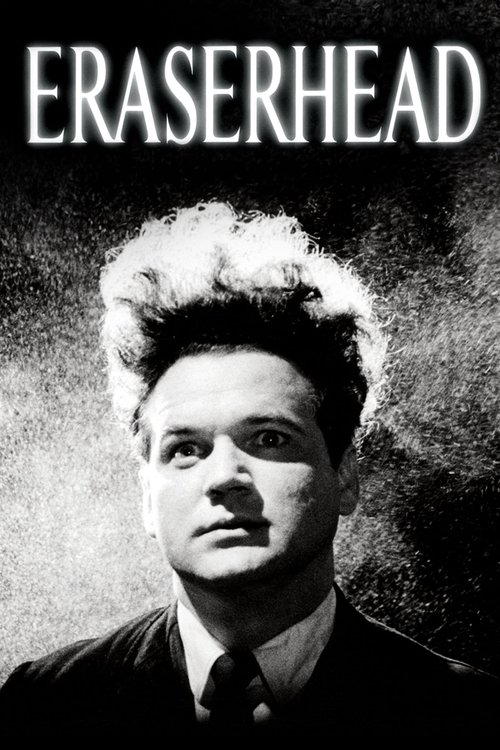
Eraserhead1977
Lynch's black-and-white nightmare of industrial decay and bodily horror shares Jodorowsky's commitment to visceral, grotesque imagery as spiritual metaphor. Both operate in the register of fever dream.
But It's deliberately repulsive and incoherent. The texture of disgust is the point, which many will reject outright.
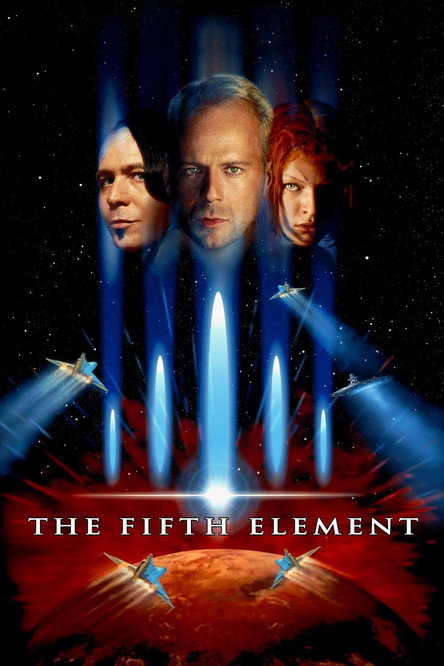
The Fifth Element1997
Luc Besson's wildly ornate sci-fi opera shares Jodorowsky's maximalist visual language—every frame bursting with design, colour, symbolic density. Both are gorgeous and baroque.
But It's much more straightforward and fun. If you want mystery and difficulty, this popular blockbuster might feel like a letdown.
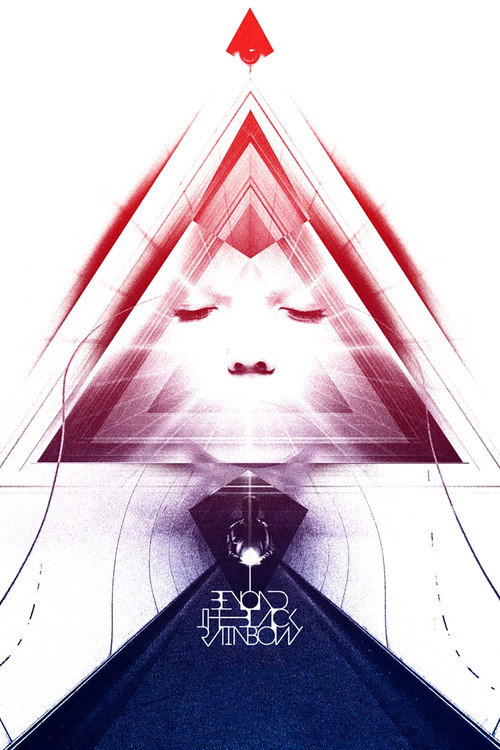
Beyond the Black Rainbow2010
Cosmatos builds a synth-soaked occult nightmare of colours and ceremony. Like The Holy Mountain, it privileges aesthetic and symbolic experience over narrative clarity.
But It's a low-budget indie that looks deliberately cheap. The plot is gossamer-thin and the pacing tests patience.
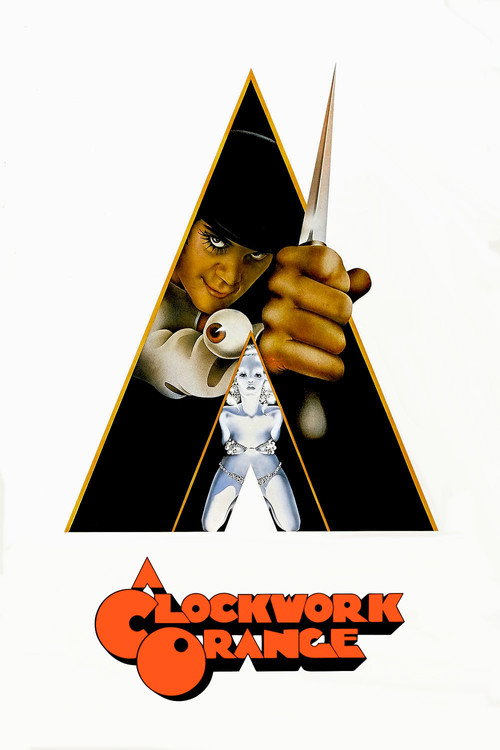
A Clockwork Orange1971
Kubrick's cold, symmetrical violence and symbolic language create meaning through visual and aural pattern rather than emotional naturalism. Both films treat the body as text and cinema as ritual.
But The assault and misogyny remain genuinely disturbing. Some viewers rightly find the clinical distance from suffering morally queasy.
Meshes of the Afternoon1943
The original avant-garde cinema of spiritual/psychological transformation through purely visual means—Jodorowsky extends and elaborates Deren's vocabulary into a feature-length ritual.
Deren's 16-minute avant-garde masterpiece is pure cinema of the unconscious—recursive, hypnotic, utterly visual. It's the template for everything Jodorowsky does, proving the form possible in miniature before he expanded it to feature length.
But Sixteen minutes, black and white, no plot, minimal sound. Even sympath viewers may find it too abstract, too short to settle into.

People
Cast
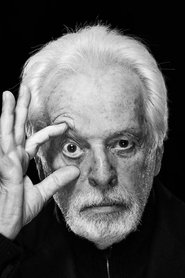 Alejandro JodorowskyThe Alchemist
- Horacio SalinasThe Thief
- Zamira SaundersThe Written Woman
 Juan FerraraFon
- Adriana PageIsla
- Burt KleinerKlen
- Nicky NicholsBerg
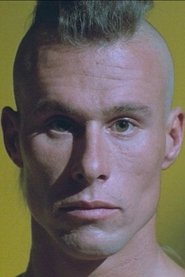 Richard RutowskiAxon
- Luis LomelíLut
 Ana De SadeThe Prostitute
- Jacqueline VoltaireTourist Wife
Directing
- Rafael Villaseñor KuriAssistant Director
- Alejandro JodorowskyDirector
Writing
- Alejandro JodorowskyScreenplay
Production
- Allen KleinExecutive Producer
- Robert TaicherExecutive Producer
- Alejandro JodorowskyProducer
- Roberto ViskinProducer
Recommended by
Jodorowsky's Dune, Crash, The Persecution and Assassination of Jean-Paul Marat as Performed by the Inmates of the Asylum of Charenton Under the Direction of the Marquis de Sade, The Man from Earth, Heaven's Gate: The Cult of Cults, Upstream Color, Zardoz, El Topo, Quo Vadis, A Man Called Horse, Starcrash, The Man Who Saved the World, Monty Python's The Meaning of Life, Enter the Void, K2, Hell House, The Kentucky Fried Movie, Terrified, The Zero Theorem, Trouble Every Day, Breaking the Waves, The Passion of the Christ, Satyricon, Centurion, Macario, Truth or Dare? - A Critical Madness, The Blood of Jesus, Safe Journey, Blood on Satan's Claw, The Age of Stupid, Distant Voices, Still Lives, Winstanley, Machuca, Little Dorrit, The Color of Pomegranates, Bill Hicks: Revelations, Don Quixote, Xala, Chang: A Drama of the Wilderness, Women in Love, Meshes of the Afternoon, The Sheltering Sky, Zama, The Match Factory Girl, Film Socialisme, Cemetery of Splendor, The Milk of Sorrow, Greaser's Palace, The Turin Horse, Midnight Family, The Beyond, Santa Sangre, High Life, Born in Flames, A Pigeon Sat on a Branch Reflecting on Existence, Enlightenment Guaranteed, Werner Herzog Eats His Shoe, Testament of Orpheus, Begotten, Nostalgia, Tusk, The Fabric of the Cosmos, Kin-dza-dza!, Beau Is Afraid, Electroma, Nekromantik, Naan Kadavul, Still Life, 40, Memoria, I ♥ Huckabees, Sympathy for the Devil: The True Story of The Process Church of the Final Judgment, Maelström, Ultra Violet, Chasing Trane, Pink Narcissus, The Reckoning, Sympathy for the Devil, The Brand New Testament, The Little Hours, Zeitgeist: The Movie, The Final Programme, Exotica, Fishing with John, Tropical Malady, Khuda Kay Liye, The Green Room, Conquest, The Decameron, Squeezed, Essential Killing, Bamako, King Lear, Susana, Tales from the Gimli Hospital, Moebius, Lexx, Žižek!, Dead Man, Sunspring, A Zed & Two Noughts, The Saragossa Manuscript, Neon Genesis Evangelion: The End of Evangelion, Metalstorm: The Destruction of Jared-Syn, We Are the Flesh, The Principle, Masala, Baskin, Journey to the Seventh Planet, Penda's Fen, Baise-moi, The Tragedy of Man, I'm a Cyborg, But That's OK, The Last Battle, Synesthesia, Tharlo, Mad Monkey Kung Fu, Yeelen, Samskara, Mindwalk, Prophecies of Nostradamus, 24 Hour Psycho, Chasing the Present, I Love You, Daddy, Derrida, Limite, The Roller Blade Seven, Tableaux Vivants, Bab'Aziz, The Act of Seeing, Treasure of the Four Crowns, Eden and After, The Ten, Footprints on the Moon, Kinetta, Kaboom, The Phantom of Liberty, Don't Torture a Duckling, The Inauguration of the Pleasure Dome, Cremaster 2, Blood of My Blood, Proving Ground 1, The Inheritance, Yor: The Hunter from the Future, Reconstruction, Bad Biology, The Smiling Madame Beudet, Macunaima, Tarantula, Cobra Verde, Parsifal, Slow Light, The Milky Way