
Film
A Pigeon Sat on a Branch Reflecting on Existence
- Absurdist comedy
- Strange
Roy Andersson's deadpan masterpiece examines human cruelty and longing through a series of tableau-like scenes: two traveling salesmen hawk novelty items, historical figures materialize, and absurdist vignettes accumulate into something that feels like watching meaning drain from the world while staying funny. It's meditative, surreal, often bleak, and completely hypnotic.
Should you watch it?
Watch it if you love deadpan absurdism built from static, carefully composed tableaux, where the joke is the stillness and the bleakness keeps arriving with a straight face.
Skip it if you need a story with momentum or characters you can settle into; its vignettes are loosely strung together, and the cruelty is laid out almost as a catalogue rather than a plot.
What it asks of you: It runs about an hour and forty minutes in brief, unhurried scenes, so you have to hold still and let each one land on its own terms before the next arrives.
Not sure? Find tonight's pick in a minute.
If you liked this
The Turin Horse2011
Béla Tarr's final film shares Andersson's glacial pacing and metaphysical despair—the slow accumulation of small failures and decay that amount to something profound. Relentless but gripping.
But It's in black and white, moves at funeral pace, and offers no catharsis or answers. Some find it punishing rather than rewarding.

Synecdoche, New York2008
Charlie Kaufman builds an elaborate theatrical metaphor about art, mortality, and self-delusion that mirrors Andersson's interest in meaning-making. Both films feel like they're breaking apart as you watch them.
But The narrative becomes deliberately impenetrable by design. If you need a story you can follow, this will frustrate you.

Come and See1985
Elem Klimov's Soviet war film uses grotesque imagery and black comedy to confront human horror, much like Andersson. It's visceral where Pigeon is still, but both refuse easy sentiment about suffering.
But It's genuinely difficult to watch—graphic, bleak, and merciless in ways that some viewers find exploitative rather than enlightening.

Not sure tonight? Get a pick in a minute, starting from A Pigeon Sat on a Branch Reflecting on Existence
The wildcard
Something you would not have found on your own.
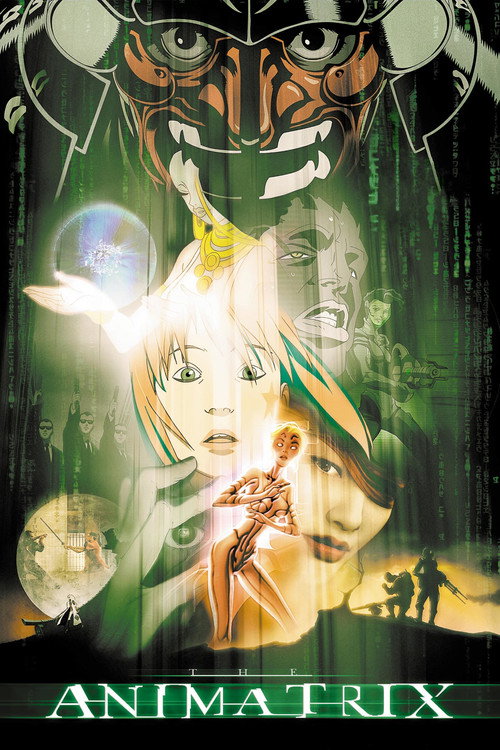
The Animatrix2003
Both use strange, non-naturalistic visual language—Andersson's painterly stillness, here animation's unreality—to ask unsettling questions about whether meaning is real or constructed.
This animated Matrix anthology entry pairs crude, experimental animation styles with existential questions about choice, control, and what constitutes reality. It's a wildcard precisely because animation allows the same surrealism and tableau-like composition as Andersson uses, but in a completely different register—trashy, poppy, sometimes beautiful, deliberately low-budget in places.
But The animation quality is wildly inconsistent. Some segments look like fan art. The philosophy is shallow compared to Andersson's patient nihilism.
More like this (6)
In the Mood for Love2000
Wong Kar-wai composes longing and regret through static, painterly frames and minimal plot. Like Andersson, he trusts the image and mood over narrative momentum.
But Nothing much happens. If you're watching for plot development, you'll leave frustrated.

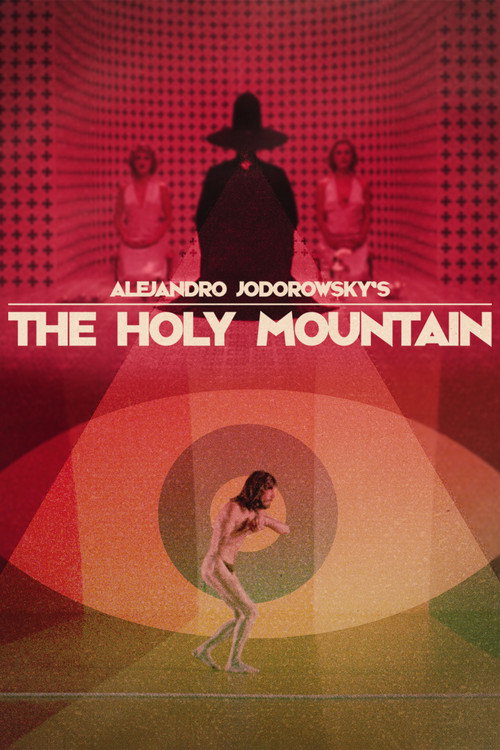
The Holy Mountain1973
Jodorowsky's surrealist epic is equally committed to nonsense and meaning, combining dream logic with genuine spiritual questioning. Both films feel like fever dreams with something true underneath.
But It's unhinged and pretentious in ways some viewers find either silly or offensive. The surrealism never resolves into clarity.
Mulholland Drive2001
Lynch builds dread and meaning from dreamlike associations and repeated imagery. Both films suggest that reality might be fundamentally unstable or absurd.
But The narrative structure is deliberately confusing. Many viewers leave angry rather than moved.

Stalker1979
Tarkovsky's meditative science fiction is about yearning and the human search for meaning in emptiness. The pacing is glacial, the imagery transcendent, the philosophy patient.
But At 163 minutes with minimal dialogue and no action, it tests endurance. Tedium and profundity sit uncomfortably close.

Ikiru1952
Kurosawa examines a life spent in meaningless routine and the desperate search for purpose. It's tender where Andersson is cold, but both films haunt you with the same question: what are we doing with our time?
But The melodrama in the second half will feel dated or heavy-handed to modern sensibilities. Kurosawa's sentiment can read as schmaltzy.

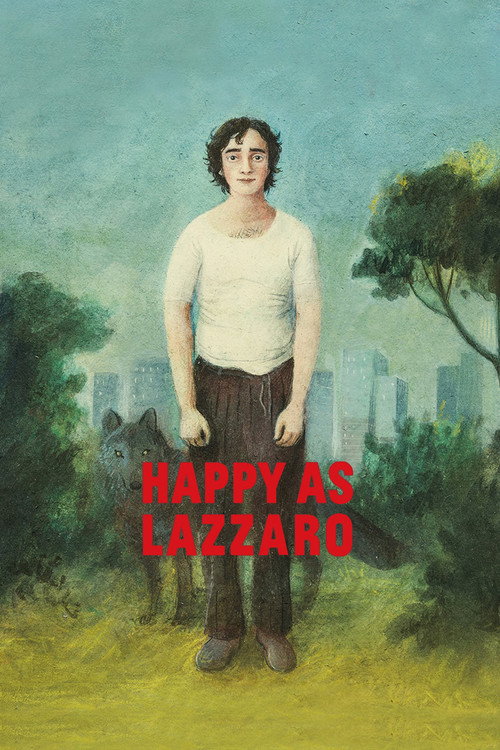
Happy as Lazzaro2018
Alice Rohrwacher mixes fable, social criticism, and magical realism into something that feels both fantastical and deeply human. Like Andersson, she trusts weirdness to tell the truth.
But The tonal shifts are jarring—from folk tale to social realism to something almost supernatural. It feels unresolved in ways some find unsatisfying.
People
Cast
- Holger AnderssonJonathan
- Viktor GyllenbergLe Roi Charles XII
- Lotti TörnrosLe Professeur de Flamenco
- Jonas GerholmLe Colonel Solitaire
- Ola StenssonLe Capitaine/Barbier
- Oscar SalomonssonLe Danseur
- Roger Olsen LikvernLe Gardien
- Charlotta LarssonLotta la Boiteuse
 Göran HolmBargäst
- Per BergqvistMuseum Couple
 Solveig AnderssonMuseum Couple
Directing
- Roy AnderssonDirector
Writing
- Roy AnderssonScreenplay
Production
- Pernilla SandströmProducer
- Philippe BoberProducer
Recommended by
Insomnia, The Innocents, The Man Who Killed Don Quixote, The Cup, Pulse, Gerry, Gerhard Richter Painting, SPL: Kill Zone, The Eyes of Orson Welles, The Milk of Sorrow, Return to Seoul, Hedi, A Question of Silence, 12:08 East of Bucharest, Russian Ark, Alias Grace, The Perished, Sweat, Adult Life Skills, Synonyms, My Childhood, Flux Gourmet, My King, Before the Frost, A Brand New Life, Distant, Uncle Vanya, The Tempter, House of Pleasures, Bhuvan Shome, Tales from the Golden Age, Daisy Diamond