
Film
Happy as Lazzaro
- Drama
- Slow-burning
A dreamlike fable about innocence and exploitation in rural Italy, where a gentle sharecropper's life splinters when he befriends the landowner's son. Director Alice Rohrwacher crafts something between neorealism and fairy tale, asking what happens when goodness meets a world designed to crush it. Hypnotic and strange.
Should you watch it?
Watch it if you like quiet, parable-like films where kindness is treated as a serious subject, the camera lingers on faces and landscape, and you don't mind magic arriving without fuss.
Skip it if you need brisk plotting or a clear sense of direction, since this drifts at its own unhurried rhythm and asks patience for a long stretch.
What it asks of you: Its shape is leisurely and unhurried, running just over two hours with long unbroken scenes and a mood that stays soft rather than sharp.
Not sure? Find tonight's pick in a minute.
If you liked this
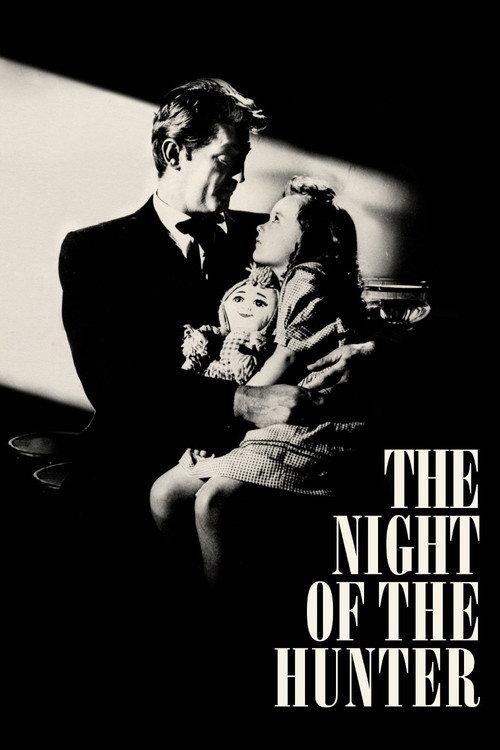
The Night of the Hunter1955
A American gothic masterpiece about innocence hunted by corruption. Charles Laughton's preacher is pure malice; the children's vulnerability mirrors Lazzaro's. Visually baroque and morally urgent in ways that still shock.
But Black-and-white, slow-burn tension, and a bleakness that doesn't offer easy comfort. The pacing can feel deliberate to the point of suffocation.
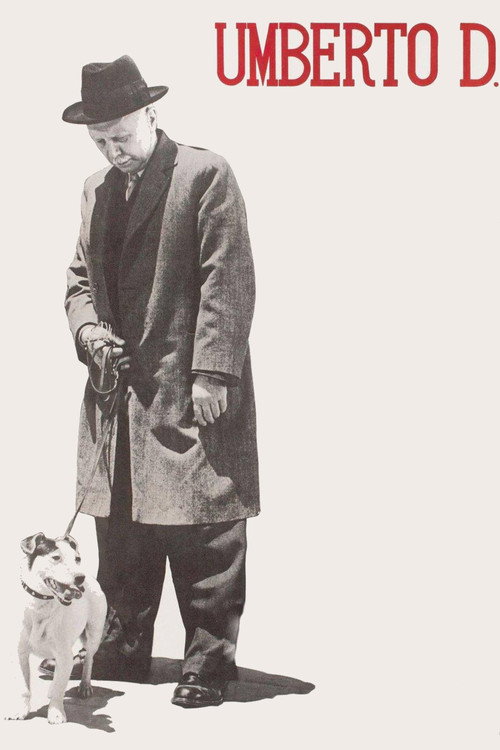
Umberto D.1952
De Sica's masterpiece about an elderly pensioner struggling to survive in postwar Rome. Like Lazzaro, it watches dignity erode against systems indifferent to human worth. Unflinching and devastatingly tender.
But Deliberately unglamorous, with long passages of quiet desperation. There's no plot machinery; just a man and his dog against time.
Bicycle Thieves1948
The neorealist blueprint. A man's bicycle—his livelihood—is stolen in Rome, and we follow his desperate search. It has Lazzaro's sense of watching someone buffeted by forces larger than themselves, but with crushing social specificity.
But Shot in documentary style with non-professional actors. The ending will devastate you in a way that can feel punishing rather than cathartic.

Not sure tonight? Get a pick in a minute, starting from Happy as Lazzaro
The wildcard
Something you would not have found on your own.
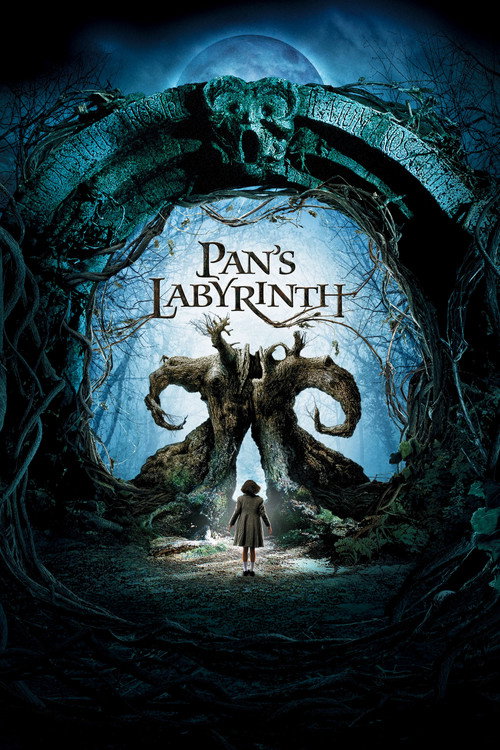
Pan's Labyrinth2006
Both use fairy-tale logic and supernatural elements to explore how systems exploit the powerless. Both refuse the comfort of neat resolution.
Del Toro fuses Spanish Civil War realism with actual fantasy—a girl navigates a dark fairy tale while fascism closes in. Like Lazzaro, it's a fable about innocence meeting cruelty, but it literalizes the magical elements and commits to them.
But Genuinely frightening in places. The practical creature effects are unsettling. It's fantasy horror, not whimsy, and some scenes are disturbing in ways that linger.
More like this (8)
The Seventh Seal1957
Bergman's medieval knight plays chess with Death itself. Like Lazzaro, it's a parable about faith, suffering, and what we owe each other. Dense with symbols but never bloodless—real anguish underneath.
But Famously heavy. Metaphysical rather than plot-driven, and the existential questions never resolve. Can feel like a philosophy lecture in period costume.

Stalker1979
Tarkovsky's science-fiction pilgrimage through a mysterious zone toward a room that grants wishes. Like Lazzaro, it's mystical and slow, asking what we truly want and whether innocence survives contact with desire.
But 163 minutes of meditative pacing. Dialogue is sparse. Some will find it transcendent; others will find it glacial. There is no in-between.

A Prophet2009
Jacques Audiard's prison epic follows a young Arab inmate's ruthless ascent. Brutal counterpoint to Lazzaro's passivity—both are about survival in systems designed to dehumanize, but this one is about fighting back.
But Violent and claustrophobic, with French prison slang that subtitles can't fully capture. The moral ambiguity is deliberate and unresolved.

The Turin Horse2011
Béla Tarr's final film depicts a philosopher and his daughter's final days as the world decays around them. Painterly apocalypse with the same sense of doom as Lazzaro, but filtered through philosophy and silence.
But Deliberately monotonous. Black-and-white, circular repetition, and a worldview so bleak it borders on nihilism. Not designed for pleasure.

Come and See1985
Elem Klimov's Belarusian masterpiece follows a boy conscripted into WWII. Watches innocence annihilated by historical forces. Raw, visceral, and theologically furious in ways that make most war films look tame.
But Genuinely traumatizing. Extremely graphic violence, child suffering, and a view of humanity so dark it requires emotional fortitude. Not cathartic; punishing.

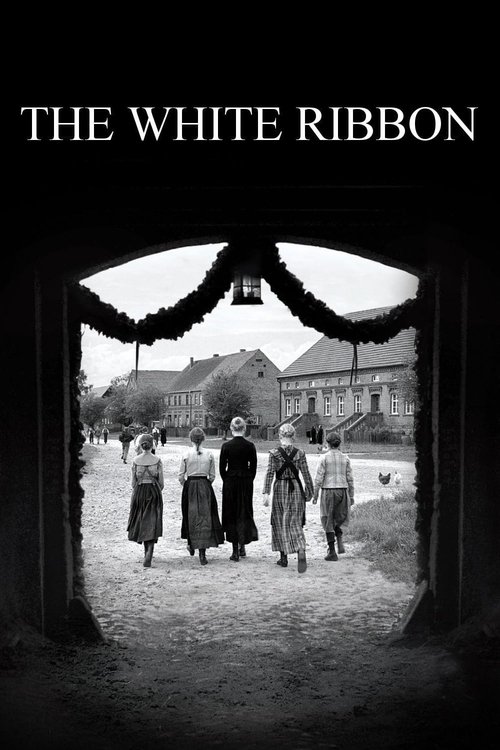
The White Ribbon2009
Michael Haneke's German village mystery set before WWI. Children commit inexplicable cruelties; authority is hollow. Like Lazzaro, it asks what evil looks like when dressed in innocence, and what systems enable it.
But Three hours, black-and-white, deliberately opaque. The mystery is never solved. Haneke withholds emotional satisfaction as a formal principle.
Mulholland Drive2001
Both films watch innocence get rewritten and consumed by systems larger than themselves. Both use formal strangeness to convey spiritual dislocation.
Lynch's Los Angeles nightmare about ambition, performance, and the self fragmenting under pressure. Like Lazzaro, it fractures reality itself—but this time to explore how capitalism manufactures and discards people, and what cinema itself does to innocence.
But Deliberately cryptic narrative structure. It does not explain itself. Some scenes are erotic and disturbing. Requires active rewatching and tolerates confusion.

Jeanne Dielman, 23, quai du Commerce, 1080 Bruxelles1976
Both films refuse to sentimentalize their subjects. Both find dignity and resistance in apparent passivity. Both ask viewers to slow down and truly witness rather than consume.
Chantal Akerman's three-hour portrait of a widow's daily routine: cooking, cleaning, sex work. Durational cinema that finds meaning in repetition and routine. Like Lazzaro, it watches someone navigate systems of exploitation with quiet dignity, but through the most mundane, embodied labor.
But It is, deliberately, boring in conventional terms. Long static shots of domestic work. No plot. Requires a specific kind of attention and patience most cinema trains you not to have.

People
Cast
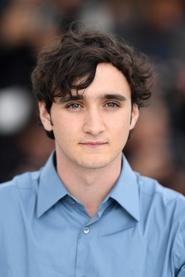 Adriano TardioloLazzaro
 Agnese GrazianiAntonia (young)
 Luke ChikovaniTancredi (young)
 Alba RohrwacherAntonia
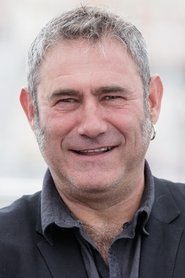 Sergi LópezUltimo
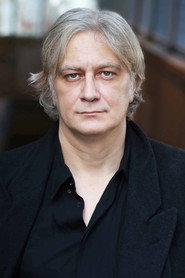 Tommaso RagnoTancredi
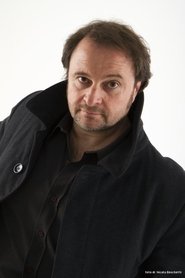 Natalino BalassoNicola
 Nicoletta BraschiMarchesa Alfonsina De Luna
- Carlo MassiminoPippo
- Daria Pascal AttoliniMaria Grazia (Adult)
- Maddalena BaioccoStefania
- Giulia CaccavelloTeresa
Directing
- Alice RohrwacherDirector
- Nicola ScorzaFirst Assistant Director
- Sara CavaniScript Supervisor
- Daniela BaldasarreSecond Assistant Director
- Alessandro CacciamaniThird Assistant Director
Writing
- Alice RohrwacherWriter
Production
- Alessio LazzareschiAssociate Producer
- Meinolf ZurhorstAssociate Producer
- Chiara PolizziCasting
- Ulrike MüllerCasting
- Massimo AppolloniCasting Assistant
- Michel MerktCo-Producer
- Olivier PèreCo-Producer
- Paolo Del BroccoCo-Producer
- Viola FügenCo-Producer
- Francesca AndreoliDelegated Producer
- Martin ScorseseExecutive Producer
- Giorgio GaspariniLine Producer
- Davide SpinaLocation Manager
- Claudia PanzicaPost Production Coordinator
- Carlo Cresto-DinaProducer
- Cécile Tollu-PolonowskiProducer
- Gregory GajosProducer
- Michael WeberProducer
- Pierre-François PietProducer
- Tiziana SoudaniProducer
- Dorissa BerningerProduction Manager
- Simon ManzollinoProduction Manager
- Daniele MoriniUnit Manager
- Daniele SpinozziUnit Manager
Recommended by
Alive Inside, The Angry Silence, The Devil's Doorway, Can You Ever Forgive Me?, Personal Shopper, Taxi Blues, Care, South, Drifting Clouds, When We Rise, Ju Dou, The Salt of the Earth, Julieta, Cairo Time, Photograph, Fill the Void, Rust and Bone, A Pigeon Sat on a Branch Reflecting on Existence, The Past, Parade, Hawking, Return to Seoul, Summer with the gentleman, Jealousy, Ava's Possessions, Billie, The Outsider, Treeless Mountain, Amour Fou, After the Winter, The Seventh Continent, SoulMate, The Banishment, The Summer of Sangaile, Everybody Knows, Things to Come, Oasis, Uncle Vanya, When Evening Falls on Bucharest or Metabolism, Consuming Spirits, The Funeral, Ship of Theseus, Last of the Mobile Hot Shots, Tharlo, The Storm, ABCD 2, The Silence, Jerichow, The Cage, Woman Without Piano, The Fire, The Notebook, Grand Hotel, Atithi Tum Kab Jaoge?, Ed è subito commedia, One Breath, C/o Kancharapalem, The Bigger Picture, Chandamama Kathalu, Betty Fisher and Other Stories, Thangamagan, The Stone Angel, Godavari, Catching Feelings, Possible Love