
Film
Eraserhead
- Horror
- Very dark
- Strange
- Slow-burning
Eraserhead is David Lynch's surreal black-and-white debut about a hapless man navigating industrial decay, domestic collapse, and a horrifyingly deformed newborn. It's deliberately paced, deeply strange, and built from sound design and texture rather than plot. For viewers willing to sit with discomfort and ambiguity rather than answers.
Should you watch it?
Watch it if you love films that trust atmosphere over explanation, where sound design, grimy textures and dream logic do the storytelling and you're happy to sit inside an unsettling mood without needing it resolved.
Skip it if the slow, airless pace and deliberately grating sound will wear thin if you want a story that moves forward or characters you can easily warm to.
What it asks of you: Long stretches of stillness and scraping noise, a hushed pace across its ninety minutes, and an uneasy mood you must sit with rather than follow as plot.
Not sure? Find tonight's pick in a minute.
If you liked this
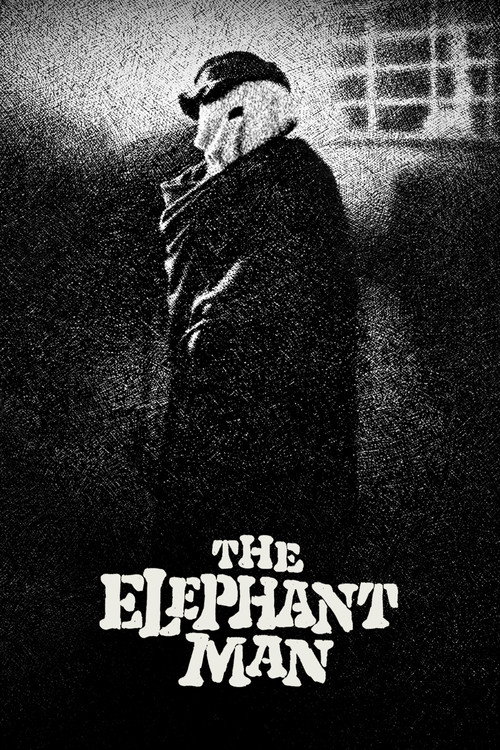
The Elephant Man1980
Lynch's follow-up is more accessible but equally committed to beauty within deformity and the cruelty of spectacle. A profound meditation on humanity wrapped in Victorian gothic.
But It's slower and sadder than you might expect—less of a story, more of an accumulation of moments and stares.
Mulholland Drive2001
Lynch at full command: a fractured Hollywood story that dissolves and reforms, funny and heartbreaking and impossible to pin down. Proof he'd spent two decades perfecting his method.
But The tonal whiplash and non-ending will frustrate you if you want narrative resolution. Some stretches drag.

Stalker1979
Tarkovsky's Soviet sci-fi is patient, hypnotic, visually lush—a spiritual journey dressed as a quest. If Eraserhead made you feel something you couldn't name, this will do the same, differently.
But It's slow cinema taken seriously: long takes, minimal dialogue, 163 minutes. Not a film you half-watch.

Not sure tonight? Get a pick in a minute, starting from Eraserhead
The wildcard
Something you would not have found on your own.
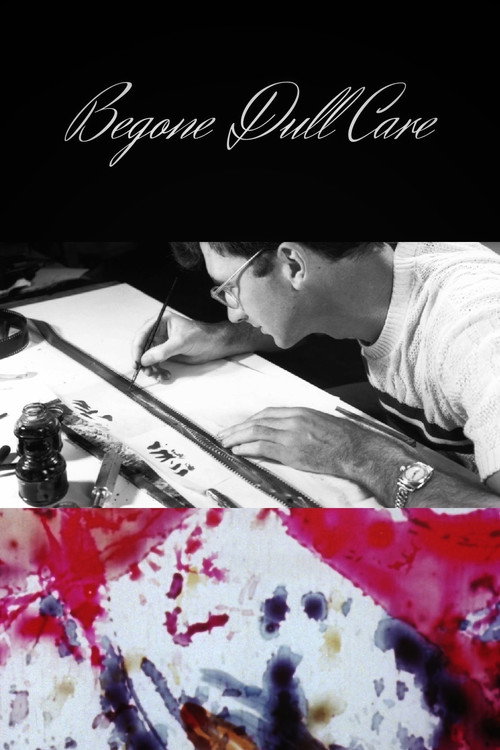
Begone Dull Care1949
Both films trust sound design and abstract image-making to generate unease and meaning without exposition. Both prove cinema doesn't need narrative.
Norman McLaren's abstract animation is pure image and sound without plot—coloured ink moving across film, synced to jazz. Eraserhead's closest visual ancestor, made three decades earlier, proof that you could build cinema from texture alone.
But Five minutes of non-representational animation. No characters, no story, no traditional reason to watch unless you're moved by pure form.
More like this (8)
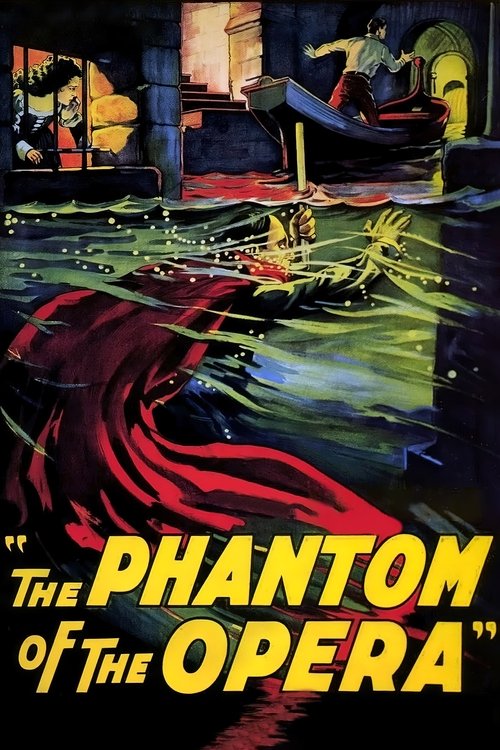
The Phantom of the Opera1925
Lon Chaney's original silent masterpiece uses shadow and architecture like Eraserhead does texture—to create dread from environment and image rather than plot mechanics.
But It's nearly a century old. If you've never sat with silent film before, the pacing takes adjustment.
Come and See1985
Elem Klimov's Soviet war film is visceral, hallucinatory, unwilling to look away from human suffering. It shares Eraserhead's refusal to soften its vision for comfort.
But It depicts extreme violence and child trauma. This is not catharsis; it's an endurance test with a point to make.

Under the Skin2014
Jonathan Glazel's film is pure mood and sound design: Scarlett Johansson in a slow, strange sci-fi horror with almost no dialogue. Hypnotic and deeply unsettling.
But Plot is minimal and intentionally vague. If you need narrative clarity, you'll hate this. Some scenes feel aimless.

Synecdoche, New York2008
Charlie Kaufman's directorial debut is Eraserhead's fractured spiritual cousin—a man spiralling through art, mortality, and identity collapse. Intellectually dizzy and genuinely distressing.
But It's three hours of increasing chaos and despair. Brilliant but suffocating. No safety net, no resolution.

The Cabinet of Dr. Caligari1920
German Expressionist proto-horror uses distorted sets and shadow like Eraserhead uses sound—to make the world itself feel wrong and threatening. The grandparent of everything Lynch admires.
But Silent film, 1920s acting style, and a story that now feels quaint. You're watching history more than experiencing dread.

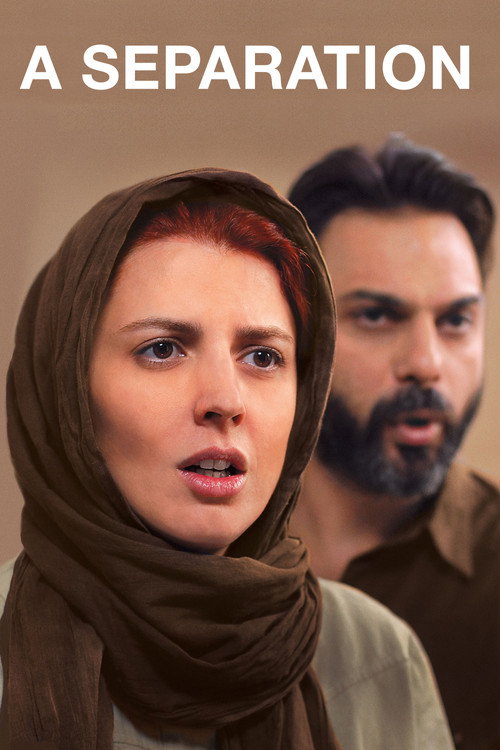
A Separation2011
Asghar Farhadi's drama shares Eraserhead's structural precision and refusal to let anyone off the hook morally. Intimate, unbearably tense, built entirely from human conflict and choice.
But It's realist and dialogue-heavy—the opposite of surreal. If you want more weirdness, you won't find it here.
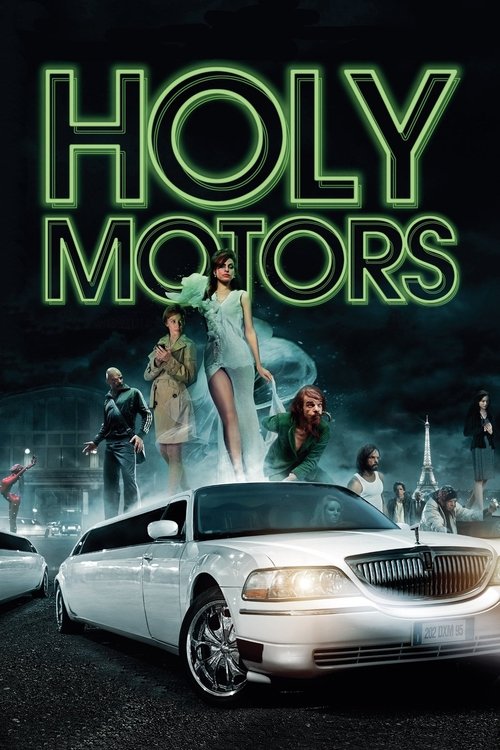
Holy Motors2012
Both films refuse linear narrative and the comfort of character continuity. Both are closer to dreams than stories—your job is to *feel* them, not understand them.
Leos Carax's fever dream: Denis Lavant riding through Paris in a limousine, stepping in and out of different lives and bodies. Surreal, gorgeous, perverse—maximalist where Eraserhead is minimal, but built from the same dream-logic.
But It's self-consciously avant-garde and occasionally silly. Two hours of tonal chaos. Some sequences feel like showing off.
Possession1981
Both films use grotesquerie and industrial/organic imagery as metaphors for relationships failing. Both are about men trapped in scenarios they cannot escape or understand.
Andrzej Żuławski's Polish nightmare about a marriage collapsing into literally cosmic horror. Claustrophobic, sexually explicit, violent, and absolutely committed to its derangement. Arguably more disturbing than Eraserhead.
But It's pretentious European horror from 1981—genuinely difficult, occasionally incomprehensible, with squid-creature effects that haven't aged smoothly. Real challenge.

People
Cast
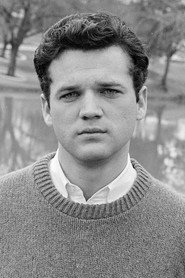 Jack NanceHenry Spencer
 Charlotte StewartMary X
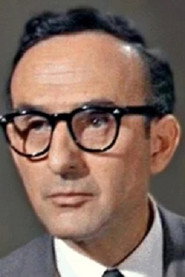 Allen JosephMr. X
 Jeanne BatesMrs. X
 Judith RobertsBeautiful Girl Across the Hall
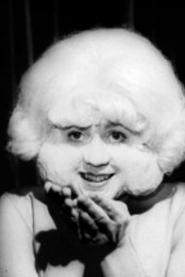 Laurel NearLady in the Radiator
 Jack FiskMan in the Planet
- Jean LangeGrandmother
- Thomas CoulsonThe Boy
- John MonezBum
 Darwin JostonPaul
- T. Max GrahamThe Boss
Directing
- Catherine E. CoulsonAssistant Director
- David LynchDirector
Writing
- David LynchScreenplay
Production
- Fred BakerExecutive Producer
- David LynchProducer
- Doreen G. SmallProduction Manager
Recommended by
The Holy Mountain, Un Chien Andalou, Following, Carnival of Souls, Frenzy, Tetsuo: The Iron Man, Liquid Sky, Delicatessen, Death Bed: The Bed That Eats, Mad God, Berberian Sound Studio, Lost Highway, Inland Empire, The Entity, Martin, Tetsuo II: Body Hammer, Truth or Dare? - A Critical Madness, White Dog, Basket Case, The Island of Dr. Moreau, It's Alive, Edge of Darkness, Ballet Mécanique, Faust, Prevenge, Shadow, The Beyond, Santa Sangre, Begotten, The Lathe of Heaven, Nekromantik, Making Waves: The Art of Cinematic Sound, Phantasm, Twin Peaks: Fire Walk with Me, The Worm Eaters, Marebito, Batman: The Dark Knight Returns, Part 2, The Butcher Boy, Fireworks, Twilight of the Dogs, Brain Damage, Moebius, Evilspeak, A Boy's Life, The Oregonian, Taxidermia, The Driller Killer, The Last Battle, The Watcher, Stanley Kubrick - Ein Leben für den Film, Joy Division, The Incredible Melting Man, The Grandmother, Creature with the Atom Brain, Young Törless, The Spiral Staircase, The Art of Vision, Malcolm & Marie, Cremaster 2, A Story of Derry, Nine Days, The Fun House, Sideshow, Ratboy, We Are the Strange