
Film
Nostalgia
Other titles called Nostalgia: the 2018 film.
- Drama
- Strange
- Slow-burning
Tarkovsky's meditation on exile and spiritual homesickness. A Russian poet drifts through Italian landscapes, interviewing locals about a lost composer while wrestling with his own displacement. Austere, dreamlike, demanding—it moves in its own time, offering no comfort or resolution. For those willing to sit with longing itself.
Should you watch it?
Watch it if you love slow, painterly films where a long take of mist over a pool does more work than any dialogue, and you are happy to sit inside a mood of homesick ache without needing it resolved.
Skip it if you want momentum or a clear plot to hold onto; very little happens in the conventional sense, and the pacing is deliberately patient enough to test anyone restless in a cinema seat.
What it asks of you: Around two hours of unhurried observation, with scenes that linger well past the point where you expect a cut, asking you to be still and let the atmosphere accumulate.
Not sure? Find tonight's pick in a minute.
If you liked this
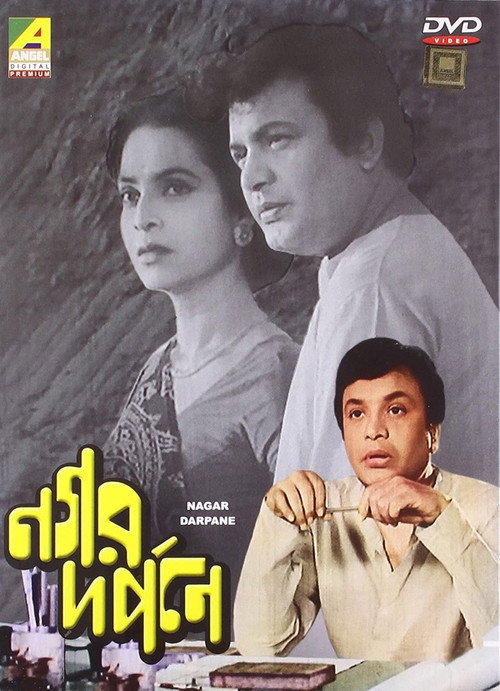
In the Mirror of the City1975
Tarkovsky's most autobiographical work, weaving memory, archive footage, and dream into a film that feels like consciousness itself. If you respond to Nostalgia's texture, this is essential.
But Even more elliptical than Nostalgia. Narrative dissolves entirely. Requires patience most cinema-goers don't have.
Stalker1979
A zone, a guide, a seeker. Three people move through a landscape toward something they may not understand. Tarkovsky at his most hypnotic, asking what we actually desire when we think we desire transcendence.
But 161 minutes. Shot in deliberately muted colours. The 'plot' is a pretence for something else entirely. Feels glacial.

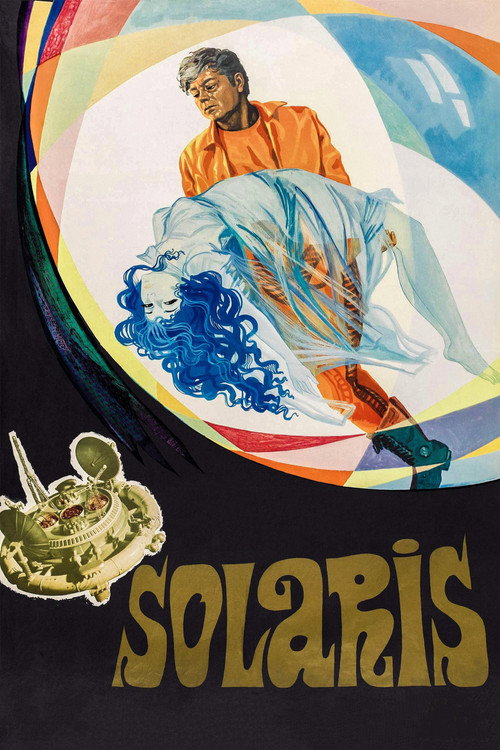
Solaris1972
Cosmonauts on a space station haunted by a planet that manifests their memories. Science fiction as philosophical inquiry—grief, identity, what it means to be human when the universe offers no answers.
But Soviet sci-fi pacing. Long takes of people thinking. No action sequences. The love story may feel like displacement activity if you're hunting plot.
Not sure tonight? Get a pick in a minute, starting from Nostalgia
The wildcard
Something you would not have found on your own.
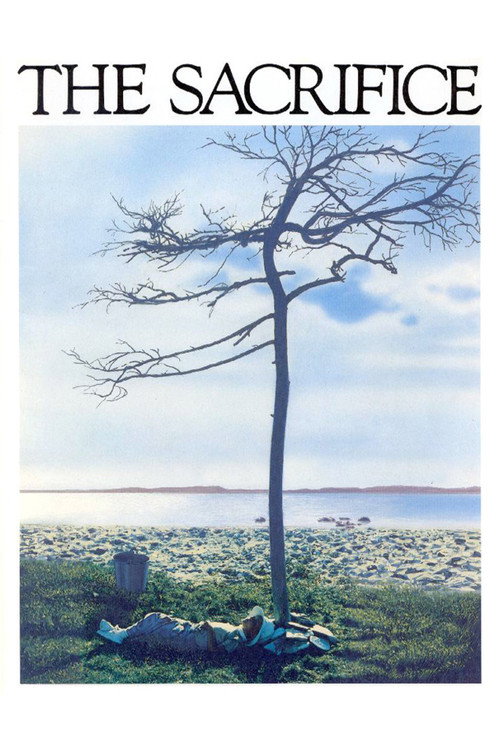
The Sacrifice1986
The two films are separated by three years and Tarkovsky's exile: Nostalgia is the homesick interior monologue; The Sacrifice is what happens when going home becomes impossible. Together they form a diptych on loss.
Tarkovsky's final film, shot in Sweden after exile from the USSR. A man prepares for apocalypse by attempting to sacrifice everything he loves. More urgent than Nostalgia, more desperate—homesickness becomes a literal countdown to annihilation.
But Diagnosed with cancer, Tarkovsky made this knowing he was dying. The film carries that knowledge. Unbearably sad. Shot in grey Scandinavian light. Feels less like cinema and more like a farewell letter.
More like this (8)
Come and See1985
A Belarusian film about a boy conscripted into war. Like Nostalgia, it's about rupture and the impossibility of return—but where Tarkovsky is interior, this is visceral. Shattering and necessary.
But Genuinely harrowing. Images of atrocity and suffering. Not meditative—assault. Some may find it exploitative rather than humanizing.

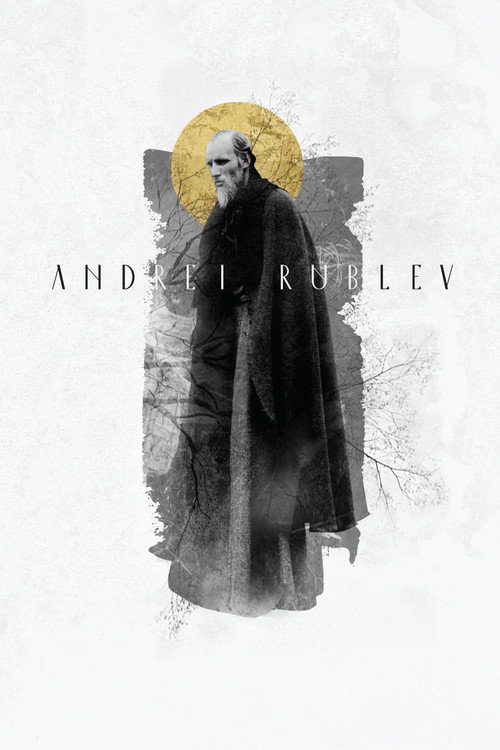
Andrei Rublev1966
Tarkovsky again, but earlier: a Russian icon painter navigating faith, violence, and whether art survives tyranny. Shares Nostalgia's preoccupation with spiritual exile and the cost of creation.
But Three hours of medieval Russia. Black and white, then colour. Drifts between chapters without conventional momentum. Intellectual rather than emotionally driven.
Tokyo Story1953
Ozu's masterpiece about ageing parents visiting their son in Tokyo. Deceptively simple—an oblique meditation on time, family, the unbridgeable distances between people who love each other.
But Slower than slow cinema usually goes. Stationary camera. Nothing dramatic happens. Its power lies in what's unsaid, which some find boring.

Possession1981
A marriage dissolves in Berlin during the Cold War. Surreal, sexually explicit, formally audacious—Andrzej Żuławski turns marital breakdown into apocalypse. Raw and unsettling in ways Nostalgia keeps at arm's length.
But Deliberately excessive. Scenes of graphic violence and sex. Feels like watching someone's nervous breakdown rather than a conventional drama. Audiences often find it abrasive.

The Holy Mountain1973
Jodorowsky's visionary fever dream. A spiritual seeker climbs a mountain toward enlightenment. Mysticism, surrealism, sacred geometry. A wildly different register from Tarkovsky but the same obsession with transcendence and its impossibility.
But Deeply weird. Genuinely obscene imagery. Feels more like a ritual or nightmare than a film. Many find it pretentious or incomprehensible.

Umberto D.1952
De Sica's neorealist tragedy about an elderly pensioner and his dog facing eviction. Minimal plot, maximum humanity. Dignity under erasure. Quieter than Nostalgia but the same spiritual desolation.
But Deliberately unglamorous. An old man's mundane struggle. No arc, no redemption. Its refusal to sentimentalize can feel bleak rather than moving.

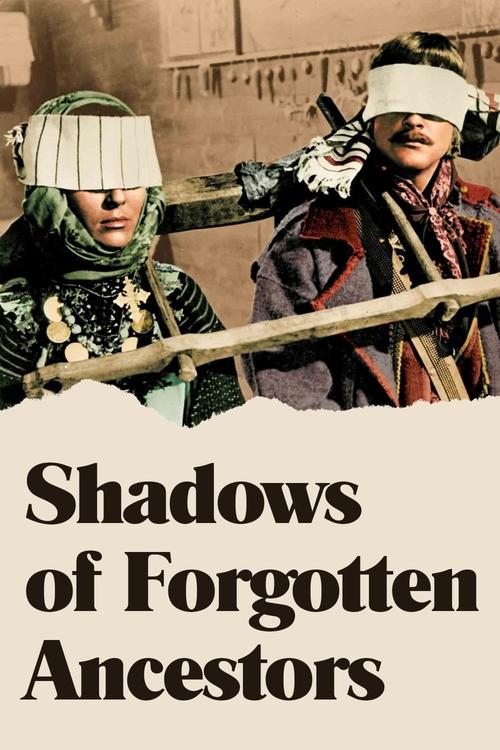
Shadows of Forgotten Ancestors1965
Both films are about exile—spiritual, linguistic, national. But where Tarkovsky internalizes it as melancholy, Parajanov externalizes it as riot and colour. Watching them back-to-back reveals two Russian-adjacent artists processing displacement in opposite registers.
Sergei Parajanov's Ukrainian folk epic rendered as hallucinogenic visual poetry. Layered, chromatic, sensual—it's about displacement and memory but speaks through myth and colour rather than Tarkovsky's austerity. Utterly intoxicating.
But Non-linear narrative obscured by dense symbolism. Ukrainian rather than Russian contexts. Parajanov's visual excess can feel baroque or impenetrable depending on your mood. Requires surrender rather than analysis.
Jeanne Dielman, 23, quai du Commerce, 1080 Bruxelles1976
Both are assaults on cinema's impatience. Both ask: what if we filmed time as it actually feels? But where Tarkovsky films consciousness, Akerman films labour and embodiment. Nostalgia is a meditation; Jeanne Dielman is a thesis on invisibility.
Chantal Akerman's three-hour portrait of a woman's daily rituals: cooking, housework, a client. Nothing happens. Everything is the texture of time itself. Like Nostalgia, it's about interior states made visible through duration—but it's feminist, Belgian, and about the present rather than memory.
But Genuinely tedious by design. Shot in real-time. A woman cooks for three hours. If you hate slow cinema, this will feel like punishment. Even admirers sometimes find it exhausting rather than transcendent.

People
Cast
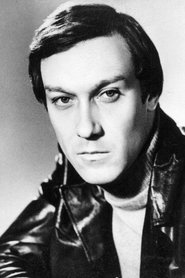 Oleg YankovskiyAndrei Gorchakov
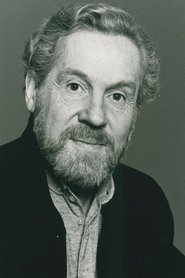 Erland JosephsonDomenico
 Domiziana GiordanoEugenia
- Patrizia TerrenoAndrei's Wife
 Laura De MarchiChambermaid
 Delia BoccardoDomenico's Wife
 Milena VukotićCivil Servant

Directing
- Larisa TarkovskayaAssistant Director
- Norman MozzatoAssistant Director
- Andrei TarkovskyDirector
- Ilde MuscioScript Supervisor
Writing
- Andrei TarkovskyScreenplay
- Tonino GuerraScreenplay
Production
- Manolo BologniniExecutive Producer
- Renzo RosselliniExecutive Producer
- Cesare NoiaOther
- Eutizio Di SalvatoreOther
- Lorenzo OstuniOther
- Raffaele StrianoOther
- Daniel Toscan du PlantierProducer
- Nestore BaratellaProduction Accountant
- Franco CasatiProduction Manager
- Filippo CampusProduction Supervisor
- Valentino SignorettiProduction Supervisor
Recommended by
The Fabulous Baron Munchausen, Theorem, Unmistaken Child, Cave of Forgotten Dreams, Tess, Paris 1900, The Sacrifice, Werckmeister Harmonies, Manakamana, The Salt of the Earth, Santiago, Italia, Sabrina, Ballet Mécanique, The Eyes of Orson Welles, Lancelot of the Lake, Keats and His Nightingale: A Blind Date, Two Years at Sea, The War at Home, Shadows of Forgotten Ancestors, Coffee for All, Age of Uprising: The Legend of Michael Kohlhaas, Mirror, The Immortals, 42 Up, The Reckoning, Lonesome, Heartbeat Detector, I, Pierre Rivière, Having Slaughtered My Mother, My Sister and My Brother…, The Last Breath, The Super 8 Years, Ek Ruka Hua Faisla, The Baader-Meinhof Gang on Trial, Malevil, The Ritual of Color, The Strange Ones, L'Orfeo, The Witch Hunt, The Flicker, Tableaux Vivants, The Death of Empedocles, The Three Sisters, What Remains of Us, Sunstroke, The Last Days, Vendetta, Thérèse, La Région Centrale, Blood of My Blood, Pyramid, Images from the Playground, El año del diluvio, At the Edge of Darkness (Song of the Earth Part 1), Eternity and a Day, The Queen and I, People on Sunday