
Film
The Principle
A 90-minute documentary that interrogates the Copernican Principle—the idea that Earth holds no special place in the universe—through interviews with cosmologists and dissident voices. It's visually ambitious, philosophically provocative, and designed to unsettle comfortable assumptions about our cosmic insignificance. For viewers hungry to question foundational scientific orthodoxy.
Should you watch it?
Watch it if you like watching mainstream cosmologists go head to head with mavericks over whether the universe's most basic assumption still holds, and talking heads don't bother you.
Skip it if you want lively visuals or a show that moves fast; this is mostly narration and talking heads, with a dense argument that needs close attention.
What it asks of you: Ninety minutes of steady, talk-driven pacing that rewards patience; it asks you to follow abstract reasoning from start to finish rather than be carried along.
Not sure? Find tonight's pick in a minute.
If you liked this
Cosmos1980
Carl Sagan's vision reimagined by Neil deGrasse Tyson, with stunning visuals and genuine wonder. It covers the same cosmic history but from the scientific consensus perspective, making a natural counterpoint.
But Thirteen hours is a commitment, and Tyson's celebrity can feel slick compared to Sagan's philosophical depth.
A Brief History of Time1991
Errol Morris's meditation on Stephen Hawking and cosmology. Contemplative, visually inventive, and unafraid to sit with big questions without rushing to answers.
But It moves slowly and dwells in abstraction. Patience required; concrete plot summary impossible.
Interstellar2014
Christopher Nolan's epic explores relativity, dimension, and humanity's place in an indifferent cosmos with genuine intellectual ambition and emotional weight.
But At nearly three hours, it's dense and occasionally opaque. The science can feel secondary to spectacle.
Not sure tonight? Get a pick in a minute, starting from The Principle
The wildcard
Something you would not have found on your own.
Powers of Ten1977
Both films wrestle with humanity's place within scale. Powers of Ten answers through pure geometry; The Principle does it through cosmological debate. The Eames offer visual certainty; The Principle questions certainty itself.
Charles and Ray Eames's nine-minute cosmic zoom from a Chicago picnic to the edge of observable space and back. A perfect distillation of scale and perspective. Hypnotic and mathematically precise.
But At nine minutes, it's barely a film—more of a meditation or teaching tool. No narrative arc, no interviews, no argument. Pure vision.
More like this (7)
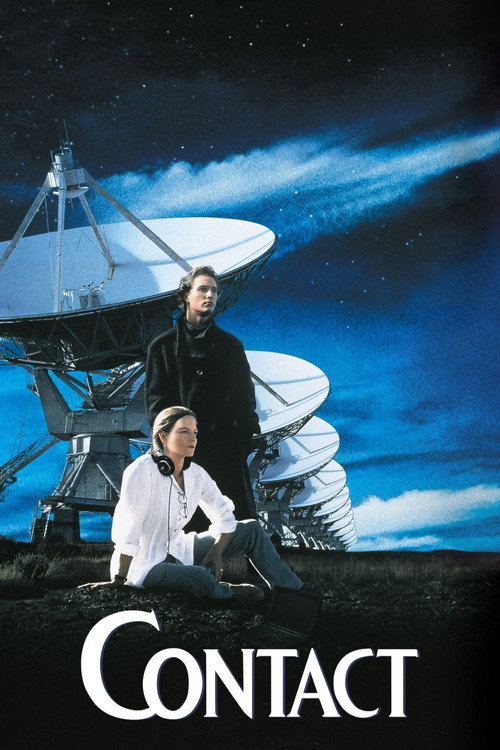
Contact1997
Robert Zemeckis adapts Carl Sagan, balancing hard cosmology with the personal and spiritual dimensions of scientific discovery. Jodie Foster is excellent.
But Released in 1997; some effects haven't aged well, and the climax divides viewers on whether it earns its metaphysical turn.
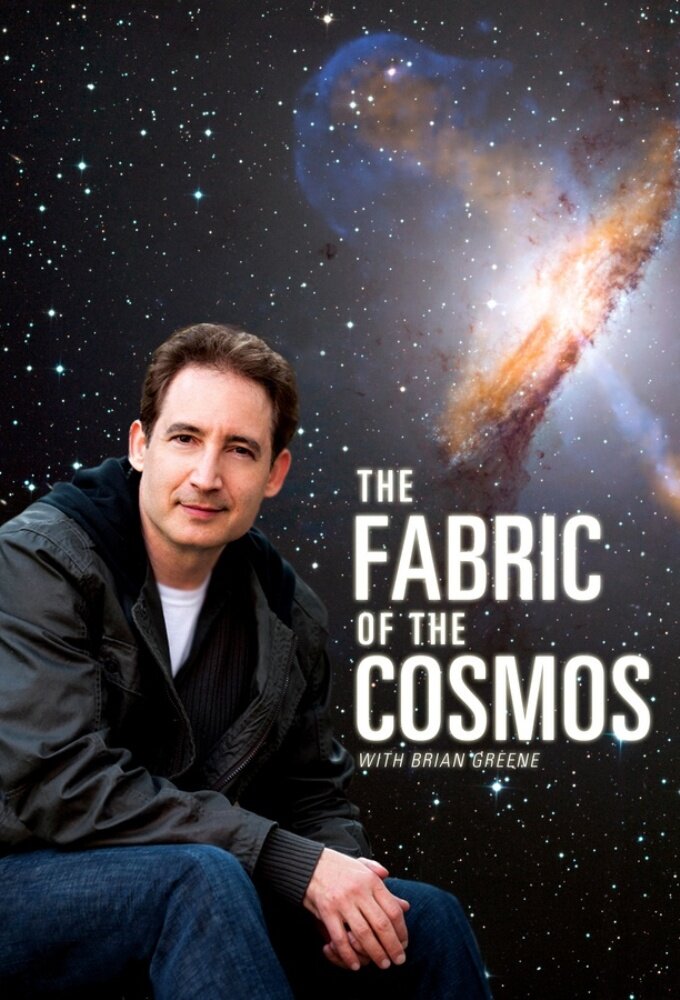
The Fabric of the Cosmos2011
Brian Greene makes quantum mechanics and cosmology visceral and (mostly) comprehensible. Four episodes, each a self-contained idea, beautifully visualized.
But Greene's explanations, while clear, sometimes oversimplify. Not a substitute for deeper reading.
Particle Fever2013
A documentary about the hunt for the Higgs boson that works as human drama, mystery, and accessible physics. Genuinely suspenseful about an experiment.
But Assumes some baseline physics literacy. The stakes may feel abstract if you're coming in cold.
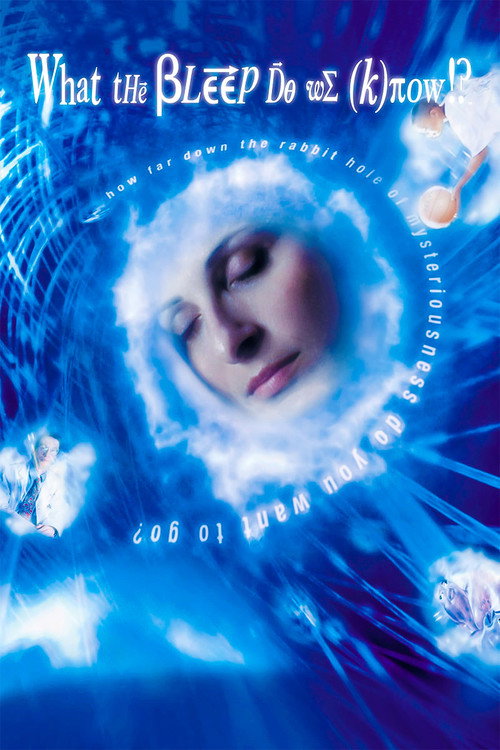
What the #$*! Do We (K)now!?2004
A provocative, unconventional doc-drama hybrid that questions the observer effect and quantum mechanics through animation and narrative. Visually inventive and genuinely weird.
But It conflates quantum physics with consciousness and spirituality in ways most physicists find irresponsible. Slips into pseudoscience territory.
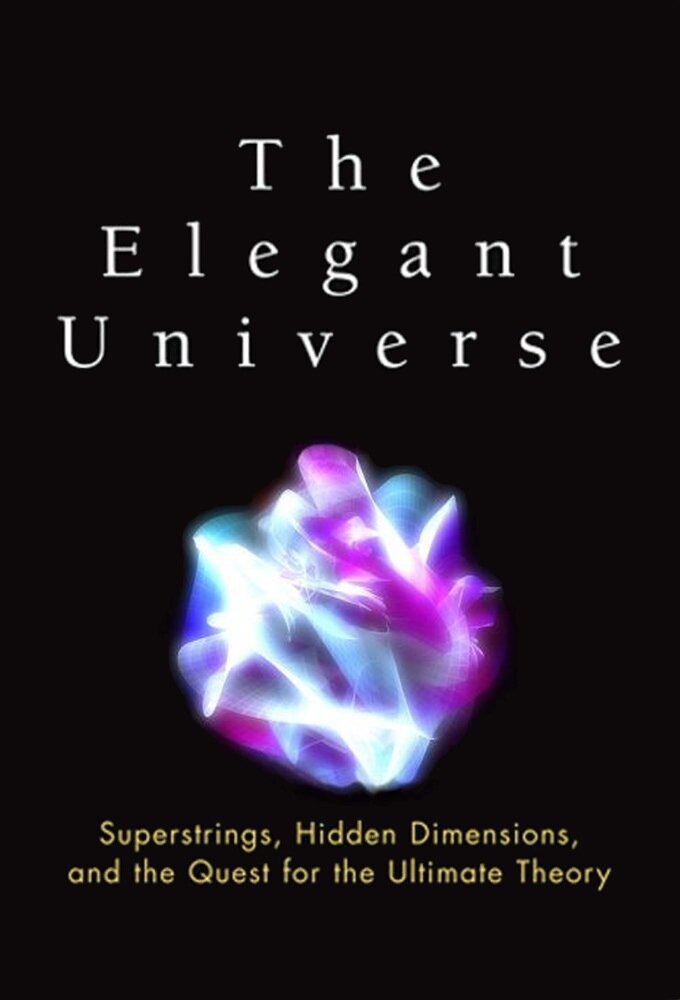
The Elegant Universe2003
Brian Greene again, this time exploring string theory. High production values and genuine attempts to make the invisible visible through metaphor and animation.
But String theory itself remains speculative and deeply contested. Some of Greene's visualizations oversell confidence where physicists have doubts.
The Holy Mountain1973
Both challenge the assumption that we understand reality through accepted frameworks—one through cosmology, one through spirituality. Both ask what we've missed by accepting the official story.
Alejandro Jodorowsky's surrealist spiritual odyssey shot on 70mm. Audacious, visually overwhelming, thematically about enlightenment and cosmic truth through symbol and sensation rather than argument.
But Bizarre, challenging, occasionally grotesque, with no conventional narrative. If you need plot clarity and rational progression, this will frustrate you profoundly.

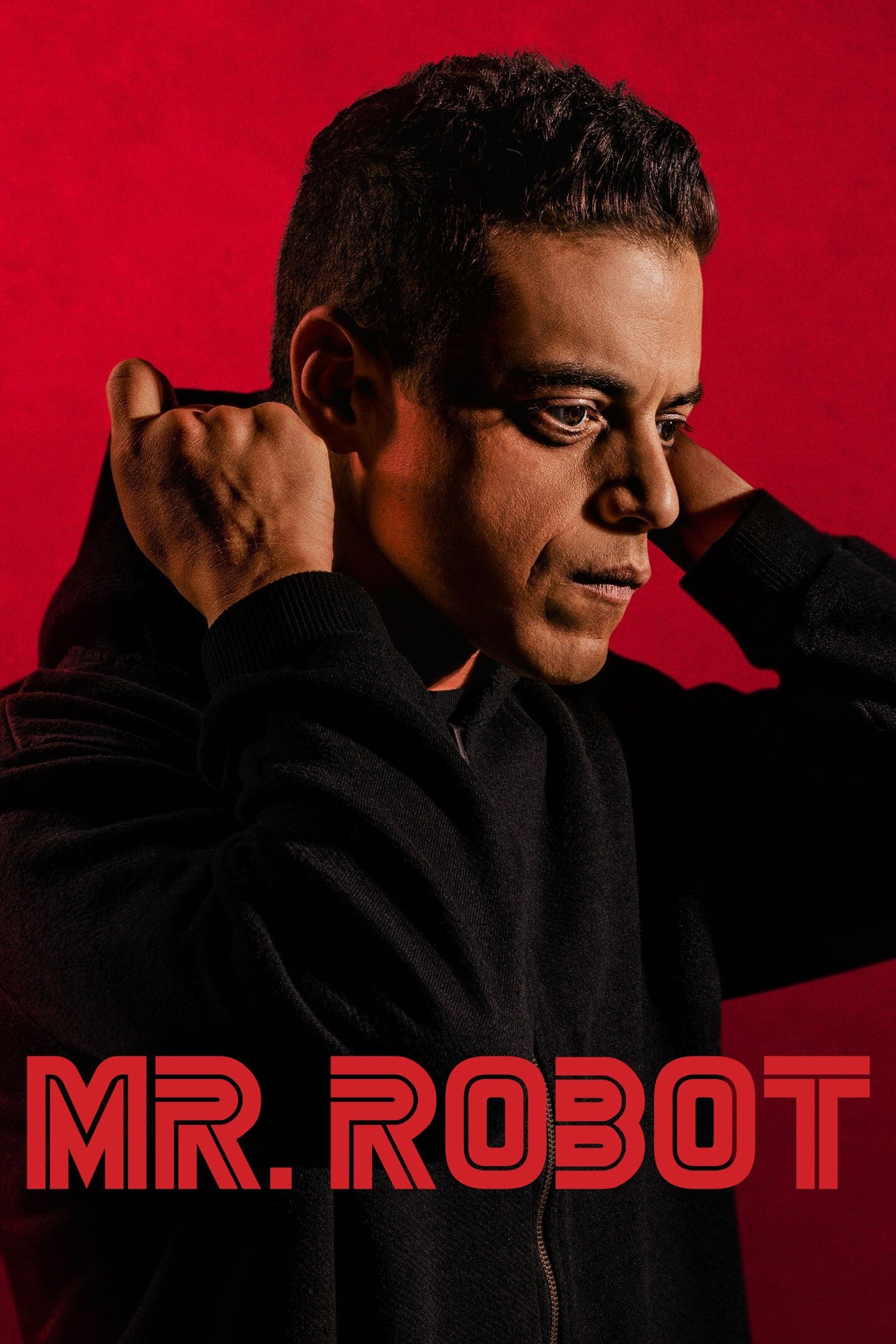
Mr. Robot2015
Both share a structural obsession with challenging what you think you know. The Principle questions cosmological consensus; Mr. Robot questions narrative consensus and institutional truth. Both make you distrust the frame you're looking through.
A psychological thriller about systemic corruption and hidden architectures, told through a narrator whose reliability keeps fracturing. Season one is a masterclass in unreliable perspective and hidden order. Visually and narratively inventive.
But Increasingly dark and complex; the show's technical sophistication can overwhelm the human story. Later seasons divide even devoted viewers.
People
Cast
 Kate MulgrewNarrator
 Michio KakuHimself
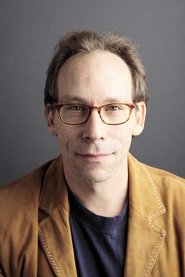 Lawrence KraussHimself
 Charissa SaverioHologram
- Julian BarbourHimself
- Robert J. BennettHimself
- John BylHimself
- Bernard J. CarrHimself
- George F.R. EllisHimself
- John HartnettHimself
- Ron HatchHimself
- Martin SelbredeHimself
Directing
- Katheryne ThomasDirector
- KT KentFirst Assistant Director
Writing
- Rick DeLanoWriter
Production
- Brian W. OberholzerAssociate Producer
- Robert SungenisExecutive Producer
- Richard K. DelanoProducer
- Amanda ThomasProduction Accountant
- Martin J. LuttkusProduction Accountant
- Amarakvati Murphy LyProduction Assistant
- Anthony PietromonacoProduction Assistant
- Rebecca HawkinsProduction Assistant
- Sequoia SierraProduction Assistant
- Michel WindtProduction Office Coordinator
- Kathey LevittResearcher