
Film
Zeitgeist: The Movie
A 2007 documentary collage that mixes archival footage, esoteric speakers, and dense reasoning to argue that major historical events—from the Nativity to 9/11—follow patterns of deliberate manipulation. It's provocative and maximalist, designed to unsettle. For viewers hungry for alternative frameworks and willing to sit with discomfort. Not entertainment; confrontation.
Should you watch it?
Watch it if you like a fast, scrappy essay film that flings provocative claims and wants you to argue back, especially if archive riffs from Carlin and Hicks appeal.
Skip it if you need claims backed by careful sourcing, since the film leans on sweeping assertion and its arguments are widely disputed by historians and investigators.
What it asks of you: Just under two hours of rapid montage, dense voiceover and archive clips with little breathing room, so keep your full attention and a willingness to fact-check as you go.
Not sure? Find tonight's pick in a minute.
If you liked this
JFK1991
Stonewalled investigation, forensic doubt about official narratives, baroque editing that mirrors paranoia itself. Oliver Stone's masterpiece of formal ambition married to conspiratorial thinking. Riveting even when you don't believe it.
But Three hours of sometimes thinly supported speculation presented as moral certainty. The film conflates plausibility with proof in ways that can feel manipulative.
The Century of the Self2002
Adam Curtis's four-part meditation on how power operates through desire, consent, and psychological manipulation. Rigorous, visually hypnotic, uses archive to show how modern control is often invisible. Changes how you see advertising and politics.
But Deliberately ambiguous and abstract. Doesn't conclude; leaves you dizzy. Some threads feel overconnected in retrospect.
Loose Change2005
The ur-text of post-9/11 skepticism: technically incompetent but earnest, made by kids with a camera and convictions. Fascinating artifact of how doubt spreads, regardless of merit. Understand the thing Zeitgeist was reacting to and improving upon.
But Poor production values. Arguments often rest on misread evidence and rhetorical sleight of hand. Watching it feels like intellectual junk food, and not in a fun way.
Not sure tonight? Get a pick in a minute, starting from Zeitgeist: The Movie
The wildcard
Something you would not have found on your own.
Synecdoche, New York2008
Both treat the search for hidden meaning as a kind of madness that can be creative or destructive depending on your angle. Both ask whether seeing the pattern is enlightenment or breakdown.
Kaufman's film about a theater director building a reproduction of reality inside a warehouse, unable to distinguish between performance and life. A parable about how we construct and become trapped in narratives. Formally dizzying, emotionally devastating. It's about the same disease Zeitgeist has—the need to map everything, find the pattern, prove the hidden truth.
But Deliberately obscure and frustrating. Three hours of depression and confusion. No answers offered. Requires multiple viewings to parse what's literal.

More like this (7)
A Brief History of Time1991
Errol Morris filming Stephen Hawking explaining the universe—cosmology, mortality, whether God exists. Meditative and visually inventive. Proves that documentary can be about ideas rather than exposés or plot. Pure intellectual stimulus.
But Slow. Requires concentration. Hawking's ideas are genuinely difficult; no dumbing down. Not for background viewing.
The Power of Nightmares: The Rise of the Politics of Fear2004
Curtis again, this time on how political fear is constructed and deployed. Traces neoconservatism and jihadism as parallel myths. Sophisticated, unsettling, makes you distrust the architecture of modern news. Essential for understanding post-9/11 thinking.
But Dense and demanding. Curtis's elliptical method can feel more suggestive than conclusive. Some viewers find his fatalism depressing.
Wag the Dog1997
Satire about a spin doctor and Hollywood producer manufacturing a war to distract from scandal. Prescient about media manipulation, darkly funny, entertainingly cynical. Shows how easily narrative trumps fact in the attention economy.
But The satire is broad and obvious now. Dated production feels lightweight compared to the real paranoia it's mocking.
The Social Dilemma2020
Tech insiders explain how algorithms shape reality, fragment consensus, and make conspiracy easier to spread. More recent, more accessible than Curtis, directly relevant to how someone encounters Zeitgeist today. Documentary-drama hybrid keeps you engaged.
But Occasionally sanctimonious. Doesn't fully grapple with why people find these narratives psychologically comforting. Some solutions proposed are naive.
Manufacturing Consent: Noam Chomsky and the Media1992
Chomsky and Herman's propaganda model applied to real cases. Rigorous media criticism with genuine evidence. If you're drawn to Zeitgeist's distrust of institutions, this is the intellectually serious version. No mysticism; pure analysis.
But Can feel didactic and repetitive. Chomsky is presented as oracle rather than questioned. Left-wing pieties sometimes stand in for argument.
They Live1988
Carpenter's sci-fi B-movie about hidden messages and invisible control. Works as both fun action film and allegory about ideology. Campy but smart. The anti-consumption politics feel lived-in rather than imposed. Pure cinema.
But Hokey special effects. Pro-wrestling subplot is genuinely bad. Allegory can overshadow character and story.

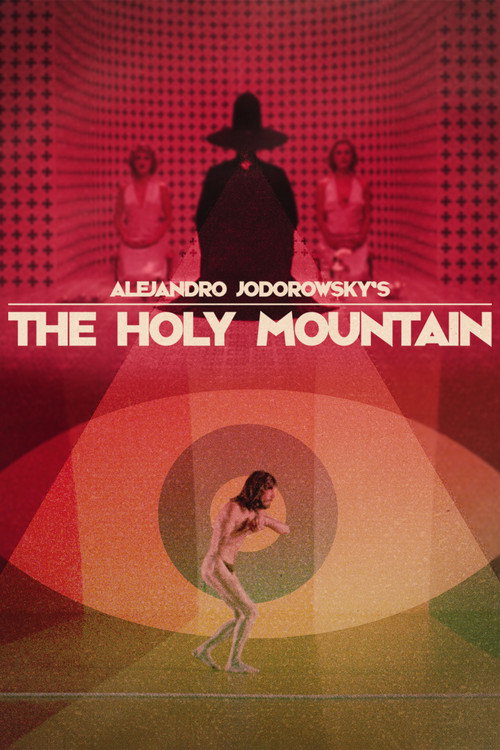
The Holy Mountain1973
Both films are driven by the conviction that hidden patterns underlie reality and that assembling images of them can produce enlightenment or revelation. Both worship meaning-making itself, regardless of whether the meaning holds up. Both are visually maximalist attempts to short-circuit the rational mind.
Jodorowsky's surrealist spiritual quest: a man climbing a mountain toward enlightenment, encountering symbols, rituals, and esoteric imagery. Visually insane, deeply committed to its own logic, utterly uncompromising. Captures the *feeling* of seeing patterns everywhere and believing you're close to truth. Mystical rather than rational, but same hunger.
But Deliberately incoherent. Gross-out imagery. Three hours of accumulated strangeness with no payoff. Religious appropriation and occult tourism. Requires tolerance for pretension and discomfort.
People
Cast
 Chögyam TrungpaSelf (voice) (archive sound)
- Jordan MaxwellSelf (voice) (archive sound)
 George CarlinSelf (voice) (archive sound)
 Bill HicksSelf (voice) (archive sound)
- David Ray GriffinSelf (archive footage)
 Joseph CasaliggiSelf (archive footage)
Recommended by
The Money Masters, Trumpland: Kill All Normies, Schooling the World: The White Man's Last Burden, Money as Debt