
Film
Woman in the Dunes
A monochrome nightmare of sand and skin, Teshigahara's 1964 film traps an amateur entomologist in a sandpit village with a widow whose only labor is shoveling sand back from the dunes. Equal parts erotic fable, survival thriller and existential parable, it moves at a crawl but never lets go — hypnotic, suffocating, and strangely tender by the end.
If you liked this
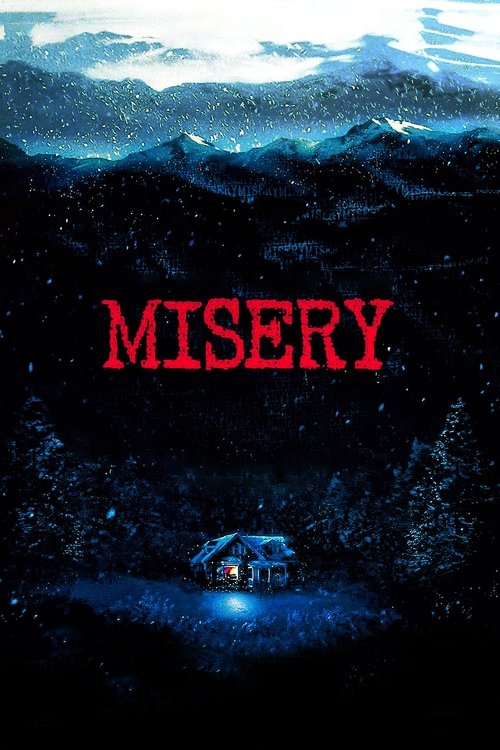
Misery1990
Kathy Bates terrorizes a bedridden novelist in a snowbound cabin, turning captivity into a two-hander of wit and menace — pure pulp craftsmanship with a genuinely unnerving performance at its centre.
But It's slicker and funnier than Teshigahara's film, with none of the erotic ambiguity — a thriller, not a meditation.
Room2015
A mother and son build an entire world inside four walls after abduction, and the film asks what freedom even means once you've adapted to captivity — tender, harrowing, and quietly hopeful.
But The back half shifts to the outside world and loses some of the claustrophobic intensity that made the first hour so gripping.

The Vanishing1988
A man's obsessive search for his abducted girlfriend leads him into the orbit of a captor whose calm, methodical menace rivals anything in Dunes — dread built from patience, not jump scares.
But The pacing is deliberately cold and the final act is bleak enough to leave a mark for days.
The wildcard
Something you would not have found on your own.
The Wages of Fear1953
Teshigahara's fable of grinding sand-labor as a metaphor for existence has a direct ancestor here — Clouzot's doomed truckers face nitroglycerin instead of dunes, but both films strip men down to pure physical toil against an indifferent, punishing landscape and ask what's left of a person once survival is the only motive.
Four desperate men drive trucks of nitroglycerin across mountain roads for money they'll probably never spend — unbearable tension sustained for two hours, and one of the bleakest visions of labor and fate ever filmed.
But It's in French and Spanish with subtitles, moves at a deliberate pace, and offers zero comfort — a punishing watch by design.

More like this (8)
Persona1966
Two women, one isolated house, and a psychological merging so intense it borders on horror — Bergman's austere formal rigor makes a fascinating companion to Teshigahara's sand-scoured intimacy.
But Almost plotless and deliberately opaque, it demands patience and offers few easy answers by the end.

Oldboy2003
A man is imprisoned for no reason he understands, then released into a plot that turns captivity into a puzzle box of vengeance — visceral, operatic, and far more violent than Dunes.
But The tonal register is pulpier and more baroque; anyone hoping for Teshigahara's restraint will find this excessive.

The Shining1980
Isolation curdles into madness as a family holes up in an empty hotel for the winter — Kubrick's control of space and dread turns confinement itself into the horror.
But Supernatural elements and Kubrick's chilly formalism make it a very different animal from the intimate, earthbound dread of Dunes.

Cast Away2000
Tom Hanks strips away everything but survival instinct on a desert island, and the film's real subject is what happens to a man's mind once the struggle to live becomes his whole identity.
But It's a big, sentimental studio film with a score and a rescue arc — a warmer, more forgiving universe than Teshigahara built.

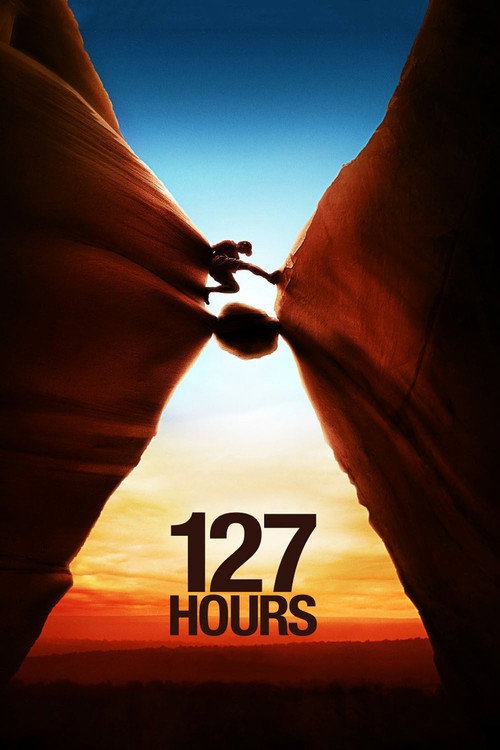
127 Hours2010
Danny Boyle turns a man trapped under a boulder into a kinetic, hallucinatory ordeal — pure physical entrapment rendered with restless visual invention rather than stillness.
But It's fast and flashy where Dunes is slow and suffocating; the style may overwhelm the horror of the situation for some.
Groundhog Day1993
The premise sounds nothing alike, but underneath the comedy is the same question Dunes asks — what happens to a person forced to repeat the same day's labor forever, and how do they make peace with it.
But It's a mainstream comedy with a happy ending, miles from the existential dread and ambiguity of Teshigahara's film.

The Prisoner1967
Swap the sandpit for a pastel seaside village and you get this British series — a man abducted and held not for his labor but his compliance. Both works use captivity to interrogate identity and complicity, asking how much resistance survives before adaptation becomes surrender.
A secret agent wakes up in a beautiful, surreal village he can't leave, interrogated nightly by masked authorities who want to know why he resigned — paranoid, stylish, and stranger with every episode.
But Sixties production values, allegory laid on thick, and a final episode so bizarre it's divided fans for over fifty years.

Cube1998
Take the sandpit's logic — a hostile environment that reshapes morality and strips people down to instinct — and blast it into cheap, gory sci-fi horror. Where Teshigahara is patient and erotic, Cube is claustrophobic and nasty, proving the trapped-and-tested premise works just as well as B-movie pulp.
Strangers wake up in a shifting maze of booby-trapped cubes with no memory of how they got there — a lean, nasty B-movie that turns captivity into a moral pressure cooker.
But Low-budget effects and thin characterisation show; it's more interested in shock and mechanics than the psychological depth Dunes achieves.

People
Cast
 Eiji OkadaEntomologist Niki Jumpei
 Kyôko KishidaThe Woman
 Kōji MitsuiVillage Elder
- Hiroko ItōEntomologist's Wife
 Sen YanoVillager
 Hideo KanzeVillager
- Ginzô SekiguchiVillager
- Kiyohiko IchiharaVillager
- Hiroyuki NishimotoVillager
Directing
- Isao FujisawaAssistant Director
- Hiroshi TeshigaharaDirector
Production
- Kiichi IchikawaProducer
- Tadashi ÔnoProducer
Recommended by
Robinson Crusoe on Mars, Kuroneko, Ugetsu, Onibaba, Robinson Crusoe, The Wind