
Film
News from Home
- Slow-burning
Chantal Akerman films the mundane streets of New York—storefronts, traffic, pedestrians, waiting—while reading her mother's letters aloud. It's a portrait of distance and longing, where the ordinary city becomes a mirror for emotional distance. Slow, meditative, and deliberately estranged. For viewers who find meaning in what films usually discard.
Should you watch it?
Watch it if you love films where static, patient images of an empty city carry a quiet ache, and where the emotion lives in what is not said rather than in plot or performance.
Skip it if you want a story that moves, characters who talk to each other, or anything resembling a conventional narrative; the film is mostly still shots and one voice reading letters.
What it asks of you: It runs about ninety minutes and asks you to sit with long, unhurried takes and a single spoken voice, letting the silences and the city's indifference do the work.
Not sure? Find tonight's pick in a minute.
If you liked this
Sans Soleil1983
Chris Marker's essay-film braids travel footage, memory, and voice into something that feels like thinking itself. It shares Akerman's faith that cinema need not perform or explain to move you.
But Ninety minutes of digressions and philosophical tangents. The narrative refuses to cohere. Patience is non-negotiable.

Jeanne Dielman, 23, quai du Commerce, 1080 Bruxelles1976
Akerman's masterpiece: three days in a woman's routine of cooking, cleaning, sleeping. It finds the invisible labour and the quiet power in what the world considers nothing. Essential viewing.
But Two hundred forty minutes. The camera barely moves. If you expect drama or plot, you will struggle.

Stalker1979
Tarkovsky's hypnotic science-fiction film moves at Akerman's pace, trusting long takes and silence. Both artists believe cinema's real power is contemplative, not explanatory.
But Slow burn that some find boring. Metaphysical rather than plot-driven. Nearly three hours.

Not sure tonight? Get a pick in a minute, starting from News from Home
The wildcard
Something you would not have found on your own.
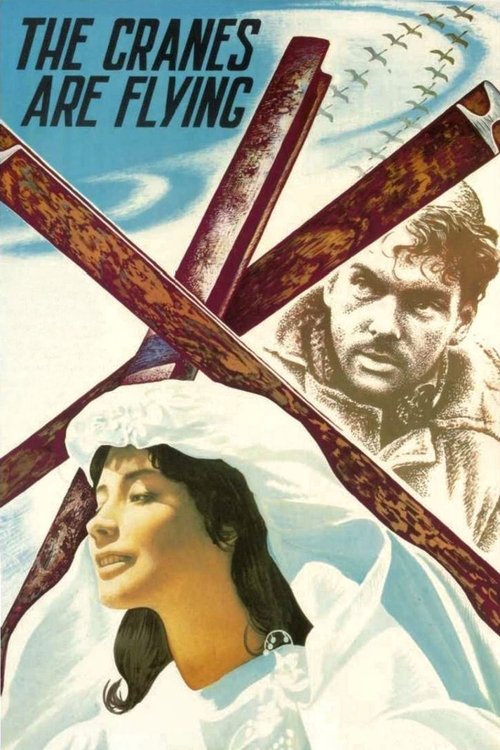
The Cranes Are Flying1957
Both films treat distance—geographical and emotional—as their true subject. Letters and images become stand-ins for presence.
Mikhail Kalatozov's post-war romance is a visual feast—movement, depth, landscape—yet it's fundamentally about absence and longing, the gap between people who love each other. Emotional immensity within restraint.
But A Soviet film from 1957. The colour is sometimes garish by modern taste. It's romantic in earnest, which can read as sentimental.
More like this (5)
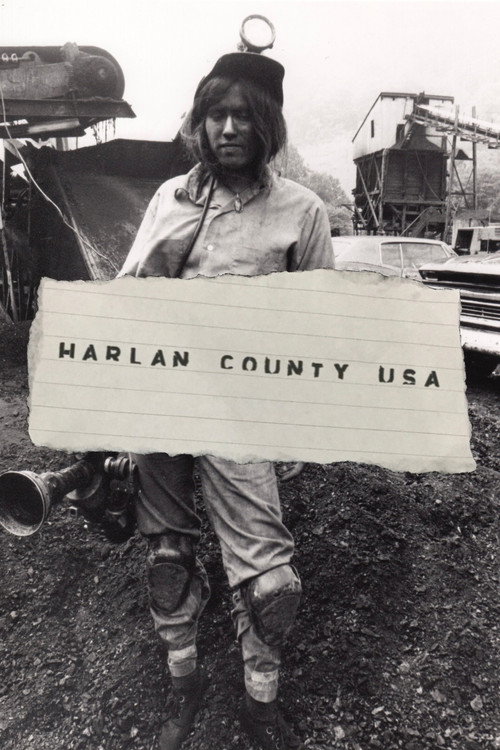
Harlan County U.S.A.1976
Barbara Kopple embeds herself in a Kentucky coal miners' strike. Like Akerman, she observes without voiceover artifice, letting daily struggle and love accumulate into something devastating.
But Gritty documentary realism. Violence and hardship are not softened. Regionally specific in ways that may feel distant.
La Haine1995
Mathieu Kassovitz trains an unflinching, lyrical camera on Paris's outer suburbs and three young men. It shares Akerman's refusal to look away from the unglamorous real.
But Bleak social realism. The ending offers no catharsis. The film is angry in ways that can be exhausting.

The Ballad of Little Jo1993
Maggie Greenwald's spare, elegiac western follows a woman who lives as a man in the frontier. It has Akerman's interest in solitude and the distance between self and presentation.
But Deliberately anti-spectacular. The cinematography is austere. It's a character study, not an adventure.

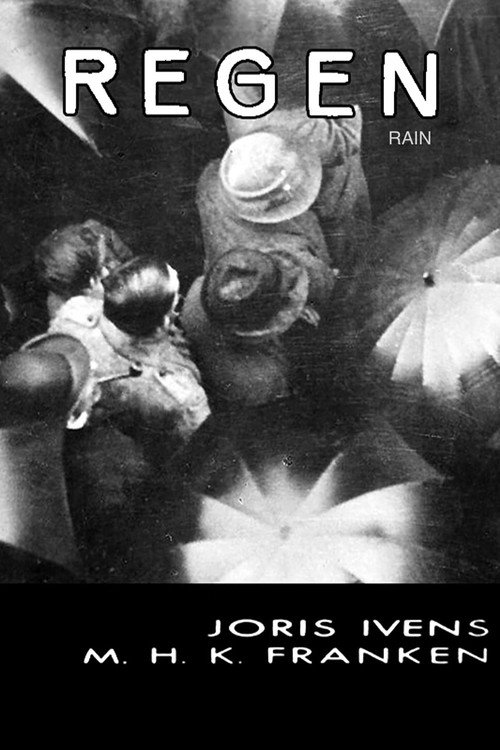
Rain1929
Joris Ivens's experimental city symphony finds poetry in urban life—rain on pavement, reflections, crowds. An ancestor of Akerman's aesthetic: the ordinary made luminous through patient looking.
But Silent, twelve minutes, avant-garde. It may feel quaint or impenetrable to modern viewers accustomed to narrative cinema.
The Act of Killing2012
Both are formally experimental works that use the camera's presence to expose something hidden—psychological truth or historical denial—that couldn't surface without the filmmaker's intervention.
Joshua Oppenheimer's documentary asks Indonesian death-squad leaders to stage dramatizations of their own killings. Formally daring and morally complex—it questions what documentary can and should do, as Akerman did.
But Extremely disturbing. Real violence is discussed and enacted. The film's ethics are deliberately ambiguous. Genuinely difficult to watch.

People
Cast
 Chantal AkermanSelf - Letter Reader (voice)
Directing
- Epp KotkasAssistant Director
- Paule ZadjermannAssistant Director
- Chantal AkermanDirector
Writing
- Chantal AkermanWriter
Production
- Guy CavagnacCo-Producer
- Liliane de KermadecCo-Producer
- Alain DahanProducer
Recommended by
Things to Come, Taste of Cherry, Masculin Féminin, Drifting Clouds, The Search, Zama, 24 Frames, Satantango, Vertical Roll, The Eternal Frame, The Steel Helmet, The Pleasure Garden, The Grey Fox, King Lear, Wild River, Geronimo: An American Legend, Three Brothers, Pickpocket, A Thousand Years of Good Prayers, Lives of Performers, Chronicle of Anna Magdalena Bach, The Cow, London River, Young Winston, Letters from Marusia, Gervaise, The Mayor of Casterbridge, At the Edge of Darkness (Song of the Earth Part 1), Heartland, The Merchant of Four Seasons