
Film
Shame
Steve McQueen's cold, exacting portrait of a Manhattan executive whose life is organised entirely around concealing a sex addiction, until his sister's arrival collapses the walls he's built. Explicit but never titillating, sparse on dialogue, drenched in loneliness. A tough, formally rigorous watch for people who want cinema that stares at pain without flinching or explaining it.
If you liked this
Hunger2008
McQueen and Fassbender's first collaboration, another unflinching study of a body pushed to extremes—here it's Bobby Sands' hunger strike, filmed with the same patient, punishing camera and refusal to explain.
But Long static takes and near-total silence for stretches; it demands a patience some viewers simply won't have.

A Single Man2009
Colin Firth as a grieving, immaculately controlled man moving through one devastating day—same aesthetic of beautiful surfaces hiding collapse, same interest in how men perform composure to survive.
But More elegiac than raw; if you wanted Shame's visceral discomfort, this is quieter and more painterly.

Requiem for a Dream2000
Aronofsky's addiction nightmare shares Shame's interest in bodies as battlegrounds and lives narrowing to a single compulsive need, shot with hallucinatory intensity.
But Far more stylised and punishing—rapid editing and a relentless score some find exhausting rather than illuminating.

The wildcard
Something you would not have found on your own.
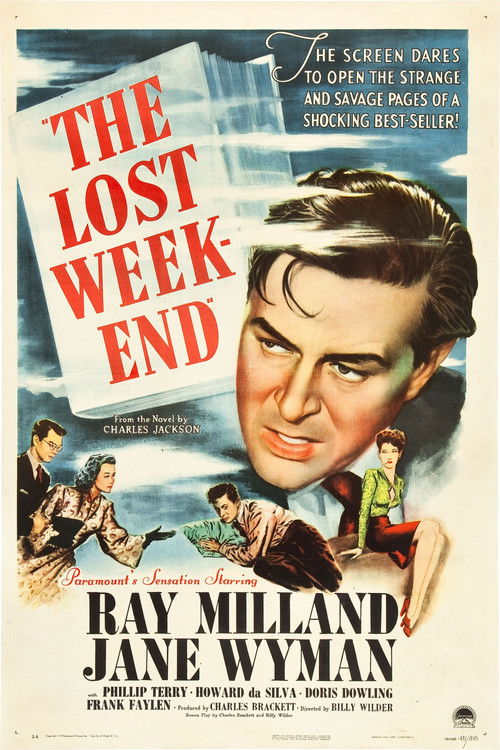
The Lost Weekend1945
Both strip a 'shameful' compulsion of glamour and moralising, showing addiction as a closed loop the person can't talk their way out of—Wilder did it for drink in 1945 with the same clinical nerve McQueen brings to sex.
Billy Wilder's portrait of an alcoholic writer's four-day binge was scandalous in its day for treating addiction as illness rather than moral failing—decades before Shame did the same for sex.
But Its Production Code-era restraint and tidier ending feel dated next to Shame's refusal to resolve anything.
More like this (7)
Leaving Las Vegas1995
Nicolas Cage drinking himself to death alongside Elisabeth Shue's sex worker is another study of self-destruction and the impossibility of intimacy once addiction takes over.
But Bleaker and more openly romantic-tragic in structure; less formally cold, more heartbroken than clinical.

Blue Valentine2010
A marriage unravels in scenes cut between courtship and collapse, sharing Shame's fascination with intimacy as something people can't sustain no matter how badly they want it.
But It's a breakup film, not an addiction film—closer to romantic tragedy than psychological case study.

Thanks for Sharing2013no page yet
A gentler, more mainstream take on sex addiction recovery, following several people in a 12-step program with warmth and occasional humour Shame never allows itself.
But Considerably softer and more redemptive; if you want Shame's unresolved bleakness, this will feel like a compromise.
The Machinist2004
Christian Bale's skeletal insomniac unravels from guilt and self-punishment in a film obsessed with what the body does when the mind refuses to face itself.
But Tips into psychological thriller territory with a twist ending, a different genre engine than Shame's plotless study.

Half Nelson2006no page yet
Ryan Gosling's addicted teacher hides his habit behind competence and charm, a smaller, quieter cousin to Brandon's compartmentalised double life.
But Much lower-key and more hopeful in tone; lacks Shame's formal intensity and explicit confrontation.
Weiner2016
Where Shame imagines the private mechanics of compulsion, Weiner shows the same self-destructive pattern happening to a real man in full public view—same shame, same repetition, radically different exposure.
This documentary follows Anthony Weiner's mayoral campaign collapsing in real time under the weight of his own compulsive behaviour—self-sabotage caught on camera with nowhere to hide.
But It's political and often darkly funny rather than tragic; the compulsion here plays out as public farce, not private anguish.

Secretary2002
Both films ask what happens when sexual desire becomes the organising secret of someone's life—Secretary just answers the question with tenderness and a happy ending instead of collapse.
A dark romantic comedy about a submissive/dominant relationship built entirely around desire its characters are embarrassed to admit they want—shame reframed as something that can, strangely, be survived together.
But It's genuinely funny and ends in something like happiness, a tonal 180 from Shame's bleakness that might feel jarring right after.

People
Cast
 Michael FassbenderBrandon
 Carey MulliganSissy
 James Badge DaleDavid
 Nicole BeharieMarianne
 Lucy WaltersWoman on Subway Train
 Mari-Ange RamirezAlexa
 Alex ManetteSteven
 Hannah WareSamantha
 Elizabeth MasucciElizabeth
 Rachel FarrarRachel
 Loren OmerLoren
 Lauren TyrrellHostess
Directing
- Steve McQueenDirector
- Atilla Salih YücerFirst Assistant Director
- Eva Z. CabreraScript Supervisor
- Jolian BlevinsSecond Assistant Director
- Cedric VaraSecond Second Assistant Director
Writing
- Abi MorganScreenplay
- Steve McQueenScreenplay
Production
- Meredith LippincottArt Department Production Assistant
- Stephanie BlackwoodAssistant Production Coordinator
- Avy KaufmanCasting Director
- Bergen SwansonCo-Producer
- Peter HampdenExecutive Producer
- Robert WalakExecutive Producer
- Tessa RossExecutive Producer
- Tim HaslamExecutive Producer
- Fiona MorhamHead of Production
- Tracey JosephsHead of Production
- David VelascoLocation Manager
- Neil CairnsPost Production Accountant
- Siobhan BoyesPost Production Coordinator
- Emile ShermanProducer
- Iain CanningProducer
- Kaelan Kelly-SordeletProduction Assistant
- Charlie DibeProduction Coordinator
- Danielle BlumsteinUnit Production Manager
Recommended by
Hunger, Owning Mahowny, Leaving Las Vegas, Closer, Nymphomaniac: Vol. II