
Film
Sahib Bibi Aur Ghulam
A lush Bengali melodrama about desire, neglect, and social decay in 19th-century Calcutta. A young servant falls for his employer's neglected wife while the dissolute Zamindar destroys himself with drink and indulgence. Guru Dutt's last film is gorgeously shot, achingly romantic, and suffused with the melancholy of a world collapsing under its own excess. For anyone who loves cinema as visual poetry.
Should you watch it?
Watch it if you love slow-burning melodrama where decaying grandeur and a lonely woman's quiet unraveling carry more weight than plot, and songs drift in like memories.
Skip it if you want brisk storytelling, because at about two and a half hours it lingers in ornate rooms and rarely hurries, which can test restless viewers.
What it asks of you: Settle in for a long, unhurried sitting: the pace mirrors a household drifting, with stretches of mood and music before the drama tightens around the heroine.
Not sure? Find tonight's pick in a minute.
If you liked this
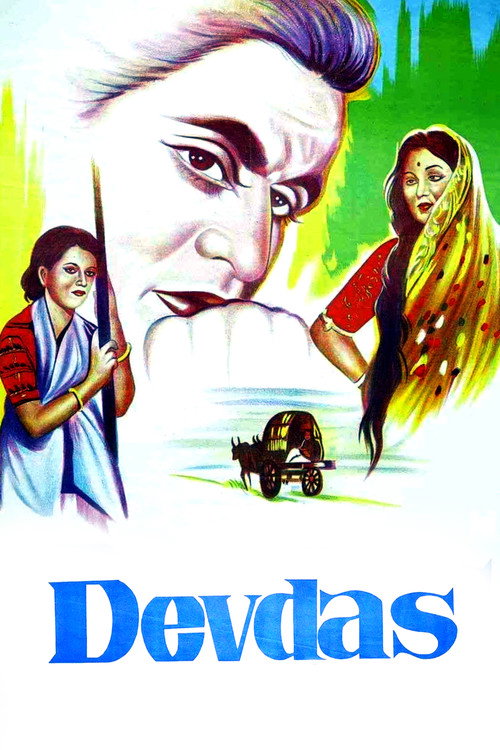
Devdas1955
Bimal Roy's sumptuous take on Saratchandra Chattopadhyay explores similar terrain: a man undone by passion and alcohol in colonial Bengal. Dilip Kumar's performance is raw vulnerability, and the black-and-white cinematography rivals Sahib Bibi Aur Ghulam's beauty.
But Three-and-a-half hours of unrelenting tragedy can feel punishing. The fatalism may read as dated rather than moving.
The Housemaid2010
Kim Ji-woon's remake of the 1960 Korean classic shares the servant's-eye view of household dissolution and desire. A taut psychological thriller that captures similar tensions of class, seduction, and domestic rot, but with a modern edge.
But It's a horror film, and far more cynical. If you're seeking Guru Dutt's romantic melancholy, this will feel cold.

Jai Bhim2021
Like Sahib Bibi Aur Ghulam, it examines the machinery of exploitation through a deeply felt human story. Suriya's performance has the same wounded dignity as Guru Dutt's, and the film earns every one of its tears without sentimentality.
But It is devastating and angry. There is very little beauty offered as consolation here.

Not sure tonight? Get a pick in a minute, starting from Sahib Bibi Aur Ghulam
The wildcard
Something you would not have found on your own.
Charulata1964
Both are intimate examinations of desire and class collapse in Bengali households. Ray made Charulata in direct artistic dialogue with the melodrama of Guru Dutt's generation, taking the same emotional architecture and stripping it to its essence.
Satyajit Ray's greatest film: a Bengali domestic tragedy about a wife whose intellectual awakening becomes entanglement with her brother-in-law. Shot in luminous black and white, it is cinema about desire as it lives in the body—glances, silences, the unbearable nearness of wrong people. It makes Sahib Bibi Aur Ghulam's central triangle feel fresh.
But It is subtle to the point of invisibility. If you need plot momentum or explicit emotion, you will find it glacial.

More like this (8)
Pakeezah1972
Kamal Amrohi's final film is Sahib Bibi Aur Ghulam's spiritual sibling: gorgeously composed, deeply tragic, built on class collision and thwarted love. Meena Kumari is luminous, and the production design is obsessive.
But The courtier-heroine narrative may feel exploitative to modern viewers. The film is also notoriously troubled in production—you sometimes feel it.

Daisies1966
Věra Chytilová's anarchic Czech New Wave film also features young women adrift in decaying institutional spaces. It offers the same tension between beauty and ruin, youth and corruption, but through a completely different (and iconoclastic) lens.
But It is surreal, chaotic, and deliberately anti-narrative. If you want plot or character arcs, you will not find them.

Pather Panchali1955
Satyajit Ray's films move through similar Indian landscapes—rural poverty, urban struggle, family and destiny—with the same humanistic intensity and visual richness. Start with Pather Panchali for maximum overlap in mood and era.
But Each film is between two and three hours. The trilogy will consume your evening entirely. Very slow cinema.

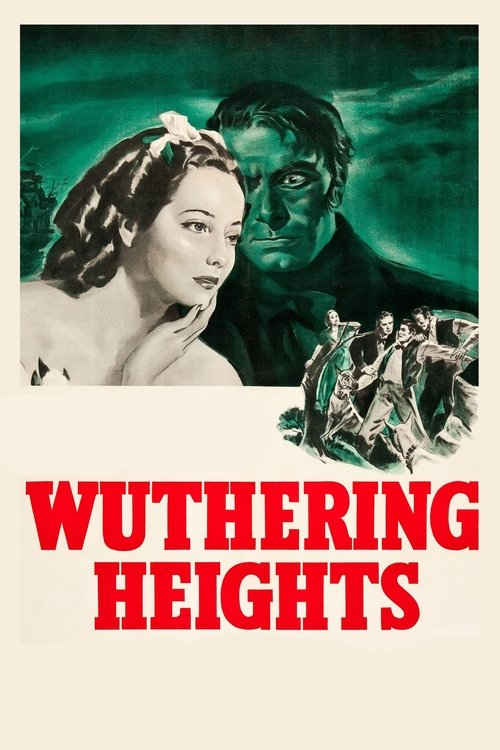
Wuthering Heights1939
Wyler's adaptation channels the same gothic romanticism: class barriers, doomed desire, a protagonist undone by his own nature. Laurence Olivier's Heathcliff shares Guru Dutt's quality of being beautiful and broken.
But It is a very American interpretation of a very English novel. The register is higher, the passion more theatrical.
The Remains of the Day1993
Ivory and Merchant's meditation on duty, desire, and regret within a decaying household. Anthony Hopkins' restrained performance mirrors the longing that Guru Dutt conveys through glances. Same architecture of longing, different century and geography.
But Everything is held in. If you need the emotion stated aloud, it will frustrate you.

Brief Encounter1945
Coward and Lean's study of passion suppressed by circumstance and social constraint. Shot in black and white, built on stolen glances and unfulfilled yearning. The structure—framing device, memory, regret—haunts similarly.
But It is formally quite different from Sahib Bibi Aur Ghulam, and some find it more theatrical than moving.

Tokyo Story1953
Both films are built on absence: what people cannot say to each other. Both find their deepest emotion not in climax but in the texture of daily life and the awareness that happiness has already passed.
Ozu's masterpiece about aging parents visiting their youngest son in postwar Tokyo. It seems utterly different—gentle, comic, structurally simple—but it operates on the same profound wavelength: family as a space of unhealed wounds, love as a thing felt in the spaces between words, beauty found in everyday decay.
But Absolutely nothing happens. The pacing may feel like punishment. Ozu's style requires surrender.

In the Mood for Love2000
Both films argue that desire is most powerful when unconsummated. Wong Kar-wai restages the colonial household melodrama in a modern apartment building, making the prison of social constraint visual and gorgeous and cruel.
Wong Kar-wai's lush Hong Kong neo-noir about two neighbors who discover their spouses are having an affair and fall in love instead. It is Sahib Bibi Aur Ghulam remade in neon and obsessive production design. Shot like a fever dream, it captures the same vertigo of impossible desire and the way beauty becomes unbearable when we cannot touch it.
But It is deliberately artificial and repetitive. Some find it more style than substance. The slowness is intentional and extreme.

People
Cast
 Guru DuttAtulya Chakraborty 'Bhootnath'
 Meena KumariChhoti Bahu
 Waheeda RehmanJaba
 RehmanChotte Sarkar





Directing
- Abrar AlviDirector
- Guru DuttDirector
Writing
- Bimal MitraOriginal Concept
- Abrar AlviWriter
- Bimal MitraWriter
Production
- Guru DuttProducer
Recommended by
Khuda Gawah, Teesri Kasam, Bandhan, Chitralekha, Aaina, Vasantasena, Jaal, Chori Chori, Baazi, Kismet, Howrah Bridge, Sheesh Mahal, Anuradha, Bhabhi, Sohag Raat, Parineeta, Lajwanti, Love Story, Ek-Hi-Rasta, Adalat, Mirza Ghalib, Gundamma Katha, Ratan, Patita