
Film
Libeled Lady
- Screwball comedy
- Light-hearted
A 1936 screwball comedy where a newspaper editor and his fiancée devise an elaborate scheme to discredit a wealthy woman suing them for libel. Built on rapid-fire dialogue, romantic chaos, and four leads who move together like a well-oiled machine, it's endlessly watchable comfort food for anyone who loves banter, mistaken identities, and the peculiar joy of watching beautiful people get thoroughly tangled up.
Should you watch it?
Watch it if you love screwball comedy built on snappy banter, elaborate schemes that keep spiraling, and a battle of wits between two sharp, mismatched people who clearly enjoy each other.
Skip it if you want modern pacing or a story driven by big emotional stakes, since this 1936 film runs on rapid-fire dialogue and polished, old-studio gags rather than sustained feeling.
What it asks of you: It runs under ninety minutes and moves quickly, so it asks you to keep up with fast talk and plot turns, and to settle into a light, breezy rhythm without much darkness.
Not sure? Find tonight's pick in a minute.
If you liked this
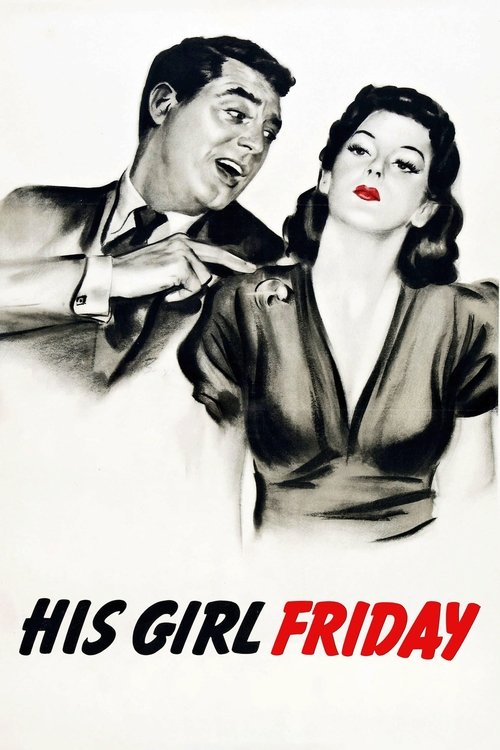
His Girl Friday1940
Newsroom chaos meets romantic comedy with screwball energy that matches Libeled Lady beat for beat. Cary Grant and Rosalind Russell crackle with the same rapid-fire dialogue and will-they-won't-they dynamic that makes the earlier film so rewatchable.
But If the breakneck pace and overlapping dialogue of 1930s screwball wears you out, this one never lets up. It demands your attention.
It Happened One Night1934
The template for romantic comedies built on chemistry and banter rather than sentimentality. Claudette Colbert and Clark Gable prove that watching two people argue their way toward love is endlessly entertaining.
But The romance hinges on gender politics that feel dated. Some moments land awkwardly through a modern lens.

Breakfast at Tiffany's1961
A later entry in the tradition of witty romance and elegant chaos. Audrey Hepburn and George Peppard dance around each other with style, and the New York backdrop gives it a dreamy, sophisticated gloss that Libeled Lady shares.
But It's more of a character study than a plot-driven romp. If you want constant forward momentum, you might find it slower than you'd like.

Not sure tonight? Get a pick in a minute, starting from Libeled Lady
The wildcard
Something you would not have found on your own.
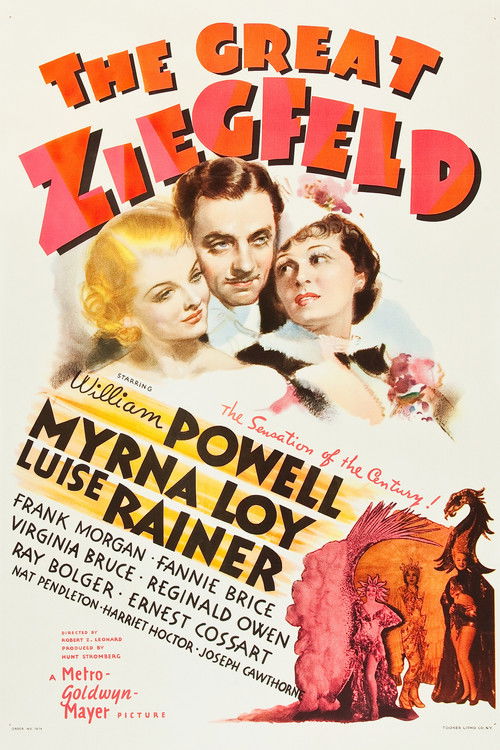
The Great Ziegfeld1936
Both showcase William Powell at the height of his charisma, but one uses it for speed and deception while the other uses it for spectacle and myth-making. They're two answers to what you can do with that particular kind of elegance and magnetism.
Made the same year as Libeled Lady, this is William Powell in an entirely different mode: a sprawling, glamorous biography of a showman, heavy on production numbers and grandeur. Seeing Powell move from the intimate scheming of Libeled Lady to the monumental ambition of this shows his full range.
But At over three hours, it's a commitment. The plot is loose, and the mid-section drags. It's a relic of 1930s Hollywood excess at its most self-indulgent.
More like this (8)
The Philadelphia Story1940
Three perfect actors—Cary Grant, James Stewart, Katharine Hepburn—in a comedy of manners with real bite. The scheme-within-a-scheme structure and rapid pivots between characters mirror Libeled Lady's playful complexity.
But At two hours, it's longer and more interested in character psychology. The comedy is sharper but less anarchic.

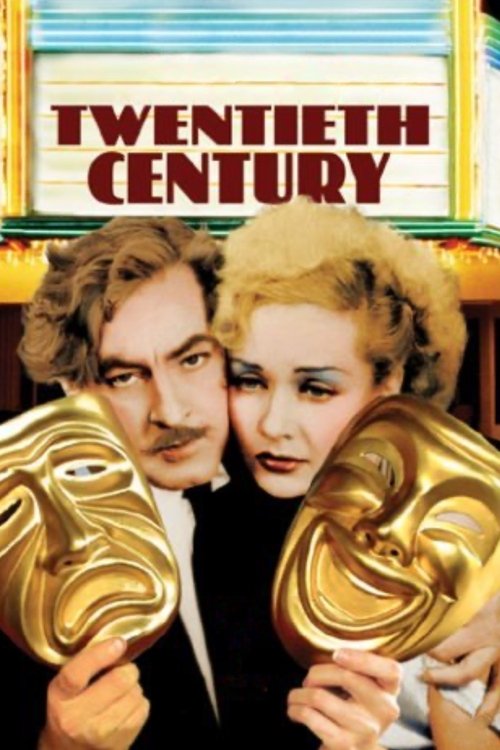
Twentieth Century1934
John Barrymore and Carole Lombard in a screwball sprint about ego, theater, and people who cannot help but perform for each other. The confined setting—a train—makes the chaos even more compressed and delicious.
But Barrymore's theatrical excess is a lot. If you prefer subtlety to broad character work, it will feel overstated.
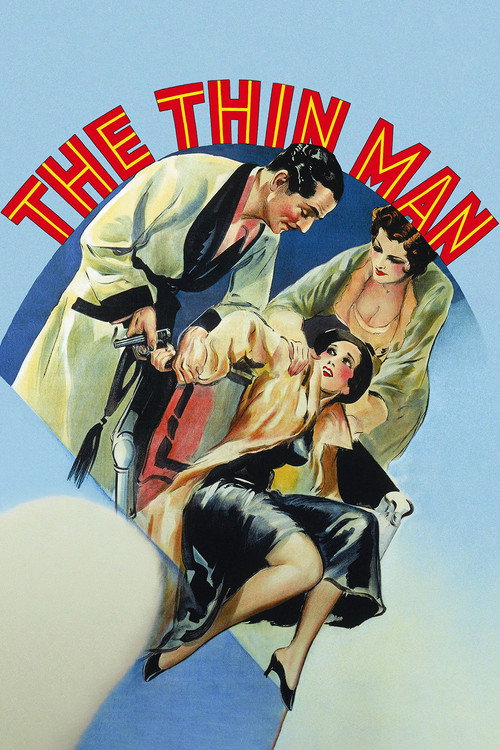
The Thin Man1934
William Powell and Myrna Loy (who appears in Libeled Lady) as a married couple solving a murder while maintaining sophisticated, sexy banter. It's proof that chemistry between leads can carry a film even more than plot.
But The murder mystery is thin; it's really about watching two people flirt. If you need a solid mystery engine, you'll be disappointed.
Singin' in the Rain1952
Gene Kelly, Donald O'Connor, and Debbie Reynolds in a film about Hollywood that uses movement and music the way Libeled Lady uses dialogue. The energy is infectious, the plotting is intricate, and the joy is genuine.
But If you're not interested in musicals, this won't convert you. The dancing is central, not decoration.

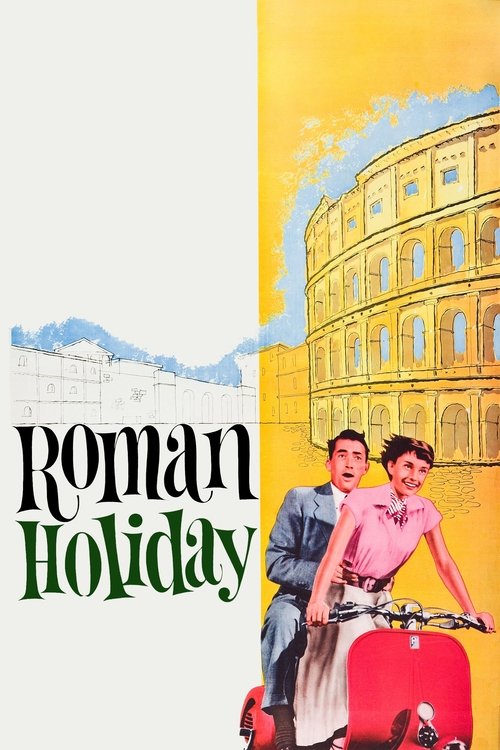
Roman Holiday1953
Gregory Peck and Audrey Hepburn in a romance structured around a deception and a scheme. It has the same lightness and elegance as Libeled Lady, with the added shimmer of Rome and a princess in hiding.
But It's more sentimental and less concerned with comic momentum. The ending prioritizes emotion over laughs.
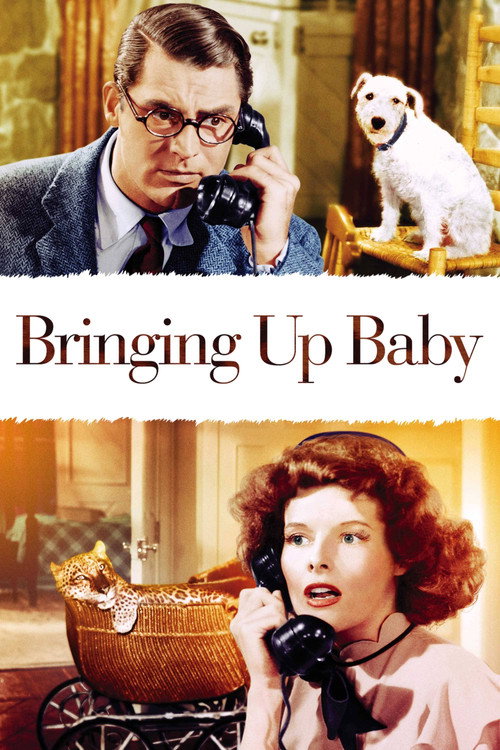
Bringing Up Baby1938
Cary Grant and Katharine Hepburn in peak screwball chaos. An escaped leopard, mistaken identities, and dialogue so fast it sometimes trips over itself. Pure comedic anarchy with real affection underneath.
But The plot is deliberately nonsensical. If you need things to make sense, the escalating absurdity will frustrate you.
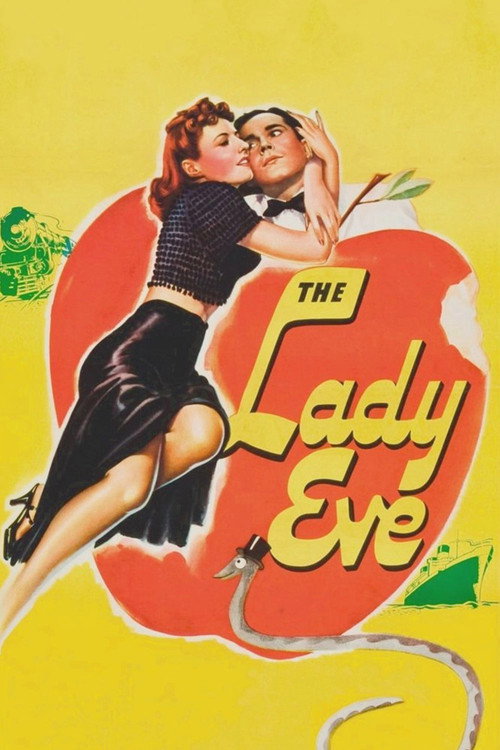
The Lady Eve1941
Both build their entire architecture on a central lie and watch what happens when it starts to unravel. But where Libeled Lady treats the scheme as a game everyone wins, The Lady Eve understands deception as a weapon that wounds.
Preston Sturges' masterpiece pairs Barbara Stanwyck and Henry Fonda in a con-woman plot that shares Libeled Lady's love of schemes, doubled identities, and the erotic charge of people outmaneuvering each other. The dialogue is even sharper, the stakes more personal.
But It's darker and less forgiving. The cruelty underneath the charm might make you uncomfortable in ways Libeled Lady never does.
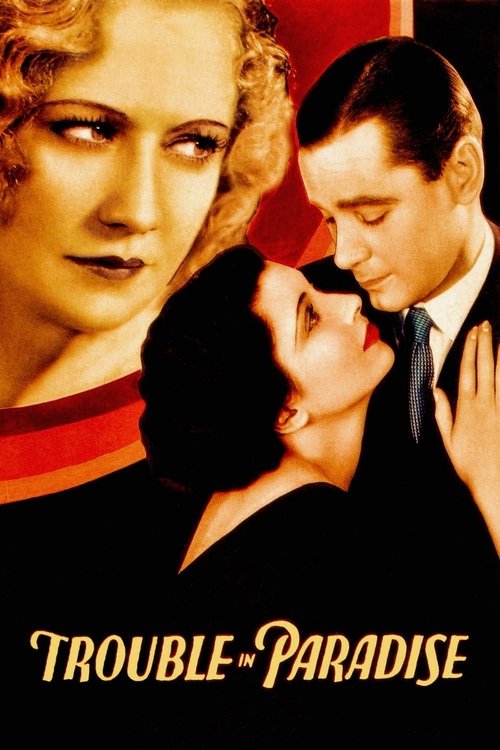
Trouble in Paradise1932
Both films are built on the logic that performance and reality are closer than we admit, and that playing a role long enough can accidentally become the truth. Libeled Lady treats this as romantic comedy; Lubitsch treats it as philosophical, and sadder.
Ernst Lubitsch's proto-screwball about two con artists posing as honest people while falling into real emotion. It has the same structure as Libeled Lady—people enacting false identities—but applies it to thieves and heists rather than newspapers and libel suits.
But It's from 1932, when sound film was still finding its feet. The pacing is slower and the image quality is degraded. You have to adjust your expectations about what cinema looked like then.
People
Cast
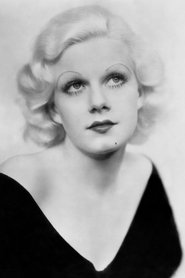 Jean HarlowGladys
 William PowellBill Chandler
 Myrna LoyConnie Allenbury
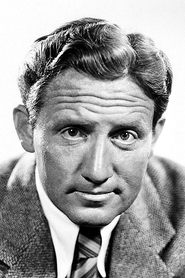 Spencer TracyHaggerty
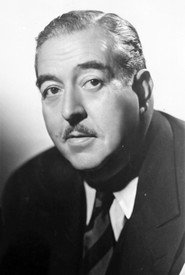 Walter ConnollyMr. Allenbury
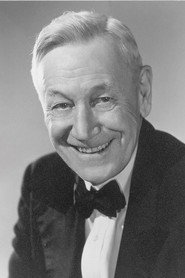 Charley GrapewinMr. Bane
 Cora WitherspoonMrs. Burns-Norvell
 E. E. CliveFishing Instructor
 Bunny BeattyBabs
 Otto YamaokaChing
 Charles TrowbridgeGraham
 Spencer ChartersMagistrate
Directing
- Jack ConwayDirector
Writing
- George OppenheimerScreenplay
- Howard Emmett RogersScreenplay
- Maurine Dallas WatkinsScreenplay
- Wallace SullivanStory
Production
- Lawrence WeingartenProducer
Recommended by
After the Thin Man, Twentieth Century, Nothing Sacred, Life with Father, The Talk of the Town, Johnny Come Lately, Ruggles of Red Gap, Room Service, After Office Hours, The Royal Family of Broadway, Day-time Wife, State Fair, The Awful Truth, Female, Fast and Loose, The Milky Way, Laugh and Get Rich, Merry Go Round of 1938, I Love You Again, The Gilded Lily, Bachelor Apartment, The Young in Heart, The Bride Comes Home, Niagara Falls, Accent on Youth, If You Could Only Cook, Hands Across the Table