
Film
4 Months, 3 Weeks and 2 Days
- Social drama
- Crime
- Very dark
A suffocating moral drama set in 1980s Communist Romania, following two young women navigating the brutal logistics of an illegal abortion. It's a film of unbearable tension, almost no music, and long static shots that force you to sit with impossible choices. For viewers who want cinema to feel like consequence.
Should you watch it?
Watch it if you want a slow, unblinking piece of realism where tension builds from ordinary errands, rooms and tired conversations rather than from music or big set pieces.
Skip it if you dislike bleak, pressured mood and long static takes; the film stays tense from first frame to last and gives little relief.
What it asks of you: Just under two hours of unhurried scenes shot in long, fixed takes that keep you in place; it wants your patience and gives back little in the way of comfort.
Not sure? Find tonight's pick in a minute.
If you liked this
Kes1970
A boy and his hawk become a story about thwarted hope and the systems that crush it. Like 4 Months, it finds tragedy in small rooms and the distance between people who should be close.
But It's a kitchen-sink realism from 1969—deliberately unglamorous, shot in grey light, with a pace that lets scenes breathe past comfort.

Come and See1985
A Belarusian film about a child witnessing horror during WWII. Both films refuse to look away from suffering and use prolonged, agonizing scenes to make you feel complicit in what you're watching.
But It's relentlessly bleak and features some of the most disturbing content in cinema. Not a film to recover from quickly.

Caché2005
Haneke again: a slow-burn exploration of guilt, evasion, and what we choose not to see. It builds dread through stillness and the unsaid, like watching someone choose to remain ignorant.
But Nothing happens in the traditional sense. It's a puzzle that may never solve itself, and some find that infuriating rather than brilliant.
Not sure tonight? Get a pick in a minute, starting from 4 Months, 3 Weeks and 2 Days
The wildcard
Something you would not have found on your own.
Jeanne Dielman, 23, quai du Commerce, 1080 Bruxelles1976
Both use extended takes and mundane locations to create psychological pressure. Both are about women navigating systems (domestic, social, legal) with minimal agency. Both make time itself feel dangerous.
Chantal Akerman's three-hour portrait of a woman's routine—making meals, washing dishes, receiving a male visitor. It finds profound meaning in repetition and the unsaid. Like 4 Months, it's about what's hidden beneath domestic order, but it uses form itself to make you *feel* the weight of routine rather than narrate crisis.
But It's nearly silent, almost static, and visually monotonous. Patience isn't optional. Many viewers experience it as punishment masquerading as art.

More like this (8)
The Death of Mr. Lazarescu2005
Another Romanian film of similar vintage. An old man's decline through a nightmare health system becomes a portrait of bureaucratic indifference and human smallness. Same unblinking eye.
But It's nearly two-and-a-half hours of someone getting progressively worse while institutions fail him. Watching it feels like a chore, intentionally.
Winter Light1963
Bergman's chamber piece about a pastor and his troubled parishioner. Sparse, airless, and focused on the gap between people trying to help and people who can't be reached. Same moral texture.
But It's austere to the point of coldness. If you need warmth or resolution from cinema, this will feel like punishment.

In the Mood for Love2000
Wong Kar-wai's film about two neighbours discovering their spouses are having an affair. Like 4 Months, it's about desire, secrecy, and the careful choreography of concealment. But it's achingly beautiful instead of brutal.
But The heavy style—saturated colour, repetitive scenes, languorous pacing—can feel precious or self-conscious if you're not in the right headspace.

Dancer in the Dark2000
Von Trier's Selma is a woman whose life collapses into an impossible choice. The film refuses pity and presents suffering as banal. You'll be hollowed out, which is the point.
But It punishes the viewer deliberately. The musical numbers exist to make the cruelty worse. Some people walk out before the end.
Stalker1979
Tarkovsky's metaphysical journey into a mysterious zone. Both films move with glacial slowness toward moral questions that can't be answered. Both trust silence more than dialogue.
But It's 163 minutes of walking and talking in drab locations. The philosophical payoff won't satisfy anyone expecting plot or action.

Uncle Boonmee Who Can Recall His Past Lives2010
An old man visits with ghosts of his past. Like 4 Months, it observes human connection across a gulf—here, between the living and dead. Patient, meditative, asking what we owe the past.
But It's a drift rather than a narrative. You're not watching to find out what happens next; you're sitting with presence and absence.
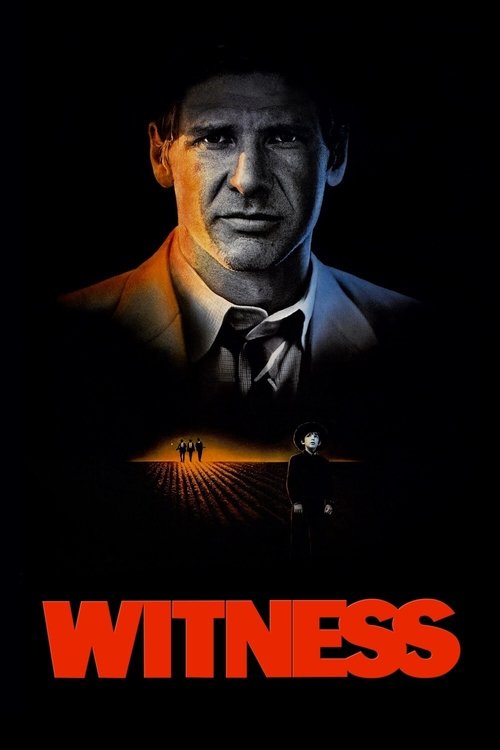
Witness1985
Both feature protagonists trying to protect someone from forces larger than individual choice. Both understand that safety often requires hiding, and hiding costs the soul. Ford's cop is as trapped as Otilia.
Harrison Ford among Amish communities, on the run. Seems like action-thriller casting, but it's a moral thriller about a man from one world protecting a child from another. The tension comes from cultural collision, not explosions—intimate, claustrophobic, about what happens when worlds collide.
But It's a mainstream '80s film, which means it has movie-movie moments and music cues. If you want uncompromising severity, the entertainment scaffolding will jar.
Sans Soleil1983
Both are about documenting the undocumentable—Marker captures what photographs cannot hold; 4 Months captures what words cannot reach. Both trust the viewer to find meaning in gaps.
Chris Marker's essay-film: a meditation on memory, travel, and history told through images from Guinea-Bissau, Japan, and Iceland, accompanied by a woman's voiceover letter to a lover. It's urgent and associative where 4 Months is claustrophobic, but both are about what we cannot say, how memory becomes revision, and the cost of bearing witness.
But It's structurally a letter, not a narrative. You're reading alongside watching. If you need conventional storytelling, this is essay dressed as cinema—deliberately elusive, refusing closure.

People
Cast
 Anamaria MarincaOtilia
 Laura VasiliuGăbiță
 Vlad IvanovDomnu' Bebe
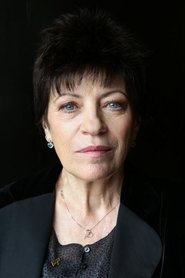 Luminița GheorghiuMrs. Radu
- Adi CărăuleanuMr Radu
 Liliana MocanuUnirea Hotel receptionist
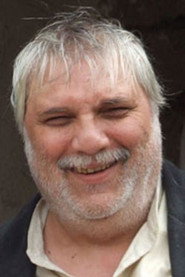 Doru AnaGas pump attendant
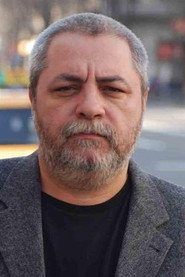 Ion SapdaruMr Rusu
- Cerasela IosifescuReceptionist Tineretului
 Tania PopaNight receptionist
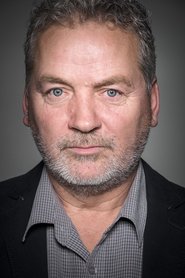 Teodor CorbanUnirea Hotel receptionist
Directing
- Cristian MungiuDirector
- Alexandru BelcScript Supervisor
Writing
- Cristian MungiuScreenplay
Production
- Philippe AvrilAssociate Producer
- Cătălin DordeaCasting
- Alexandru TeodorescuCo-Producer
- Cristian MungiuProducer
- Oleg MutuProducer
Recommended by
Juno, The International, The Death of Mr. Lazarescu, Peterloo, Everything Is Illuminated, The Apple, Made in Bangladesh, Vow of Silence, Conversations with My Gardener, Things to Come, The Dinner Party, The Act of Seeing with One's Own Eyes, The Last Breath, My Childhood, The Second Act, Pleasure, Beanpole, After the Winter, Thithi, Let My People Go !, 24 Weeks, After Tiller, The First Wave - Milan in the Time of Covid-19, A Private Matter