
Film
Aparajito
Aparajito is the middle chapter of Satyajit Ray's Apu trilogy, following its hero from devout boyhood in Benares into restless adolescence and the pull of Calcutta's classrooms. Nothing much happens by plot standards; everything happens in the widening gap between a boy's growing mind and his mother's stillness. Slow, exact, deeply humane — for patient viewers who love character over incident.
If you liked this
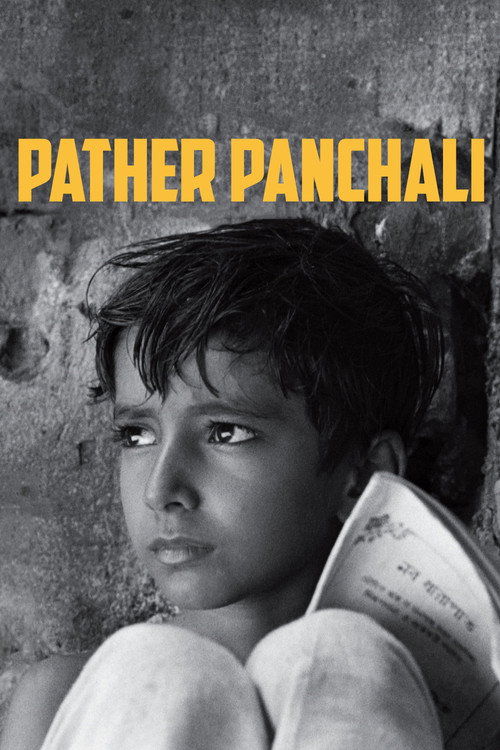
Pather Panchali1955
The first chapter of Apu's story, the film that made Ray's name and set the trilogy's tender, unhurried tone; watching it first makes the mother's arc in Aparajito land twice as hard.
But Even sparser than Aparajito, with long stretches of almost no dramatic incident at all.
The 400 Blows1959
Truffaut's autobiographical debut follows a neglected Parisian boy skipping school and lying his way toward freedom, with the same clear-eyed sympathy for a child navigating an indifferent adult world.
But More restless and rebellious in spirit, with a colder, harsher home life than Apu ever faces.

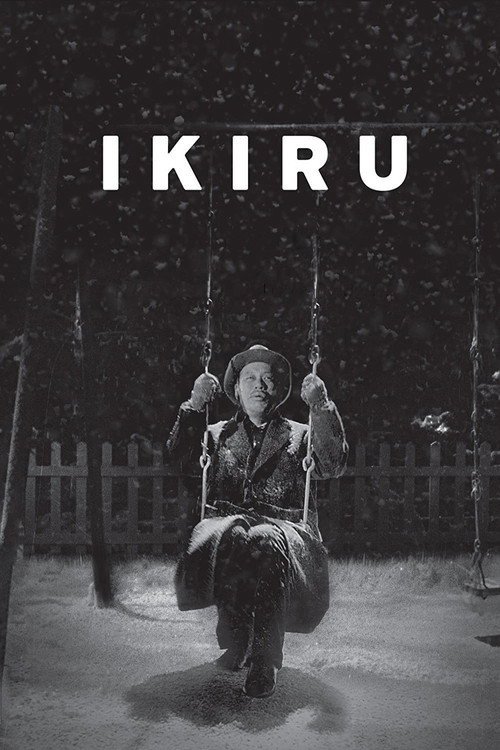
Ikiru1952
Kurosawa's study of a dying bureaucrat searching for meaning shares Ray's patient humanism and its faith that ordinary, unremarkable lives deserve serious attention.
But Centres on an old man confronting death rather than a boy discovering life, so the mood runs heavier and more elegiac.
The wildcard
Something you would not have found on your own.
Hoop Dreams1994
Both follow a gifted boy whose escape from poverty runs straight through his mother's sacrifice and worry — one filmed as fiction, one as it actually happened.
Two real Chicago teenagers chase basketball scholarships out of poverty while their mothers hold everything together — an unscripted echo of Apu's own path from struggle toward ambition and away from home.
But Three hours long, entirely factual, and rooted in 1990s American basketball culture rather than Ray's lyrical Bengal.

More like this (7)
Cinema Paradiso1988
A warmer, more sentimental cousin: a boy's education and eventual departure from his hometown, filtered through his love of cinema and the people he leaves behind.
But Openly nostalgic and swelling with music where Ray stays cool and observational; it can feel manipulative by comparison.

Boyhood2014
Linklater's twelve-years-in-the-making experiment tracks a boy into adulthood in real time, sharing Ray's interest in accumulated, unremarkable moments over dramatic turning points.
But American, contemporary, and loosely shot, with none of Ray's formal composure or visual poetry.

Roma2018
Cuarón's memory piece centres on a woman holding a household together as the world outside shifts, a fitting companion to Aparajito's own study of a mother left behind.
But Told from the housekeeper's perspective rather than the son's, and its widescreen black-and-white grandeur is a very different kind of beauty.

Fanny and Alexander1982
Bergman's own childhood epic, full of family tension and a mother navigating loss, told with the same unhurried seriousness about how children absorb the adult world.
But Considerably longer and stranger, with gothic and theatrical flourishes Ray never touches.

The Tree of Life2011
Malick's fractured memory of boyhood and a mother's quiet suffering trades Ray's realism for cosmic imagery, but the ache of growing away from a parent remains the same.
But Abstract, nonlinear, and almost wordless in places; it demands real patience with its impressionistic style.

I Was Born, But...1932no page yet
Same moment of growing up: a child's clear eyes exposing the gap between a parent's authority and their actual, smaller place in the world.
Ozu's silent comedy-drama about two boys discovering their father isn't the important man they believed him to be quietly invented the disillusioned-child genre Ray later deepened and darkened.
But Silent, black-and-white, and nearly a quarter-century older; its comic rhythms feel almost from another planet.
Mother India1957no page yet
Made the same year as Aparajito, it tells a strikingly similar story of poverty, a devoted mother, and a son's uncertain path, but turns the emotional volume all the way up.
A contemporaneous Hindi epic that turns the mother-son bond and rural hardship into full-throated melodrama — songs, villains and all — showing how differently the same story can be told next door.
But Broad, theatrical, and unashamedly sentimental — everything Ray's restraint was built to avoid.
People
Cast
 Pinaki SenguptaYoung Apurba 'Apu' Roy
 Smaran GhosalTeenage Apurba 'Apu' Roy
 Kanu BannerjeeHarihar Roy
 Karuna BanerjeeSarbajaya Roy
- Ramani Ranjan SenguptaBhabataran
 Charuprakash GhoshNanda Babu
- Subodh GangulyHeadmaster
- Santi GuptaGinnima
- RanibalaTeliginni
 Sudipta RoyNirupama
- Kamala AdhikariMokshada
Directing
- Arup GuhathakurtaAssistant Director
- Shailen DuttaAssistant Director
- Subir HajraAssistant Director
- Suren ChakrabortyAssistant Director
- Satyajit RayDirector
Writing
- Bibhutibhushan BandyopadhyayNovel
- Satyajit RayScreenplay
Production
- Satyajit RayProducer
- Anil ChoudhuryProduction Manager