
Film
The Caretaker
- Social drama
- Very dark
- Slow-burning
Harold Pinter's directorial debut adapts his own play about three men in a decaying London house: one broken and haunted, one desperate and delusional, one cruel and restless. It's claustrophobic chamber drama that moves like a nightmare, full of silence and menace, for viewers willing to sit with discomfort and let language do strange things.
Should you watch it?
Watch it if you love talky, pressure-cooker two-handers where the menace hides in pauses and small cruelties, the way Pinter builds a room full of unsaid things.
Skip it if you want plot to move briskly, since little happens on screen and the stammering, stage-bound dialogue can feel like being stuck in a draughty room.
What it asks of you: Under two hours, but slow and circling, with repetition and long silences doing as much work as any event, and attention that never fully relaxes.
Not sure? Find tonight's pick in a minute.
If you liked this
Secrets & Lies1996
Mike Leigh's portrait of a London family unraveling through revelation and resentment. Like Pinter, he finds the violence in ordinary speech, the way people wound each other in kitchens and sitting rooms.
But It's emotionally exhausting and three hours long, with no dramatic crescendo—just the accumulation of damage and the faint hope of repair.

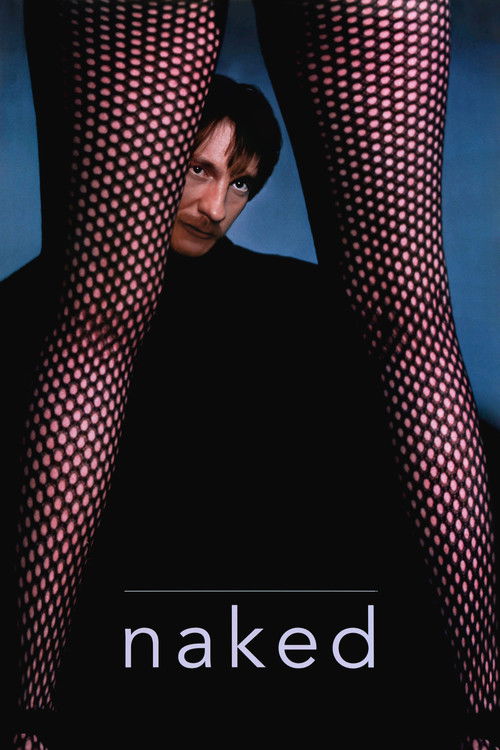
Naked1993
David Thewlis as a man of such corrosive intelligence and bitterness that he poisons every room he enters. A character study of cruelty dressed as insight, set in a bleak London that feels almost biblical.
But Relentlessly grim, often ugly, and the protagonist is so exhausting that you'll understand why everyone abandons him.
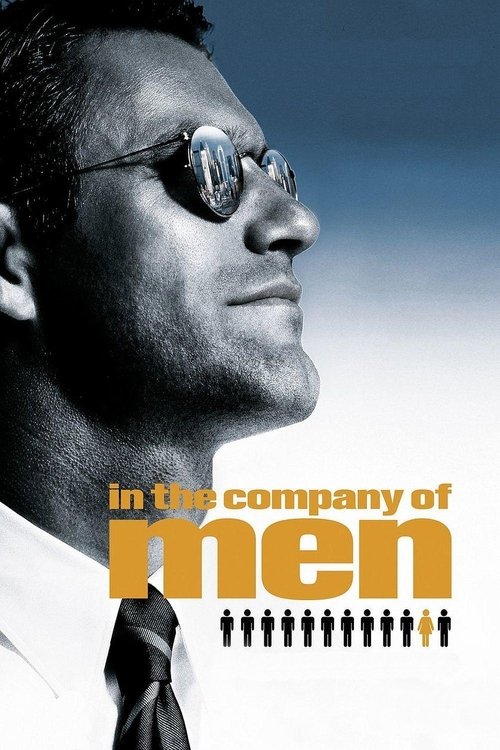
In the Company of Men1997
Two corporate men engineer the emotional destruction of a deaf woman as a game. A chamber drama of masculine cruelty that captures the casual evil Pinter understood—how bullies create their own logic.
But It's deeply uncomfortable by design, and some will find it morally murky rather than illuminating.
Not sure tonight? Get a pick in a minute, starting from The Caretaker
The wildcard
Something you would not have found on your own.
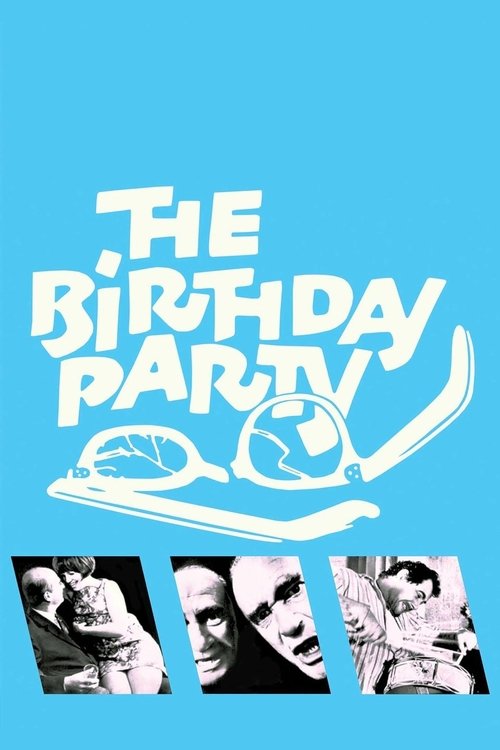
The Birthday Party1968
Both are direct Pinter adaptations about men undone by the arrival of strangers into their space; here the threat is more explicitly supernatural or political, but the texture is identical.
Henry Safran's adaptation of Pinter's play about an ordinary man in a boarding house visited by two strangers who may be murderers, or may be nothing at all. It's Pinter's own nightmare in its purest form, and the film captures what theatre cannot: the ordinary streets and rooms where terror becomes plausible.
But Even weirder than The Caretaker and much harder to parse. If you find Pinter's evasiveness maddening rather than brilliant, this will test your patience.
More like this (8)
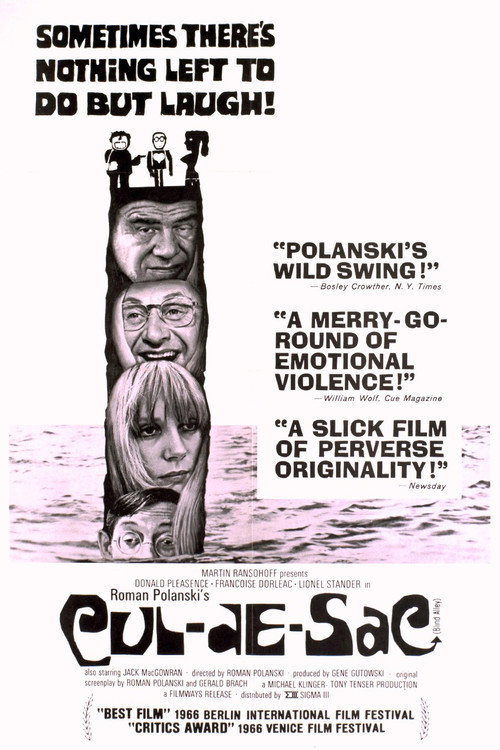
Cul-de-sac1966
Roman Polanski's film of two criminals invading a couple's isolated house. The same claustrophobic power struggle, the same sense that language and manners are thin masks over violence.
But It's very much of its era—the sexual politics will feel dated, and some viewers find it merely nasty rather than meaningful.
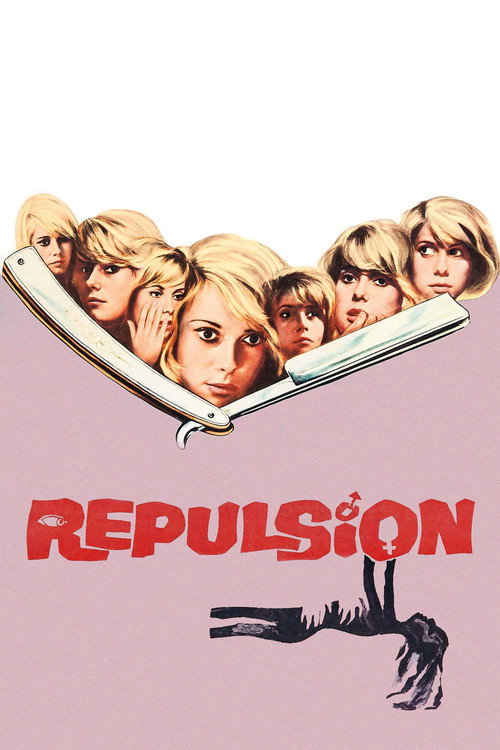
Repulsion1965
Polanski again, this time a woman alone in a flat as her mind fractures. It shares Pinter's interest in how enclosed spaces and isolation breed terror, and in the gap between inner and outer worlds.
But It's visually nightmarish and psychologically intense; the body horror can genuinely disturb, which is the point.
The Killing of a Sacred Deer2017
Yorgos Lanthimos channels Pinter through a Greek tragedy: strange dialogue rhythms, power shifting like weather, a family and an intruder locked in a ritual of blame and consequence. Hypnotic and cruel.
But The artificiality of the dialogue and pacing will feel mannered to some; it requires patience and a taste for formal strangeness.

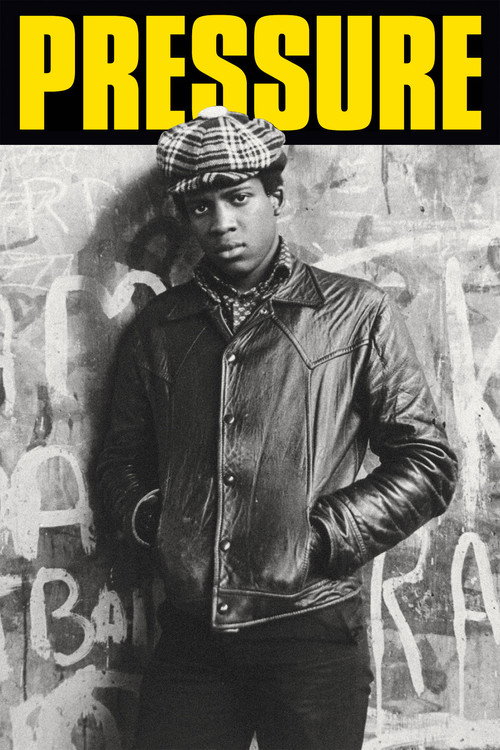
Pressure1976
Horace Ové's rarely seen debut about a young Black man navigating racism in London, using Pinter-like tension and dialogue to create unbearable social claustrophobia.
But It's difficult to find and demands active attention; the realism makes the discrimination harder to watch than in period pieces.
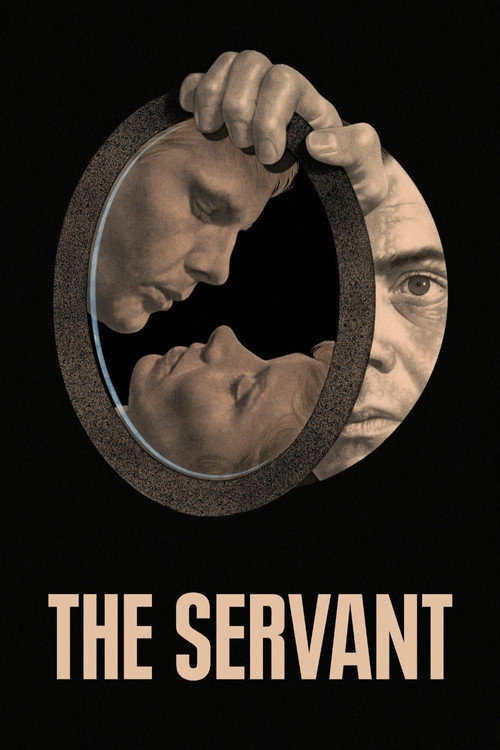
The Servant1963
Joseph Losey's film about a man and his valet, where power and class slowly invert through gesture and insinuation. Like Pinter, it understands that dominance is a game everyone can lose.
But The pacing is deliberate to the point of slowness, and the sexual subtext will be clearer to some viewers than others.
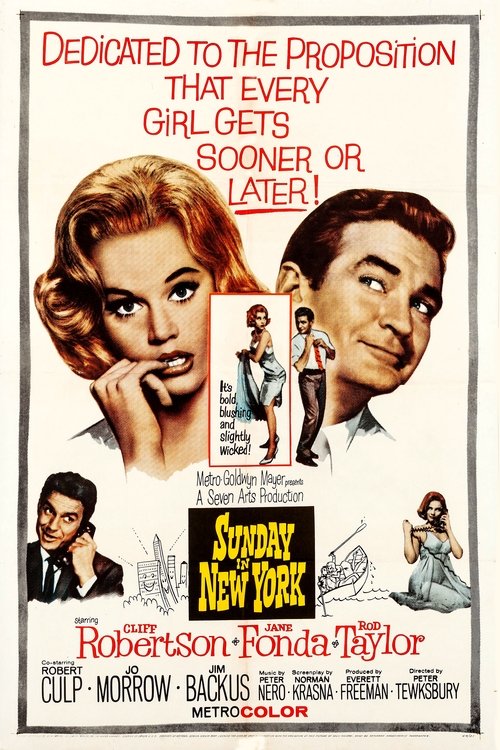
Sunday in New York1963
A lighter alternative that still captures the era's interest in people trapped together in rooms, negotiating desire and self-presentation. Breathes differently than Pinter, but shares his ear for how we talk.
But It's much more conventional and romantic, so you lose the menace entirely; some may find it merely a pleasant period piece.
Come and See1985
Both films understand that a small space and a few characters can contain existential dread; both use silence and waiting as weapons. But where Pinter is interior, Klimov is apocalyptic.
Elem Klimov's Belarusian war film about a boy's initiation into horror. Like The Caretaker, it's a chamber drama—two figures in an enclosed, deteriorating world—but where Pinter's menace is psychological, this is the menace of history itself, raw and unbearable.
But It's one of the most harrowing films ever made. The violence is not metaphorical, and the suffering is real in a way that will break some viewers.

Stalker1979
Both films are about men trapped with each other in defined spaces, waiting, talking obliquely, unable to leave. Tarkovsky makes it mythic; Pinter makes it nightmarish. But the engine is the same: enclosure breeds revelation.
Andrei Tarkovsky's science-fiction meditation on desire, belief, and the spaces we inhabit. Three men journey through a mysterious zone toward a room that grants wishes. It's Pinter's power dynamics and claustrophobia filtered through philosophy and long, meditative shots—a completely different sensory experience but the same obsession with what rooms mean.
But Nearly three hours of slow, hypnotic cinema. If you need plot momentum or dialogue, you'll find it glacial and empty.

People
Cast
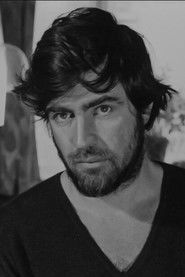 Alan BatesMick
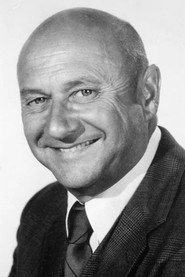 Donald PleasenceMac Davies / Bernard Jenkins
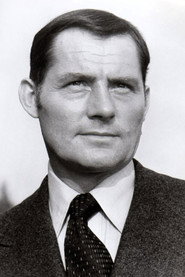 Robert ShawAston
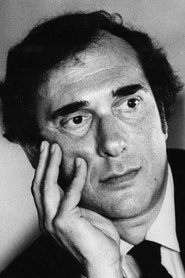
Directing
- Lee TurnerContinuity
- Clive DonnerDirector
Writing
- Harold PinterWriter
Production
- Elizabeth TaylorAssociate Producer
- Noël CowardAssociate Producer
- Richard BurtonAssociate Producer
- Michael BirkettProducer