
Film
Man Push Cart
- Social drama
- Slow-burning
A 2006 character study following Ahmad, a former Pakistani rock musician now selling coffee and donuts from a pushcart in New York City. Shot in observational documentary style, it's a quietly devastating portrait of displacement, labor, and the distance between who you were and who circumstances force you to become. For anyone moved by stories of quiet dignity under pressure.
Should you watch it?
Watch it if you want a quiet, unshowy portrait of a displaced man's daily grind, where small gestures of dignity matter more than plot machinery.
Skip it if you need momentum or a clear narrative engine, since this moves at a deliberately slow, meandering pace and leans on mood more than incident.
What it asks of you: Eighty-seven unhurried minutes spent largely on night streets, where patience pays off in texture and silence rather than a steady stream of incident.
Not sure? Find tonight's pick in a minute.
If you liked this
Chungking Express1994
Wong Kar-wai's meditation on urban loneliness and connection, built from fragments of ordinary life in Hong Kong. Like Man Push Cart, it finds the profound in the everyday movements of people navigating city streets.
But The style is deliberately oblique and drifting; if you want plot propulsion or narrative clarity, this will feel slow and elusive.

A Prophet2009
Jacqueline Audiard's portrait of transformation inside a prison, where circumstance forces someone to become a different person. The same moral weight and careful observation of how systems shape identity as Man Push Cart.
But Prison brutality and gang violence are depicted without softening. It's not comfortable, and it's over two hours of deliberate pacing.

Moonlight2016
Three chapters tracing a man's life across decades in Miami, understated and visually luminous. It shares Man Push Cart's refusal to melodramatize struggle, finding grace in small moments and silences.
But The elliptical structure means crucial plot points happen offscreen. Some find that approach frustrating rather than powerful.

Not sure tonight? Get a pick in a minute, starting from Man Push Cart
The wildcard
Something you would not have found on your own.
Kes1970
Both films trust that showing work—labor, discipline, the physical repetition of survival—is enough to convey a human life's value. Neither needs melodrama to make us understand what's at stake.
Ken Loach's debut follows a working-class English boy and his relationship with a kestrel. It's about transcendence through attention to something outside yourself, and about how society crushes small rebellions of dignity and care.
But It's in black and white, from 1969, and depicts British poverty with unflinching bleakness. The register is grave, and there's no redemptive arc.

More like this (7)
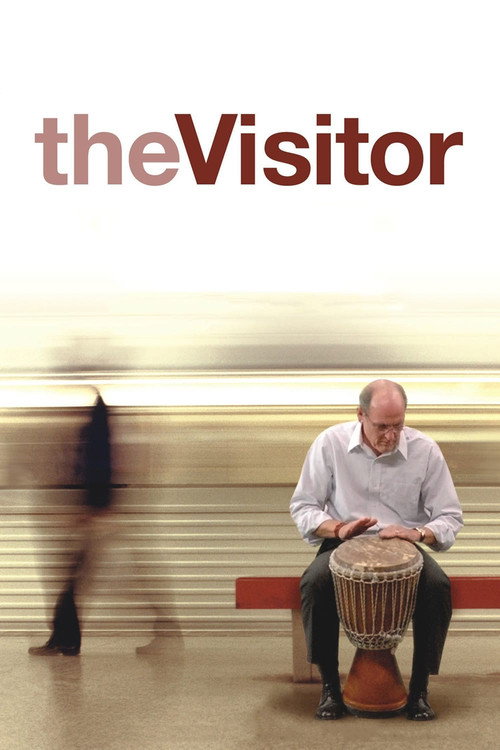
The Visitor2008
Tom McCarthy's film about an American professor befriending undocumented immigrants in New York. It has the same quiet empathy and attention to how immigration reshapes both the newcomer and the native.
But It skirts toward sentimentality at times, and the class dynamics can feel a touch simplified for an audience's comfort.
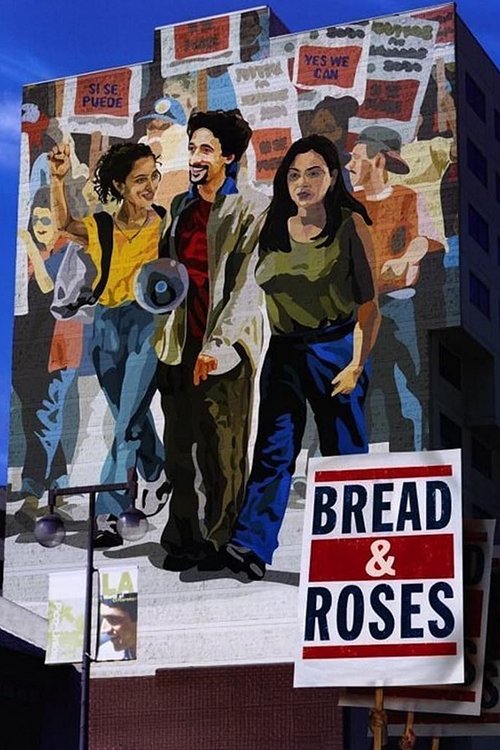
Bread and Roses2000
Ken Loach's chronicle of immigrant janitors organizing in Los Angeles. Naturalistic performances and a commitment to showing labor as dignity, not disaster—the same engine as Man Push Cart.
But It's didactic by design. If you bristle at films with a clear political message, the agenda won't be subtle.
Parable of the Sower
An adaptation of Octavia Butler's novel about survival and community across fragmentation. Like Man Push Cart, it tracks how people build meaning and connection under systemic pressure.
But It's speculative fiction set in a dystopian future, so if you wanted contemporary realism, the genre shift might feel distant.

La Haine1995
Mathieu Kassovitz's black-and-white portrait of three young men in the suburbs of Paris, trapped between hope and rage. The same documentary-adjacent style and refusal to look away from social fracture.
But It's deliberately abrasive and confrontational. The film doesn't comfort; it provokes, and some find that exhausting rather than necessary.

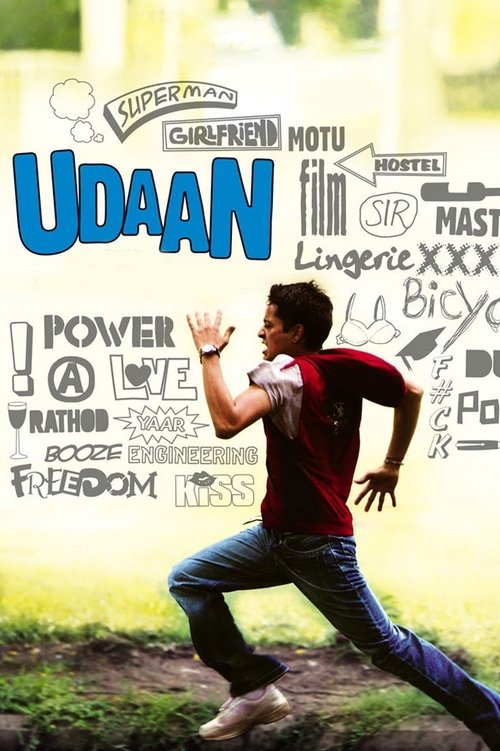
Udaan2010
A quieter Indian drama about a young man navigating family obligation and self-determination. Similar emotional register—restrained, precise, interested in how circumstance limits choice.
But It's deeply specific to Indian family dynamics and class. Some Western audiences find the cultural specificity creates distance rather than connection.
Synecdoche, New York2008
Where Man Push Cart is minimalist, this is maximal, but both use the framework of someone trapped in repeated daily action to explore what remains of a self when circumstances strip away everything else.
Charlie Kaufman's baroque meditation on the impossibility of art capturing life, starring Philip Seymour Hoffman as a theater director trying to stage the entirety of existence. It's obsessed with the same question as Man Push Cart: what happens when identity collapses into performance?
But It's deliberately labyrinthine, three hours of recursive meta-theater that some find pretentious or impenetrably complex. It doesn't resolve so much as dissolve.

The Death of Louis XIV2016
Both films ask what remains of a man when circumstance—whether age or immigration—strips away the identity he built his life around. Both find something sacred in that remainder, even as convention says there's nothing left to see.
Albert Serra's radical 92-minute portrait of the dying Sun King, filmed in extreme close-up and shot in academy ratio. It's a film about the final hours of someone losing control over his own body and legacy. Utterly still, utterly strange.
But There's almost no plot. It's a chamber piece about physical decay and the erosion of power, shot in a nearly abstract style. If cinema to you means narrative and clarity, this will feel like torture.

People
Cast
- Ahmad RazviAhmad
 Leticia DoleraNoemi
 Charles Daniel SandovalMohammad
 Ali RezaManish
- Panicker UpendranNoori
- Arun LalFather-in-Law
- Razia MujahidMother-in-Law
- Hassan RazviAhmad's son
- Mustafa RazviPakistani Driver
- Altaf HousseinAltaf
 Bill LewisFinal Customer
Directing
- Ramin BahraniDirector
Writing
- Ramin BahraniScreenplay
Production
- Lisa MuskatExecutive Producer
- Sanjay MotwaniExecutive Producer
- Scott BoothExecutive Producer
- Steve SabbaExecutive Producer
- Vinay JayaramExecutive Producer
- Bedford T. BentleyProducer
- Pradip GhoshProducer
- Ramin BahraniProducer
- Nicholas FraynProduction Manager
Recommended by
Tsotsi, Kuhle Wampe or Who Owns the World?, Trio, Agneepath, Mon oncle Antoine, Night Falls on Manhattan, On the Bowery