
Film
Blind Spot: Hitler's Secretary
- Drama
- Very dark
- Slow-burning
A ninety-minute conversation with Hitler's secretary, recorded in 2002 when she was eighty-one. Traudl Junge speaks plainly about her work in the bunker, the ordinary texture of proximity to evil, and the peculiar blindness of serving something monstrous. It's haunting, almost unbearably intimate, and asks difficult questions about complicity and compartmentalisation that linger long after.
Should you watch it?
Watch it if you want the history of the Third Reich told by someone who sat close enough to its centre to see the cracks, with the film mostly letting her talk and trusting the account to carry itself.
Skip it if you want archive footage, reenactments or a brisk pace; this is one elderly woman speaking to the camera, and the stillness can feel slow if you came for spectacle.
What it asks of you: Ninety minutes of unhurried attention to a single voice, with the weight carried in the pauses between her sentences rather than in any score or edit that tells you how to feel.
Not sure? Find tonight's pick in a minute.
If you liked this
Shoah1985
Claude Lanzmann's nine-hour epic interviews Holocaust survivors and perpetrators with patience and moral gravity. It's the foundational documentary about bearing witness to atrocity, and sits naturally alongside Junge's account.
But Nine hours is a commitment. The pacing is deliberate to the point of difficulty, and there's no score to guide your emotions—you sit with silence.
The Act of Killing2012
Joshua Oppenheimer documents Indonesian death-squad leaders as they recreate their own murders. Like Blind Spot, it's a disturbing portrait of ordinary men who committed extraordinary atrocities, and how they remember themselves.
But The recreations are surreal and deeply uncomfortable. It demands you stay present with people you'd rather look away from.

Nuremberg: Its Lesson for Today1948
Uses Nazi trial footage to examine how bureaucrats and soldiers justify themselves. Contemporaneous with the actual trials, it's a historic record of the questions Junge's interview later echoes.
But The image and sound quality reflect its age. It moves at a 1940s documentary pace, which tests modern patience.
Not sure tonight? Get a pick in a minute, starting from Blind Spot: Hitler's Secretary
The wildcard
Something you would not have found on your own.
Compliance2012
Both examine the machinery of ordinary compliance—how decent people do terrible things not through malice but through bureaucracy, habit, and the seduction of following orders. Compliance is the fictional version of Junge's testimony.
Craig Zobel dramatizes the Milgram obedience experiments and a real-world fast-food prank call scam. It's a fiction film about how ordinary people surrender moral agency to authority—the same psychological phenomenon Junge describes without naming it.
But It's aggressively bleak and confrontational. The humiliation is hard to watch, and the film offers no comfort or explanation for the behavior it documents.
More like this (7)
The Fog of War2003
Errol Morris interviews Robert McNamara about decision-making during the Vietnam War. Like Junge's account, it's a searching conversation with someone who shaped history, examining memory and moral reckoning.
But McNamara's voice can feel evasive, and some viewers resent the film's refusal to condemn him outright. It requires sitting with ambiguity.

Night and Fog1956
Alain Resnais's thirty-two-minute meditation on Auschwitz moves between present-day footage and archival film. Poetic and piercing, it captures the impossible task of bearing witness to industrial genocide.
But Its beauty—the cinematography, the editing, the score—can feel at odds with its subject. Some find this jarring rather than moving.
The Specialist1999
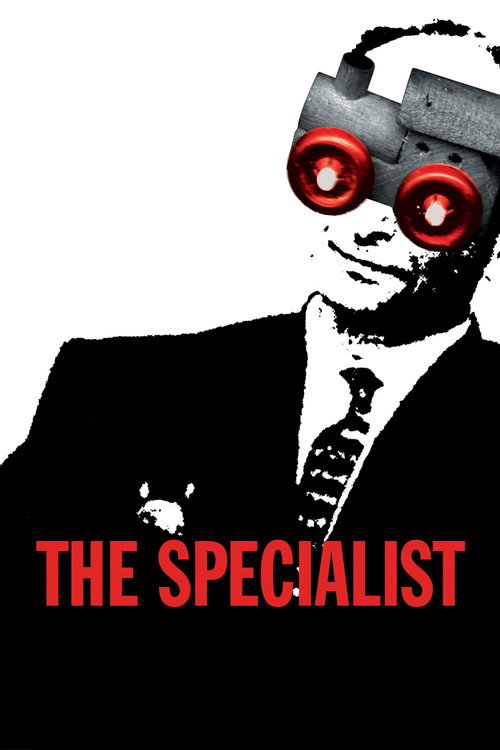
Eyal Sivan interviews Gitta Sereny, who herself interviewed Adolf Eichmann. It's a documentary about documentary, memory, and the ethics of conversation with architects of genocide.
But It's intellectually dense and assumes familiarity with Holocaust history. The meta-textual approach won't appeal to everyone.
Harlan County U.S.A.1976
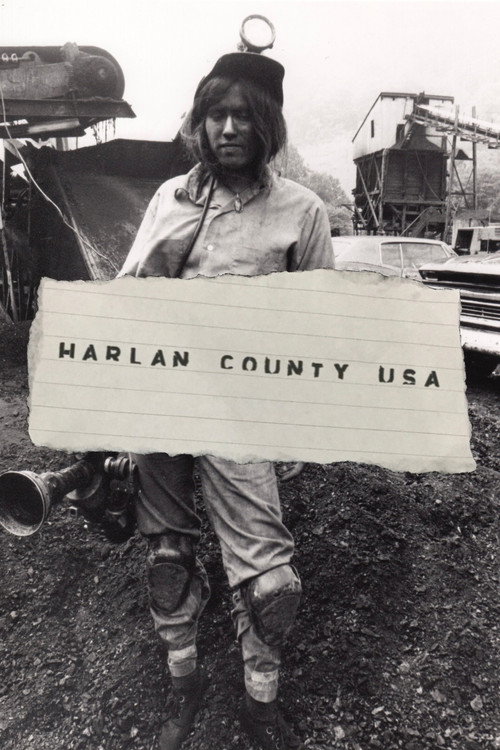
Barbara Kopple's coal-mining documentary proves how intimate cinema-vérité can capture lives shaped by systems larger than themselves—different subject, same moral architecture.
But It's about American labor struggle, not genocide, so the tonal shift is stark. Some viewers want more obvious thematic continuity.
Grey Gardens1976
The Maysles brothers film two isolated women in a decaying mansion. It's a masterclass in observational documentary that finds strange humanity in damaged, difficult subjects.
But It's almost anthropological in its distance. Some find the filmmakers' detachment feel exploitative given their subjects' vulnerability.

Sans Soleil1983
Chris Marker's essay film weaves memory, travel, and history into something that resists summary. It's meditative about how we remember and what we forget—thematically akin to Junge's reckonings.
But It's deliberately fragmented and abstract. If you want narrative clarity or emotional catharsis, this will frustrate you.

The Red Shoes1948
Both are about the psychology of serving an absolute system that demands total devotion. One uses Nazi bureaucracy; one uses art direction. Both ask what it costs to surrender your will to something larger than yourself.
Powell and Pressburger's Technicolor ballet film is visually sumptuous, about an artist caught between love and art. It sounds like escapism, but it's a study in obsession, perfectionism, and surrender of self to an all-consuming system—precisely what Junge describes about serving Hitler.
But It's stylized, romantic, and gorgeous—tone-deaf if you approach it as a literal analogy. It requires you to find moral seriousness in artifice and spectacle.

People
Cast
 Traudl JungeHerself
Directing
- André HellerDirector
- Othmar SchmidererDirector
Writing
- André HellerScreenplay
- Othmar SchmidererScreenplay
Production
- Danny KrauszProducer
- Kurt StockerProducer
Recommended by
The Ghazi Attack, Morning Departure, The Wooden Horse, The Rack