
Television series
The Death of Yugoslavia
- Very dark
A landmark documentary series examining how a multiethnic federation collapsed into genocide and war. Made while events were still unfolding, it combines archive footage, newsreel, and testimony from politicians, soldiers, and survivors across the region. Essential viewing for understanding modern Europe's bloodiest conflict and how nationalism can demolish coexistence.
Should you watch it?
Watch it if you want patient, reported history that explains how a federation unravelled through the people who lived it, and you're happy to sit with complicated politics rather than be handed a villain.
Skip it if the names, republics and alliances come thick and fast, and as a 1995 piece it is shaped by its moment, so it is no neat, updated account.
What it asks of you: Six fifty-minute episodes, so a full evening's commitment spread across a week; the interviews and archive footage move steadily, and the subject stays grim from start to finish.
Not sure? Find tonight's pick in a minute.
If you liked this
The Fog of War2003
Errol Morris's masterwork using archive and interviews to examine how leaders make decisions during conflict. McNamara reflects on Vietnam with devastating honesty. A model for understanding how rational men cause irrational suffering.
But Ninety minutes of a single man talking. His rationalizations, however self-aware, will infuriate many viewers.

All the President's Men1976
Procedural excellence: how patient investigation and testimony-gathering slowly reveal truth under pressure. The methodology mirrors documentary journalism. Woodward and Bernstein's work shows how systems can be held accountable.
But Partly dated in its political optimism. The pacing is deliberate, not swift. Not an action film whatever its reputation.
Night and Fog1956
Alain Resnais's 32-minute essay on the Holocaust uses colour and black-and-white archive to ask how atrocity becomes possible. Poetic and unbearably precise. Influenced every serious documentary about genocide since.
But The subject is appalling. It is brief but demands immense emotional stamina.
Not sure tonight? Get a pick in a minute, starting from The Death of Yugoslavia
The wildcard
Something you would not have found on your own.
Come and See1985
Both use witness testimony and archive to show how ordinary people become trapped in historical violence. Both demand that the viewer sit with suffering rather than analyze it from safety.
Elem Klimov's Belarus war film is not a documentary, but it achieves something more true: the subjective, sensory reality of living in a collapsing nation. A young boy's journey through Nazi occupation. Shot in 1985, it feels like witness testimony. Devastating.
But Brutally graphic. Not historically about Yugoslavia but about war's effect on the innocent. Exhausting rather than clarifying.

More like this (5)
The Thin Blue Line1988
Errol Morris reconstructs a murder conviction, using animation, archive, and interviews to expose a wrongful prosecution. Proves that investigative documentary can be visually inventive and morally urgent without sensationalism.
But The case, while important, is ultimately local. The triumph of justice will not surprise you.
The Summit2013
Documentary about the 1995 Srebrenica massacre and the Dayton peace agreement. Uses footage and interviews to trace political decisions. Directly contextualizes the moment Death of Yugoslavia was being made.
But Assumes some prior knowledge of the region. Without it, the political details blur together.
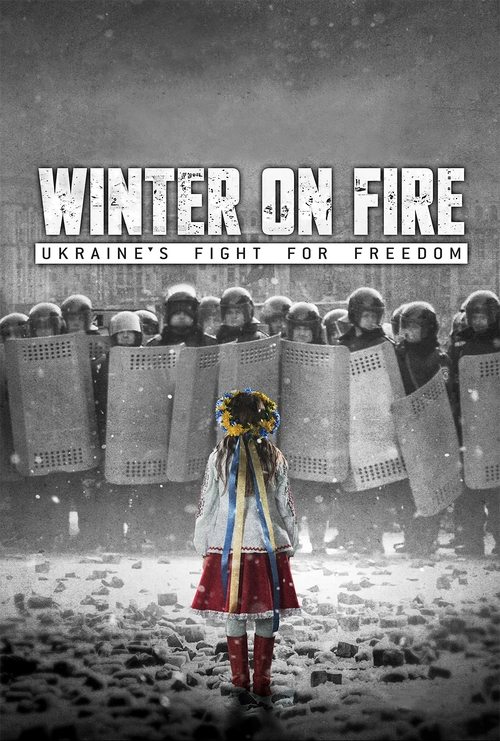
Winter on Fire: Ukraine's Fight for Freedom2015
Documentary capturing the 2013–14 Ukrainian uprising through eyewitness footage and testimony. Shows how a nation fractures along ethnic and political lines. The Balkans' echo across Eastern Europe.
But More activist in tone than Death of Yugoslavia. Some will find it propagandistic rather than investigative.
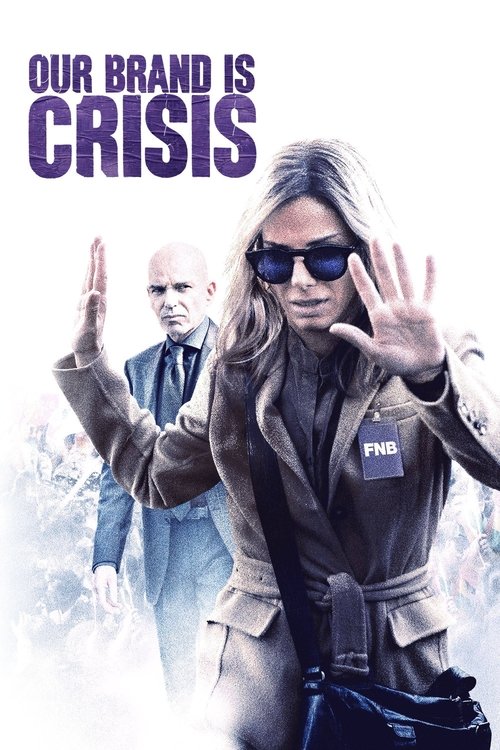
Our Brand Is Crisis2015
Documentary about American political consultants in Bolivia. Shows how external powers interfere in fragile democracies and stoke division. A quieter, stranger meditation on how nations are destabilized.
But The connection to Yugoslavia is thematic, not historical. American campaign operatives feel trivial beside genocide.
The Act of Killing2012
Both refuse easy moral distance. Death of Yugoslavia lets perpetrators speak; Act of Killing gives them the camera. Both ask: how do ordinary people commit atrocity, and what does it cost them?
Documentary in which Indonesian mass murderers reconstruct their killings for the camera. No voiceover, no judgment imposed. The perpetrators' own words and re-enactments reveal how atrocity is rationalized. Morally ambitious and genuinely original.
But The method is controversial and disturbing. Some viewers will feel the filmmakers are complicit in giving killers a platform. Long and demanding.

Recommended by
The Power of Nightmares: The Rise of the Politics of Fear, Grenfell, My Lai, Girlfriend in a Coma, The Wave, God Exists, Her Name Is Petrunya, Louis Theroux's Weird Weekends, Joanna Lumley's Japan, Reversal of Fortune