
Film
Making 'The Mahabharata'
A 55-minute window into Peter Brook's radical adaptation of the world's longest poem, following the director and writer Jean-Claude Carrière as they rehearse, cast, and build a production that strips ancient Sanskrit epic down to its human core. Watching a master craftsman negotiate the impossible: how do you stage infinity? For anyone curious about theatre-making, cross-cultural adaptation, or what happens when an artist refuses to be bound by convention.
Should you watch it?
Watch it if you are curious how a theatre director turns a sprawling epic into a rehearsal room, and enjoy watching ideas get argued over until they take physical shape.
Skip it if you want a plain, fact-driven record of the production, since this is a loose, meandering portrait of two men at work rather than a tidy account of the show.
What it asks of you: Under an hour of unhurried attention, moving at the speed of conversation and rehearsal, so settle in and let its talk and silences breathe.
Not sure? Find tonight's pick in a minute.
If you liked this
Grey Gardens1976
A documentary about performance and obsession that works like theatre itself—two women in a decaying mansion become their own drama. It shares Brook's fascination with how human presence and personality can sustain a whole world without spectacle or plot machinery.
But Deliberately repetitive and claustrophobic; it moves at the pace of a slow unravelling, not a narrative. The two subjects are difficult people in a difficult situation.

Visions of Eight1973
Eight international directors given one subject: the 1972 Olympics. Like Brook's film, it's process-obsessed—how do artists solve the problem of representing something vast? Fascinating for what each filmmaker notices that the others miss.
But Episodic and uneven; some segments work better than others. You're watching experiments, not guaranteed payoffs.
F for Fake1973
Orson Welles on theatre, cinema, authenticity and fakery—a 90-minute essay that's itself a conjuring trick. Like Brook's film, it's about a master filmmaker thinking aloud about the nature of his own medium and the stories we tell ourselves.
But Deliberately chaotic and digressive; it prioritises Welles's voice and ideas over a clear structure. Very of its time in pacing and sensibility.
Not sure tonight? Get a pick in a minute, starting from Making 'The Mahabharata'
The wildcard
Something you would not have found on your own.
Tokyo Story1953
Both are radical acts of reduction: Brook strips epic to its human essence; Ozu strips cinema to its simplest elements. Both argue that constraint and clarity reveal more than abundance ever could.
Ozu's masterpiece uses minimal plot and maximum human observation—an elderly couple visit their children in Tokyo, almost nothing happens, and it becomes the most moving film ever made. It shares Brook's conviction that presence and specificity matter more than spectacle or pace.
But Will feel glacially slow and plotless to anyone raised on conventional narrative. The emotional impact creeps in sideways, and it won't work if you're impatient with subtlety.

More like this (8)
Singin' in the Rain1952
A musical about theatre people adapting and reinventing themselves for a new medium. The craftsmanship is transparent—you watch Kelly and Donen solve problems in real time. Same spirit of creative resourcefulness as Brook's rehearsal footage.
But If you want challenging ideas about art rather than uncomplicated joy, this isn't it. The charm can feel a little saccharine.

The Death of Louis XIV2016
Rivette's four-hour meditation on a king dying, almost entirely in long takes. Slow, theatrical, utterly committed to watching human presence and the texture of a single room. Philosophical in the way Brook's work is philosophical.
But Four hours. Very little happens. The pacing is designed to test your patience and rewire your expectations of cinema.
La Haine1995
A taut, urgent three-act play disguised as a crime film—follow three friends through 24 hours in the banlieue. Stylised, choreographed, it proves that rigorous form can contain raw contemporary anger and human specificity.
But The stylisation can feel dated now; some may find the artifice gets in the way of the film's social argument rather than strengthening it.

Man with a Movie Camera1929
Dziga Vertov's silent documentary about cinema itself—a city, a filmmaker, and the act of looking. Revolutionary in method and pure cinema joy. A fundamental text about how form and content merge in the best work.
But No dialogue, no plot, pure visual language. If you need narrative or narrative momentum, this will feel like watching someone else's research notes.

The Conformist1971
Bertolucci orchestrates meaning through every frame—colour, composition, movement. A film about adaptation and performance that is itself a masterclass in cinematic craft. Visually intoxicating and morally complex.
But Fascist aesthetics are made beautiful here, which some find ethically troubling. The elegance can seduce you into complicity, which may or may not be intentional.
Stalker1979
Tarkovsky's meditation on desire, meaning, and the journey inward. A film so committed to its own rhythm and visual language that it becomes a kind of ritual. Rewards the same patient attention Brook asks of his audience.
But Glacially slow, deliberately obscure, with long stretches of near-silence. Many will find it punishing rather than profound.

The Leopard1963
Both grapple with how to represent large historical and spiritual forces through intimate human action. Visconti translates Lampedusa the way Brook translates the Mahabharata: with reverence and the willingness to cut.
Visconti's three-hour epic about historical transformation, told through the eyes of an aristocrat watching his world die. Gorgeously composed, morally serious, about adaptation and the cost of change—a narrative film that thinks like Brook's documentary about how you stage the unstaging of the world.
But Slow, long, steeped in 1960s Italian cinema aesthetics. The famous ballroom scene divides viewers—some find it transcendent, others exhausting.

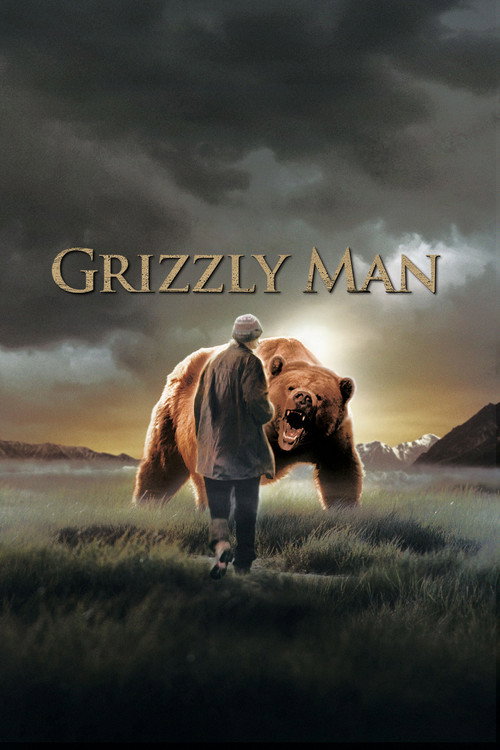
Grizzly Man2005
Herzog, like Brook, is fascinated by artistic obsession and the attempt to bridge unbridgeable distances. Both films watch someone trying to translate or communicate across an impossible gulf—Brook with epic poetry, Herzog with nature itself.
Herzog's documentary about a man who lived among grizzly bears until they killed him. Philosophically vast, morally complex, entirely obsessed with the gap between human intention and reality. A meditation on why artists do impossible things and what it costs them.
But Difficult subject matter—you're watching footage related to someone's death. Herzog's narration is sometimes portentous. Not a comforting watch.
People
Cast
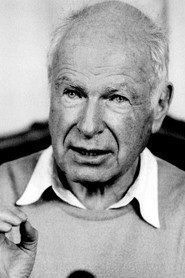 Peter BrookSelf
Production
- Alyson WoodExecutive Producer
- Colin WilsonProducer