
Film
London
- Slow-burning
Patrick Keiller's experimental documentary follows an unnamed narrator and his companion Robinson through London in 1992, blending psychogeography, archival footage, and philosophical digression into a meditation on place, politics, and British decline. It's essayistic and digressive, shot with patient observation. For viewers who like ideas embedded in images, who find cities as interesting as people.
If you liked this
Night and Fog1956
Alain Resnais's 32-minute essay film interrogates memory and history through juxtaposition of colour and black-and-white footage, archive and present. Formally inventive and emotionally devastating. A masterclass in how to make you think while watching.
But It's an unflinching documentation of the Holocaust. Brevity doesn't soften the weight of what you're seeing.

Sans Soleil1983
Chris Marker's poetic documentary moves through Guinea-Bissau, Japan, and elsewhere, held together by a narrator reading letters. Dreamlike, digressive, full of strange connections. It thinks in images rather than arguments.
But There's no conventional narrative spine. If you need a clear throughline or resolution, this will frustrate you.

Stalker1979
Tarkovsky's sci-fi parable moves through a mysterious zone toward a wish-granting chamber, but the real film is in the walking, waiting, and talking. Hypnotic photography and metaphysical depth. A film that trusts your patience.
But 163 minutes of deliberate pacing. Long sequences of people moving through spaces. If slow cinema feels like wasting time to you, stay away.

Not sure tonight? Get a pick in a minute, starting from London
The wildcard
Something you would not have found on your own.
Synecdoche, New York2008
Both films are about seeing a place (and yourself) anew through obsessive psychogeographic attention. Both use fragmentation and digression as structure rather than flaw. Both demand active interpretation.
Charlie Kaufman's film collapses the boundary between an artist's life and his work, following a theatre director building an enormous model of New York inside a warehouse. Structurally dazzling and genuinely disorienting.
But Deliberately confusing and emotionally punishing. It asks you to hold contradictions without resolving them. Some will call it brilliant; others will call it indulgent.

More like this (7)
F for Fake1973
Welles's essay-film collage about deception, forgery, and cinema itself is playful and endlessly inventive. It questions what documentary even is. Visually alive and genuinely funny.
But The rapid-fire editing and constant tonal shifts can feel scattershot. Some will see genius; others will see a mess.
The Act of Killing2012
Joshua Oppenheimer films perpetrators of Indonesian genocide re-enacting their crimes in fantastical recreations. Disturbing, formally daring, impossible to look away from. A radical interrogation of complicity and memory.
But Graphic depictions of violence and a deeply unsettling atmosphere. The ethical questions it raises don't resolve cleanly.

Man with a Movie Camera1929
Dziga Vertov's silent Soviet city-symphony makes ordinary urban life into visual poetry through relentless formal innovation and montage. Exhilarating to watch, hypnotizing in rhythm.
But No dialogue, plot, or character. Pure cinematic technique and ideology. Some find it thrilling; others find it exhausting.

Shoah1985
Claude Lanzmann's nine-hour oral history of the Holocaust consists entirely of interviews and footage. Unbearable and necessary. One of cinema's most important works.
But Nine hours. Descriptions of unimaginable suffering. You cannot half-watch this. Some will find it exploitative regardless of intention.

The Thin Blue Line1988
Errol Morris reconstructs a murder in Dallas through interviews and stylized reenactments, creating ambiguity where a verdict once stood. Formally clever and morally searching.
But The rotoscoped sequences feel dated now. The narrative structure privileges suspense over the real suffering involved.
Robinson in Space1997
Direct continuation. Same method, same people, evolved observations. Not a recommendation if you haven't seen London, but essential if you have.
The sequel to London, made three years later. Keiller returned with the same companions to examine post-Thatcher Britain. If you're gripped by the first, this deepens and complicates everything.
But It assumes you've seen London. There's no standalone entry point. The pacing is even more demanding. Robinson's melancholia can feel suffocating.
The Death of Stalin2017
Both are essays on state power and historical rupture using formal constraint (Keiller's voice and montage, Iannucci's monochrome and structure). Both see politics as tragedy and farce simultaneously.
Armando Iannucci's black-and-white comedy-drama about the power struggle after Stalin's death uses precise political manoeuvring and dark wit. Wickedly funny about systems failing to contain chaos.
But Political comedy about totalitarianism. Some audiences find it flippant. Shot in monochrome and deliberately theatrical rather than realistic.
People
Cast
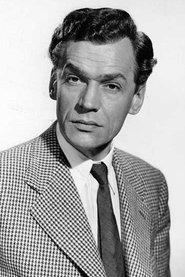 Paul ScofieldNarrator (voice)
Directing
- Patrick KeillerDirector
Writing
- Patrick KeillerWriter
Production
- Ben GibsonExecutive Producer
- Keith GriffithsProducer