
Film
India's Daughter
- Crime
- Very dark
Leslee Udwin's documentary examines the 2012 Delhi rape and murder through interviews with the victim's family, her attackers on death row, and the society that enabled them. It's urgent, difficult, and essential—not entertainment but testimony. For anyone asking how violence becomes normalized, and what change actually requires.
Should you watch it?
Watch it if you want a documentary that lets the men responsible talk at length in their own words and then asks hard questions about the attitudes that made the crime thinkable.
Skip it if you struggle to sit through long stretches of unsettling interview footage with almost no lightness, since the subject is heavy and the pace stays deliberately steady.
What it asks of you: Runs just over an hour and stays with interviews and sober testimony rather than building toward a plot, so it wants steady, uninterrupted attention.
Not sure? Find tonight's pick in a minute.
If you liked this
The Act of Killing2012
Werner Herzog and Joshua Oppenheimer's film lets Indonesian death-squad leaders restage their own atrocities. Like India's Daughter, it forces viewers to sit with perpetrators' humanity while refusing to let them off the hook. Unflinching moral inquiry.
But The violence is described in graphic detail through their own words and reconstructions. It's watching evil explain itself, which some find unbearable rather than clarifying.

Stories We Tell2012
Michael Haneke's Funny Games uses a family's terror to interrogate why audiences consume violence. India's Daughter asks the same question differently: why do we need to see the rapists' faces and hear their justifications? Both demand you examine your own complicity.
But It's a horror film that turns the screw deliberately. If you're coming to documentaries to feel better, this will unsettle you instead.
The Look of Silence2014
Oppenheimer returns to Indonesia to film a son confronting the man who murdered his brother. Like India's Daughter, it's about survivors facing their abusers' architects and asking: can anything be repaired? The intimacy is devastating.
But Long, slow, and almost entirely quiet. The power is in restraint, which can feel like nothing is happening if you're not prepared for it.
Not sure tonight? Get a pick in a minute, starting from India's Daughter
The wildcard
Something you would not have found on your own.
The Battle of Algiers1966
Both are structured as inquiries into how ordinary people become instruments of atrocity, and both refuse the comfort of seeing them as monsters instead of systems.
Gillo Pontecorvo's 1966 film about the Algerian War is structured as investigation: we watch terrorists and colonizers explain their violence, justify their tactics, reveal their logic. It's a documentary's work done through narrative cinema. India's Daughter uses documentary form to do what Pontecorvo did with drama—strip away rhetoric and show how violence gets rationalized.
But It was made in 1966 and shows its era. The politics are explicit and unambiguous in ways modern documentaries avoid. Some find it didactic rather than investigative.

More like this (8)
Winter Song2015
A documentary about a woman murdered in Kashmir, and the men who killed her. Like India's Daughter, it centers the victim's family's grief and the failure of justice systems to protect women. Smaller scale, same moral weight.
But Less widely available. The violence is more distant from the viewer, which some find less urgent.
The Hunting Ground2015
Kirby Dick's film about sexual assault on US college campuses does what India's Daughter does: reveals how institutions protect abusers over survivors. The scale is different; the pattern is identical.
But It's been criticized for oversimplifying some cases and relying on accusers' accounts without always showing institutional response. The filmmaking is less balanced than India's Daughter.
Blackfish2013
Not about human violence, but about how systems—theme parks, courts, media—justify cruelty through rhetoric. India's Daughter shows how that works in real time. Both are about what we're willing to ignore for convenience.
But The orca-focused framing can feel like it's trivializing human suffering if you're coming from India's Daughter. The emotional register is lighter.

13th2016
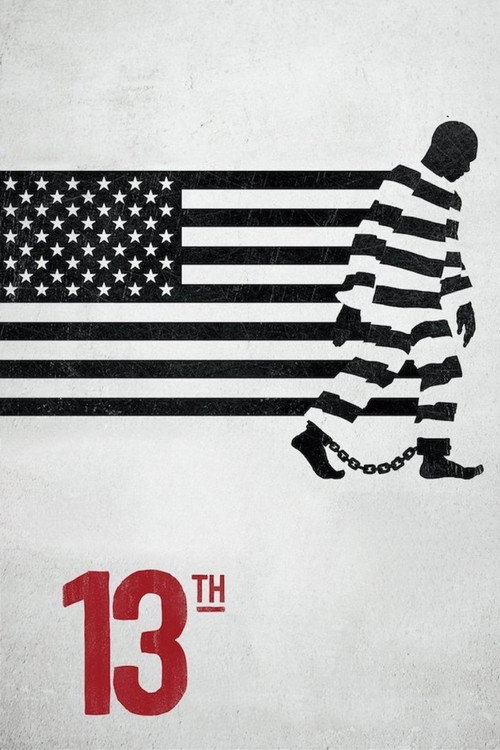
Ava DuVernay's documentary about mass incarceration traces how systems transform violence into policy. It's what India's Daughter gestures toward: the machinery that makes individual violence possible. Both ask who benefits from brutality.
But It's US-focused. The specificity of the Delhi case matters; this is necessarily more abstract and systemic.
An Inconvenient Truth2006
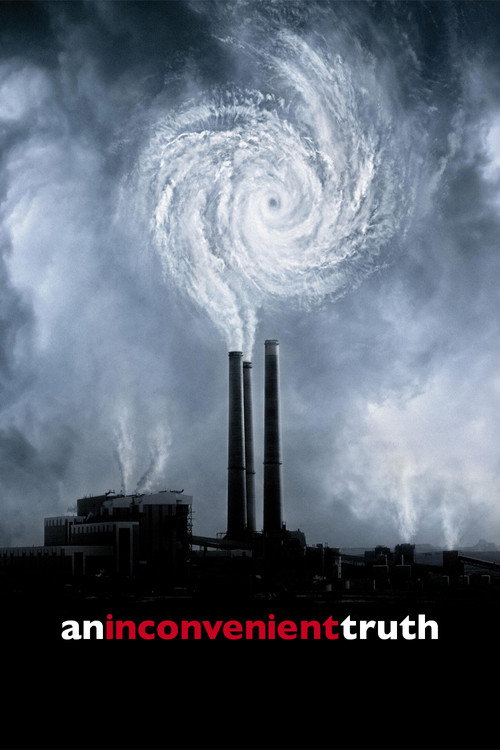
Al Gore's climate documentary pioneered the 'here's the problem, here's what you can do' structure. India's Daughter uses the same: bearing witness to horror, then asking for change. Both believe audiences can be moved to action.
But The comparison feels tonal—this is about ice caps, not murder. And it's more optimistic than India's Daughter allows itself to be.
Hoop Dreams1994
A three-hour documentary about two boys' basketball dreams that becomes about race, class, and systems designed to exploit people. Like India's Daughter, it shows how individual tragedy reveals structural violence.
But It's oblique. India's Daughter is direct; this requires patience to see what it's really about. And the stakes feel lower because they're not life-or-death.

Elephant2003
Structurally opposite approaches to the same question: how do we honor the humanity of those destroyed by violence without centering the violence itself?
Gus Van Sant's film about a school shooting follows students through hallways before a massacre, never showing the violence itself—only the leads. It's the inverse of India's Daughter: instead of hearing perpetrators explain, we see victims in their final ordinary moments. Both demand you reckon with the people violence erases.
But The slowness will feel like nothing is happening. It's meditative where India's Daughter is urgent. And the refusal to show what happened infuriates people who want direct address.

Stalker1979
Both work with the idea that witnessing creates responsibility, and that the act of looking at something difficult is itself a moral choice that can't be unmade.
Andrei Tarkovsky's science-fiction film is about desire, transgression, and the things we're not allowed to know. It's a meditation on forbidden knowledge—what we should and shouldn't witness. Watching India's Daughter, you feel that tension: is seeing the perpetrators' faces essential documentation or violation? Stalker builds that moral vertigo into its structure.
But It's 163 minutes of Russian philosophical cinema with long silences and minimal plot. Approaching it after a 63-minute documentary about rape and murder will feel like tonal whiplash. It's not cathartic.

People
Cast
- Asha DeviHerself, Jyoti Singh's mother
- Badri SinghHimself, Jyoti Singh's father
- SatendraHimself, Jyoti Singh's tutor and close friend
- Mukesh SinghHimself, rapist
- M.L. SharmaHimself, defence lawyer for the rapists
- Vinay SharmaHimself, convicted of Jyoti Singh's rape and murder
- Pawan GuptaHimself, convicted of Jyoti Singh's rape and murder
- Akshay ThakurHimself, convicted of Jyoti Singh's rape and murder
- A.P. SinghHimself, defence lawyer for the rapists
- Leila SethHerself - Former Chief Justice Member of Rape Review Committee
- Maria MisraHerself, writer and historian, Oxford University, Keble College
- Sandeep GovilHimself, prison psychiatris