
Film
Anne Frank Remembered
A meticulously assembled documentary that moves beyond Anne Frank the symbol to reveal the vivid, complicated girl herself. Using archival footage, photographs, and intimate interviews with those who knew her, it presents her family's story with unsentimental clarity. Essential viewing for anyone who wants to understand both the Holocaust's human cost and the person behind the diary.
If you liked this
Night and Fog1956
Alain Resnais's landmark essay film confronts the Holocaust's machinery with devastating visual poetry. Its formal precision—the contrast between color present-day footage and black-and-white archive—makes abstraction impossible. You'll feel the weight of history in your chest.
But At 32 minutes, it's dense and difficult. It doesn't offer comfort or narrative closure. Some viewers find its aesthetic distance emotionally punishing rather than clarifying.

Shoah1985
Claude Lanzmann's nine-hour oral history is unflinching testimony from survivors and witnesses. No archival footage, no music—just voices and faces and the landscapes where atrocities occurred. It's the most complete artistic reckoning with the Holocaust ever made.
But The length is genuinely demanding. Lanzmann refuses to make it palatable; watching feels like a responsibility, not entertainment. The repetition and slow pacing will exhaust many viewers.

Come and See1985
Elem Klimov's Soviet war film follows a boy conscripted into the Red Army. It's visceral, hallucinatory, and captures the psychological annihilation of war in ways that mere documentation cannot. The horror is immediate and inescapable.
But It's punishing to watch—graphically violent and deliberately traumatizing in its technique. The film doesn't respect your comfort. Some find its extremism exploitative rather than revelatory.

Not sure tonight? Get a pick in a minute, starting from Anne Frank Remembered
The wildcard
Something you would not have found on your own.
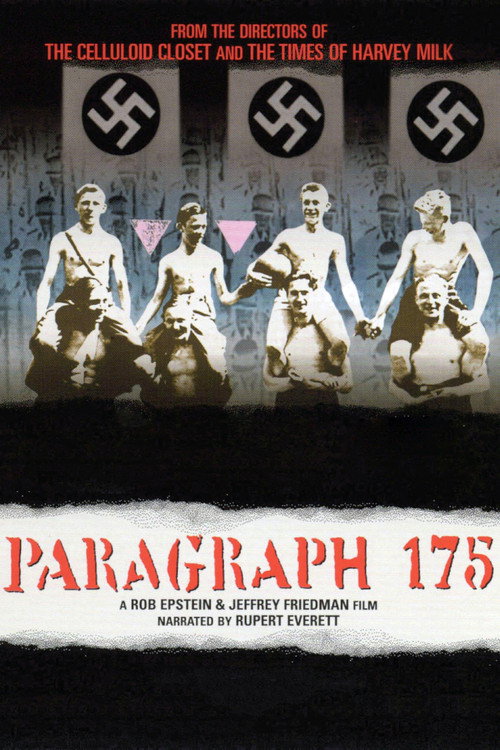
Paragraph 1752000
Both restore the specificity and dignity of individuals reduced to symbols or statistics. Anne's diary asserts the interior life; this film insists the same for those whose identities were doubly hidden.
Rob Epstein and Jeffrey Friedman's documentary centers on gay and lesbian survivors of the Nazi camps—a history often erased from Holocaust narratives. It restores visibility to a silenced community and asks hard questions about how historical memory gets constructed and whose stories disappear.
But At 81 minutes, it's short, but the intersectional history requires active attention. Some viewers may find its focus narrow compared to broader Holocaust documentaries, not recognizing that narrowness as necessary correction.
More like this (5)
The Last Days of Disco1998
Steven Spielberg's documentary focuses on Hungarian Jews in the 1944 Auschwitz liberation, told through five survivors' testimonies. It's intimate without being melodramatic, and captures how memory itself becomes an act of resistance and reclamation.
But At two hours, it covers familiar ground for Holocaust documentation. Some may find its conventional structure—survivor interviews, historical stills—less formally innovative than other documentaries.
Lest We Forget1991
This hourlong documentary uses testimony from survivors at Auschwitz, directly confronting the site and its remaining architecture. The survivors' voices grounded in actual place creates a specific, embodied understanding that abstraction cannot reach.
But Limited distribution makes it harder to find. Some viewers may feel that on-site documentation feels incomplete without deeper historical context or analysis.
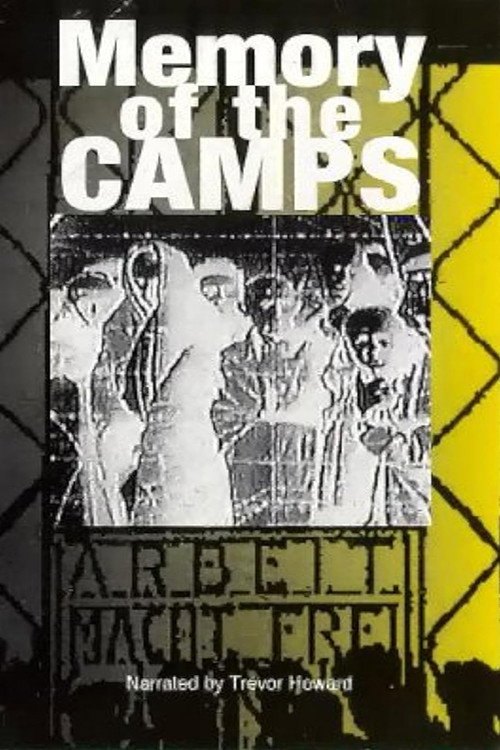
Memory of the Camps1985
Made from Allied liberation footage and narrated by Laurence Olivier, this documentary combines archival evidence with eyewitness accounts. It's a foundational record, showing what liberators actually discovered. The material speaks with unadorned gravity.
But The production feels dated, and its narrative structure is sometimes repetitive. Some find the archival footage's quality and arrangement less compelling than more recent documentary work.
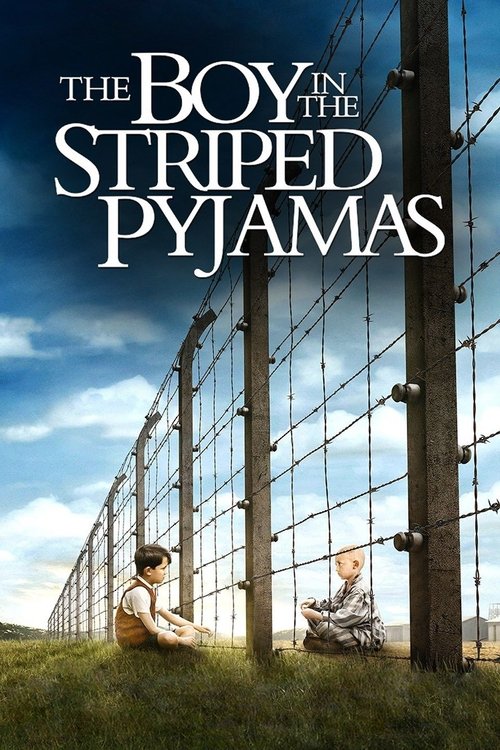
The Boy in the Striped Pyjamas2008
Like Anne's diary, it captures a young mind trying to make sense of an adult evil encroaching on childhood. Both resist the flattening that turns individuals into categories.
Mark Herman's drama tells the Holocaust through the eyes of a child, seen from both sides of the fence. It's a formal experiment: how do you show atrocity through innocence? The perspective makes the incomprehensible work as narrative without simplifying horror.
But Many historians and survivors criticize it for mythologizing the camps, softening brutality through a child's confusion. The ending feels constructed rather than earned to some viewers. Its emotional trajectory can feel manipulative.
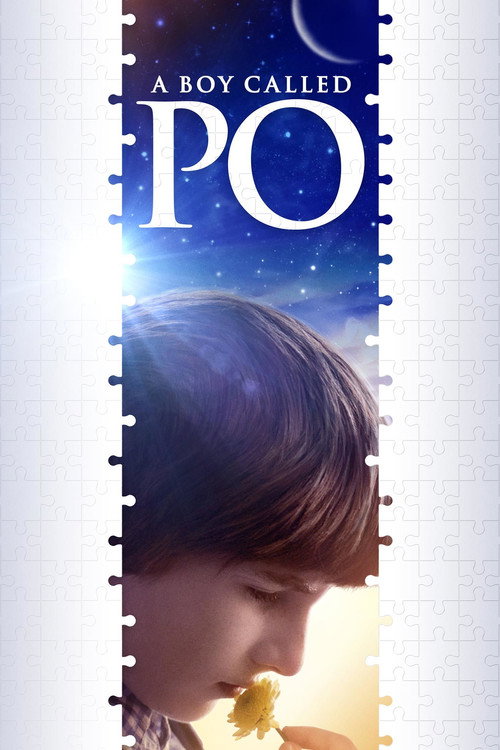
A Boy Called Po2016
Both use the device of a young person's perspective (diary, memory, consciousness) to collapse distance between then-and-now and to insist that how we understand atrocity depends on who's allowed to narrate it. Both say: the personal record is how history survives.
This Australian film pairs a contemporary boy with autism with animated retellings of his grandfather's memories of the Japanese occupation of Singapore. It's formally inventive—mixing live-action, animation, and memory—and argues that trauma and neurodiversity aren't separate stories. The animation renders unbearable experience into something visually urgent.
But It's quietly strange; the tonal mixture of whimsy and atrocity discomforts viewers expecting a conventional war film. The low profile and modest budget mean the execution sometimes feels uneven. The connection to Anne may feel oblique.
People
Cast
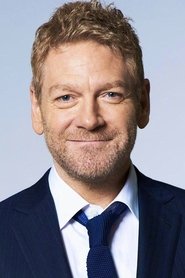 Kenneth BranaghNarration (voice)
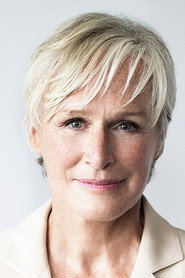 Glenn CloseDiary Readings (voice)
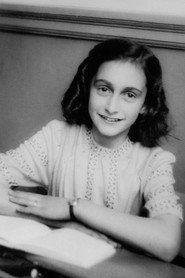 Anne FrankSelf (archival footage)
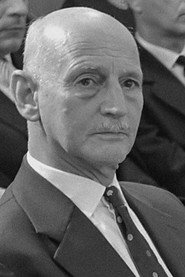 Otto FrankSelf (archival footage)