
Television series
Apocalypse: La 2e Guerre mondiale
- Very dark
A landmark six-part French documentary that restores and colorizes over 600 hours of declassified WWII footage—from combat zones, intelligence operations, resistance cells, and civilian life—into vivid high-definition. Mathieu Kassovitz's narration guides you through an immersive, intimate retelling that makes the war feel immediate and human rather than historical abstraction. For anyone who thought they knew WWII, or anyone discovering it for the first time.
Should you watch it?
Watch it if you want the war seen through restored color footage and ordinary people's own words, the kind of history that makes the past feel uncomfortably close.
Skip it if you want analysis, argument or a clear through-line of battles and generals, since this leans on testimony and images more than explaining why things happened.
What it asks of you: Six hours of hour-long episodes that move in measured chapters, asking you to sit with wartime footage and let each testimony land before the next one arrives.
Not sure? Find tonight's pick in a minute.
If you liked this
The World at War1973
The definitive English-language WWII documentary series. Laurence Olivier's narration, comprehensive scope, and access to survivors' testimony set the gold standard. Essential if you want the broadest possible context.
But Shot in black and white on 1970s budgets, it can feel dated visually. Twenty-six episodes is a serious commitment.
Night and Fog1956
Alain Resnais's landmark 32-minute essay on the Holocaust, using archival footage and tracking shots through Auschwitz. Devastating, poetic, unforgettable. The film that defined how we remember atrocity on screen.
But Its power lies partly in its refusal to explain or comfort. The pace is glacial by design. Not a survey—a confrontation.
Shoah1985
Claude Lanzmann's nine-and-a-half-hour oral history of the Holocaust, built from interviews with survivors, perpetrators, and witnesses. No archival footage—just voices, faces, and landscape. Hypnotic and unbearable in equal measure.
But It is nearly ten hours long. It contains graphic survivor testimony about unimaginable things. Not designed for passive viewing.
Not sure tonight? Get a pick in a minute, starting from Apocalypse: La 2e Guerre mondiale
The wildcard
Something you would not have found on your own.
Satantango1994
Both use formal innovation and duration to make invisible suffering visible. Satantango proves that the power isn't in the images themselves, but in how you're asked to witness.
A seven-and-a-half-hour Hungarian film about a community after an unnamed historical catastrophe. The connection isn't direct—it's structural. Like Apocalypse, it uses time and accumulation to make you feel the weight of history on ordinary people's bodies and faces. A meditation on trauma in slow motion.
But Slow cinema in the most extreme form. Shot in black and white, no conventional narrative, sometimes incomprehensible. Tests patience rather than rewards it.
More like this (6)
Come and See1985
A Belarusian fiction film about a teenage boy conscripted into the Soviet Army during Operation Barbarossa. The most viscerally authentic depiction of Eastern Front combat ever made. Transforms how you understand the human cost.
But Extremely violent and grotesque. The infamous scene with the statues will stay with you for years. This is not entertainment, and it knows that.

The Fog of War2003
Errol Morris interviews Robert McNamara about his role in WWII and Vietnam. Not a combat documentary—a meditation on how war looks from inside decision-making, and how memory shapes certainty into doubt.
But It's really about Vietnam as much as WWII. If you want to understand the war itself, this is sideways to that project.

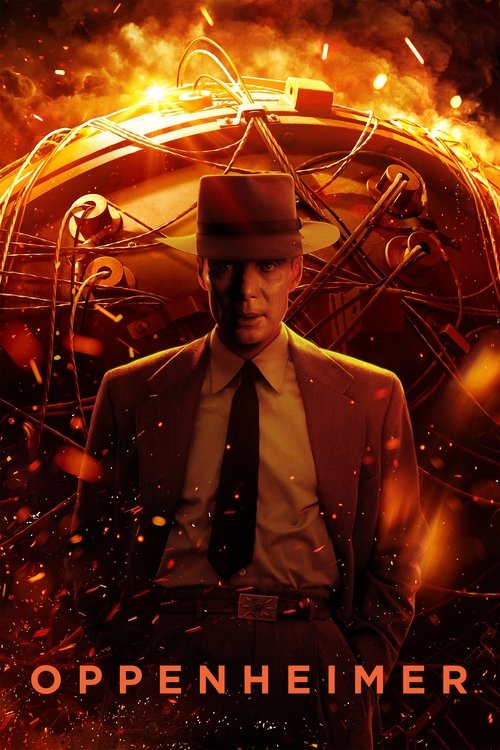
Oppenheimer2023
Christopher Nolan's account of the bomb's creation and its moral fallout. Gripping, visually stunning, and seriously engaged with the question of what scientists owe the world. Feels urgent rather than historical.
But Three hours and not always clear. The non-linear structure can feel mannered. The bomb itself barely appears on screen.
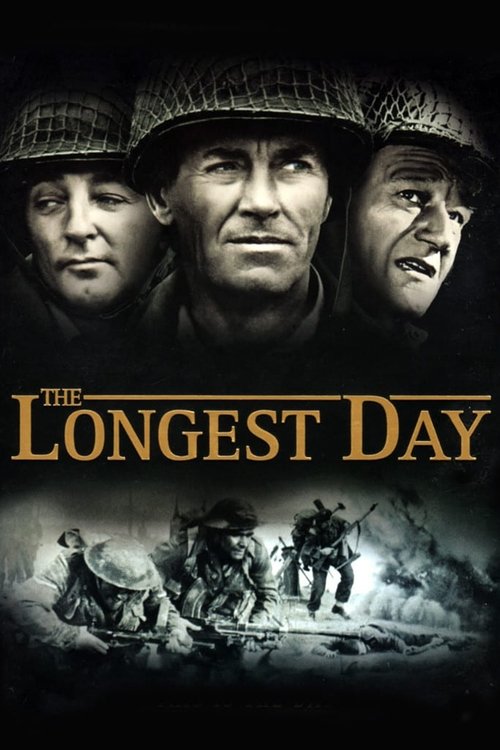
The Longest Day1962
An epic ensemble recreation of D-Day that still holds up as a technical and narrative feat. Sweeping, exciting, and remarkably detailed about the logistics and chaos of invasion. Entertaining without being glib.
But A fiction film about one day, so it leaves 99% of the war untouched. The spectacle can dwarf the human story it's trying to tell.
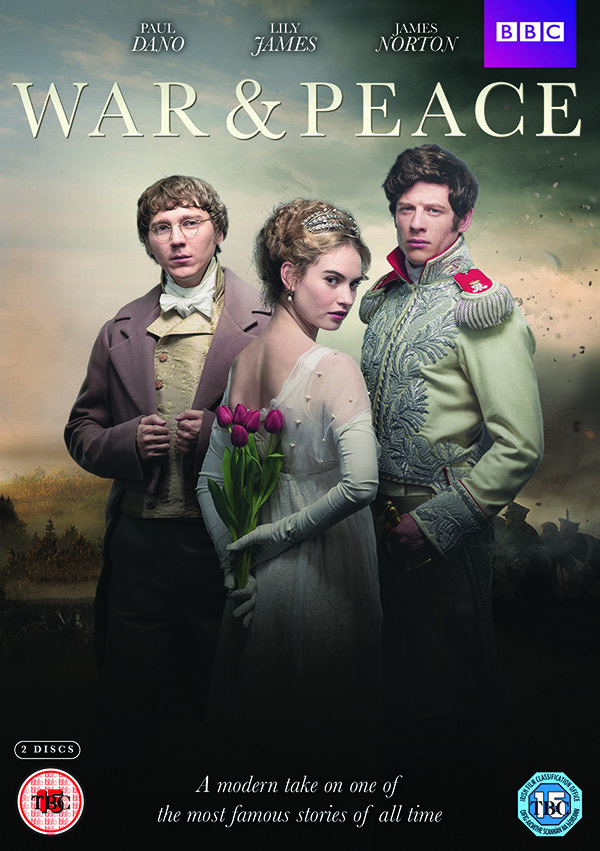
War & Peace2016
Both use immersive duration and first-person testimony (though Tolstoy's is fictional) to make war feel lived rather than learned about. Both insist that history happens in parlors and bedrooms as much as trenches.
Sergei Bondarchuk's Soviet adaptation of Tolstoy: eight hours across multiple episodes, spanning the Napoleonic Wars and the Russian home front. Staggering in scale and emotional texture. Shows WWII docs what intimacy inside historical magnitude can look like.
But Russian, subtitled, vastly longer than you think. The personal stories can feel glacial compared to the battle scenes. Requires real patience.
Stalker1979
Both see landscape as a record of historical violence. Both ask what it means to move through a world marked by catastrophe. Both trust images over explanation.
Andrei Tarkovsky's science fiction film about a guide leading two men through a mysterious zone toward a room that grants wishes. It's not about WWII, but it's obsessed with the same thing Apocalypse is: how trauma reshapes the landscape and the human soul. Hypnotic, philosophical, visually extraordinary.
But Deliberately slow. No action, no answers, no conventional climax. A puzzle that doesn't want to be solved. Science fiction for people who hate plot.

People
Cast
 Mathieu KassovitzNarrator