
Film
Werther
Pilar Miró's 1986 adaptation transplants Goethe's romantic tragedy to contemporary Spain, where a tutor becomes dangerously entangled with his employer's wife. Shot with surgical precision and emotional restraint, it's a film about desire that refuses to perform desire—quiet, tense, and utterly committed to the slow collapse of a man who loves too much. For viewers who prize psychological depth over passion.
Should you watch it?
Watch it if you are drawn to slow, emotionally cool romances where what goes unsaid carries more weight than the dialogue, and you don't need the couple to be warm company.
Skip it if you want heat on screen, because this keeps its passion buttoned up and its pace stiff, so restraint can start to feel like a long wait.
What it asks of you: Expect a slow, quiet pace of lingering looks and long pauses across about an hour and forty-five minutes, with little rushing to tell you how to feel.
Not sure? Find tonight's pick in a minute.
If you liked this
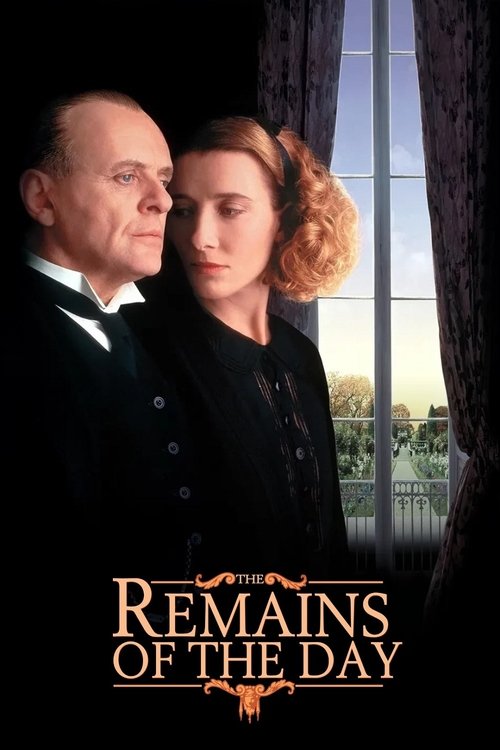
The Remains of the Day1993
Anthony Hopkins as a repressed servant nursing decades of unspoken love creates the same portrait of desire as quiet destruction. Both films understand that the deepest wounds are the ones we inflict on ourselves through restraint.
But It moves glacially and withholds emotional catharsis. If you need your feelings validated by the film, this will frustrate you.
A Ghost Story2017
Like Werther, it's about love that persists beyond reason or health, told with remarkable formal control. Both films are interested in how obsession distorts time and selfhood into something almost unrecognizable.
But The pacing is deliberately mournful and the ending offers no resolution. It demands patience and rewards it sparsely.

The Leopard1963
Visconti's Italian masterpiece, also about desire and social constraint, shares Werther's belief that style and composition can express what characters cannot say aloud. Both are about watching someone's world silently come apart.
But It's 205 minutes long and assumes you're fluent in 19th-century Sicilian politics and custom. Sumptuous but demanding.

Not sure tonight? Get a pick in a minute, starting from Werther
The wildcard
Something you would not have found on your own.
The Passion of Anna1969
Both are meditations on the impossibility of reciprocal love, told through meticulous mise-en-scène and characters who suffer in near-silence. Both believe that a room can express what a person cannot.
Bergman's most explicitly Werther-like film—four people isolated in a house while one of them loves someone who cannot return it. Shot with the same emotional austerity and visual precision, it's Goethe filtered through Swedish metaphysics.
But It's 131 minutes of anguish with no narrative momentum. Bergman assumes you're watching for psychological texture, not plot.
More like this (8)
In the Mood for Love2000
Wong Kar-wai transforms yearning into visual poetry. Like Werther, it's a film about desire that moves through glances and clothing rather than declarations, where restraint becomes a form of passion.
But The narrative barely moves. If you're watching for plot, you'll find an hour and a half of beautiful stasis deeply tedious.

The Conformist1971
Another study of desire and self-deception set against a distant, hostile society. Bertolucci structures it like Werther—a man undone by what he cannot admit to himself until it's too late.
But Fascist Italy, a bisexual protagonist, and sexual violence. It's intellectually brilliant but morally dark and demands active engagement.
Bitter Lake2015
Andrew Hultkrants experimental documentary uses archive and poetry to explore longing as a kind of haunting. Both films see desire as something that possesses you rather than something you possess.
But It's avant-garde and elliptical, made for viewers already comfortable with formal difficulty and cryptic emotional language.
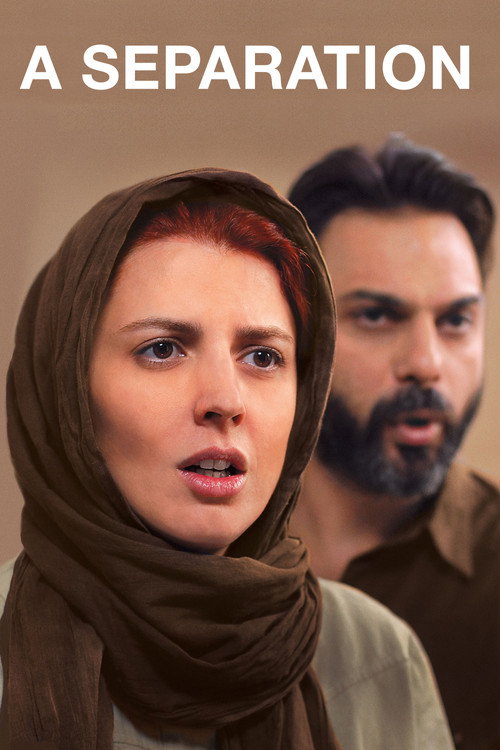
A Separation2011
Asghar Farhadi's Iranian masterpiece shares Werther's belief that private feeling crashes against social obligation with devastating consequence. Both films watch people rationalize their own destruction.
But It's relentlessly bleak and the moral ambiguity never resolves. There are no heroes, only damage and people trying to justify it.
The Skin I Live In2011
Another Spanish film about obsessive love that corrodes the lover from within. It shares Werther's cool precision and understanding that passion can be a disease.
But It's a psychological thriller that darkens considerably in its final act. The twist recontextualizes everything and not everyone welcomes that inversion.

Prick Up Your Ears1987
Gary Oldman as Joe Orton, destroyed by love for someone incapable of returning it with anything resembling stability. Both films anatomize the specific tragedy of needing someone who will never need you back.
But It's a film about a gay relationship that ends in murder. The emotional tone is sharp and contemporary in a way that older viewers sometimes find alienating.
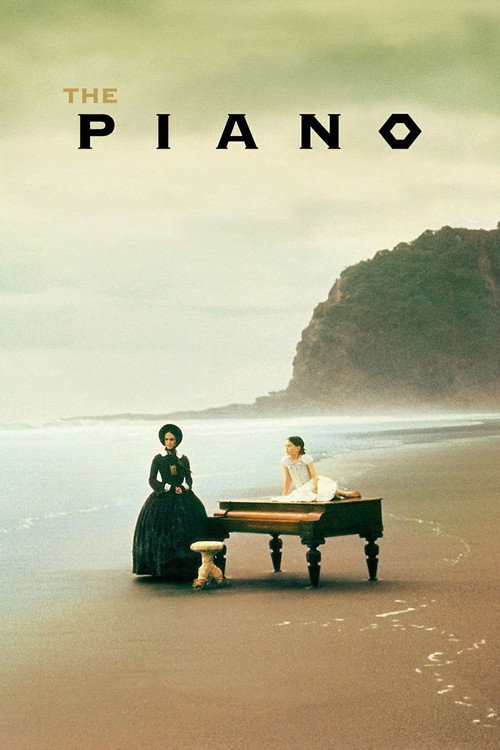
The Piano1993
Both films understand desire as a force that transgresses social boundaries and corrodes the self. Both use landscape and silence as emotional language. Both are formal experiments masquerading as love stories.
Jane Campion's New Zealand fever dream reverses Werther's power dynamic—a mute woman's desire for an unsuitable man in a colonial setting. Like Werther, it's about passion as both liberation and peril, told through visual restraint and formal daring.
But It's sensual and sometimes brutal. The sexual content is direct and the violence is not decorative. Some viewers find its romanticism of transgression troubling.
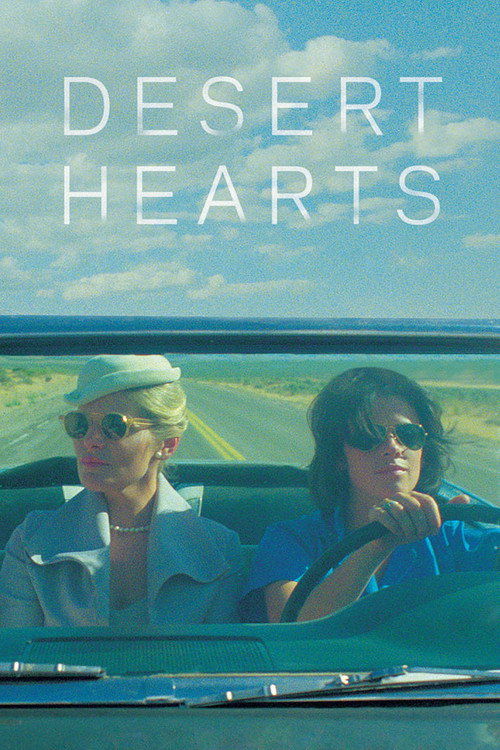
Desert Hearts1985
Both are period pieces about transgressive desire made by directors working in Spanish cinema's orbit. Both argue that love is worth the cost, but cost it dearly. Both shoot isolation and longing as visual beauty rather than emotional indulgence.
Donna Deitch's lesbian western—made in the same year as Werther—is a love story about two women meeting across class and age and choosing each other in defiance of the world. Where Werther is about desire that destroys, this is about desire that transforms. Both are formally precise.
But It's openly a love story between women in the 1950s. Some viewers approach older queer cinema with unexamined assumptions about what it 'had' to be.
People
Cast
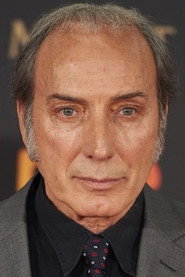 Eusebio PoncelaWerther
 Mercedes SampietroCarlota
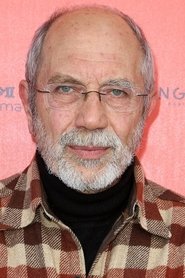 Féodor AtkineAlberto
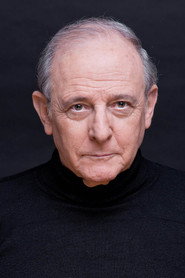 Emilio Gutiérrez CabaFederico
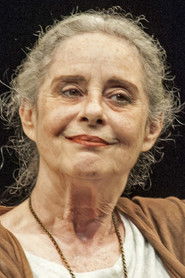 Vicky PeñaBeatriz1 (as Victoria Peña)
 Luis HostalotJerusalén
Directing
- Juan Pablo OcalAssistant Director
- Pilar MiróDirector
- Blanca AstiasuFirst Assistant Director
- Roberto BodegasFirst Assistant Director
Writing
- Johann Wolfgang von GoetheCharacters
- Mario CamusScreenplay
- Pilar MiróScreenplay
Production
- César BenítezProducer