
Film
The Iceman Tapes: Conversations with a Killer
- Serial killer
- Biopic
- Very dark
A 1992 documentary featuring taped prison interviews with Richard Kuklinski, a convicted serial killer who claimed over 100 victims. It's a stark, unflinching conversation with a man who describes methodical violence with domestic banality. For those drawn to true crime psychology and the banality-of-evil phenomenon, though the casual detail and Kuklinski's performance of normalcy will stay with you uncomfortably.
Should you watch it?
Watch it if you are drawn to unsettling true-crime documentaries built around a single person talking straight to the camera, where the horror comes from how calmly he describes himself rather than from gore.
Skip it if you want a documentary with wide investigative sweep, multiple witnesses and reenactments, since this one is almost entirely one man's voice and a few talking heads, and the subject matter is heavy throughout.
What it asks of you: Under an hour long, it is slow and unhurried, asking you to sit with a dark, quiet conversation and to stay alert to what the man is not saying.
Not sure? Find tonight's pick in a minute.
If you liked this
Conversations with a Killer: The Ted Bundy Tapes2019
A Netflix series using similar archival interview footage to examine another charismatic serial killer. It has the same hypnotic quality of watching someone describe atrocities while seeming almost ordinary. A natural follow-up for anyone unsettled by Kuklinski's calm.
But The format is extended across four episodes rather than one concentrated viewing, which dilutes some of the immediate visceral impact. Also relies heavily on the Bundy mythology, which may feel less grounded than Kuklinski's plainspoken confessions.
Killing Season2013
A documentary examining the logic of serial murder through interviews and psychological analysis. It shares the clinical tone of *The Iceman Tapes*, exploring how killers rationalize and compartmentalize their violence without melodrama or sensationalism.
But It's slow and deliberately unglamorous, which means long stretches without narrative momentum. Some viewers find the psychological approach less immediately gripping than the personal interview format.
In Cold Blood1967
A pioneering true-crime film based on Truman Capote's book about two men who murdered a family. It treats killers as complex people rather than monsters, examining motivation and psychology with remarkable restraint for its era.
But It's a literary adaptation, not a direct interview, so it lacks the raw, unmediated quality that makes Kuklinski's voice so disturbing. The pacing is deliberate and contemplative rather than tense.
Not sure tonight? Get a pick in a minute, starting from The Iceman Tapes: Conversations with a Killer
The wildcard
Something you would not have found on your own.
Kwaidan1965
Both examine how a killer lives with what they've done, but one uses psychological realism and the other uses supernatural metaphor. The psychological principle is identical: violence leaves a stain.
Masaki Kobayashi's masterpiece treats murder and violence as spiritual contamination that haunts the guilty. Like *The Iceman Tapes*, it's interested in the conscience of someone who has destroyed life, but approaches it through Japanese ghost stories rather than documentary evidence. The formal beauty makes the moral horror deeper.
But It's a 1960s Japanese film in four short stories, so it demands patience and tolerance for a very different aesthetic and narrative rhythm. If you want direct confessions rather than philosophical meditation, this will feel oblique.
More like this (8)
MINDHUNTER2017
David Fincher's series about the FBI's early criminal profiling unit, featuring interviews with real incarcerated killers. It captures the same fascination with how serial murderers think and justify themselves, with meticulous production design and performances.
But It's a drama, not a documentary, so the interviews are dramatized and the narrative has conventional TV arcs. If you want the unvarnished thing, this theatrical approach might feel like a step away.
The Devil in the White City
A Hulu miniseries about H.H. Holmes, a serial killer during the 1893 Chicago World's Fair. Like *The Iceman Tapes*, it explores how a killer moves through ordinary life, though it reconstructs rather than records his story.
But It's a period drama with substantial narrative invention, so it prioritizes storytelling over forensic accuracy. The aestheticization of murder may feel like it works against the documentary's unflinching tone.
The Confession Killer2019
A Netflix documentary about Henry Lee Moore, a man who confessed to hundreds of murders, most of which he didn't commit. It shares the archival interview approach and explores the psychology of confession, but adds an unsettling moral complexity.
But The unreliability of the subject makes it less immediately gripping than a case of genuine documented crimes. Some find the ambiguity frustrating rather than intriguing.
Aileen: Life and Death of a Serial Killer2003
Nick Broomfield's documentary featuring extensive interviews with Aileen Wuornos on death row. Like *The Iceman Tapes*, it's a direct encounter with someone convicted of multiple murders, though Wuornos is far more volatile and unguarded than Kuklinski.
But Broomfield's presence is intrusive; he inserts himself into the narrative in ways that distract from the subject. Some viewers find his directorial choices manipulative rather than illuminating.
The Jinx: The Life and Deaths of Robert Durst2015
An HBO miniseries built around extensive interviews with a man suspected in multiple murders. It has the same quality of sitting across from someone discussing violence with unsettling calmness, and the production is meticulous.
But It's structured as a mystery-box thriller, which occasionally prioritizes dramatic revelation over understanding. The real-time legal developments that occurred during its broadcast now feel like they've overwhelmed the original documentary intent.
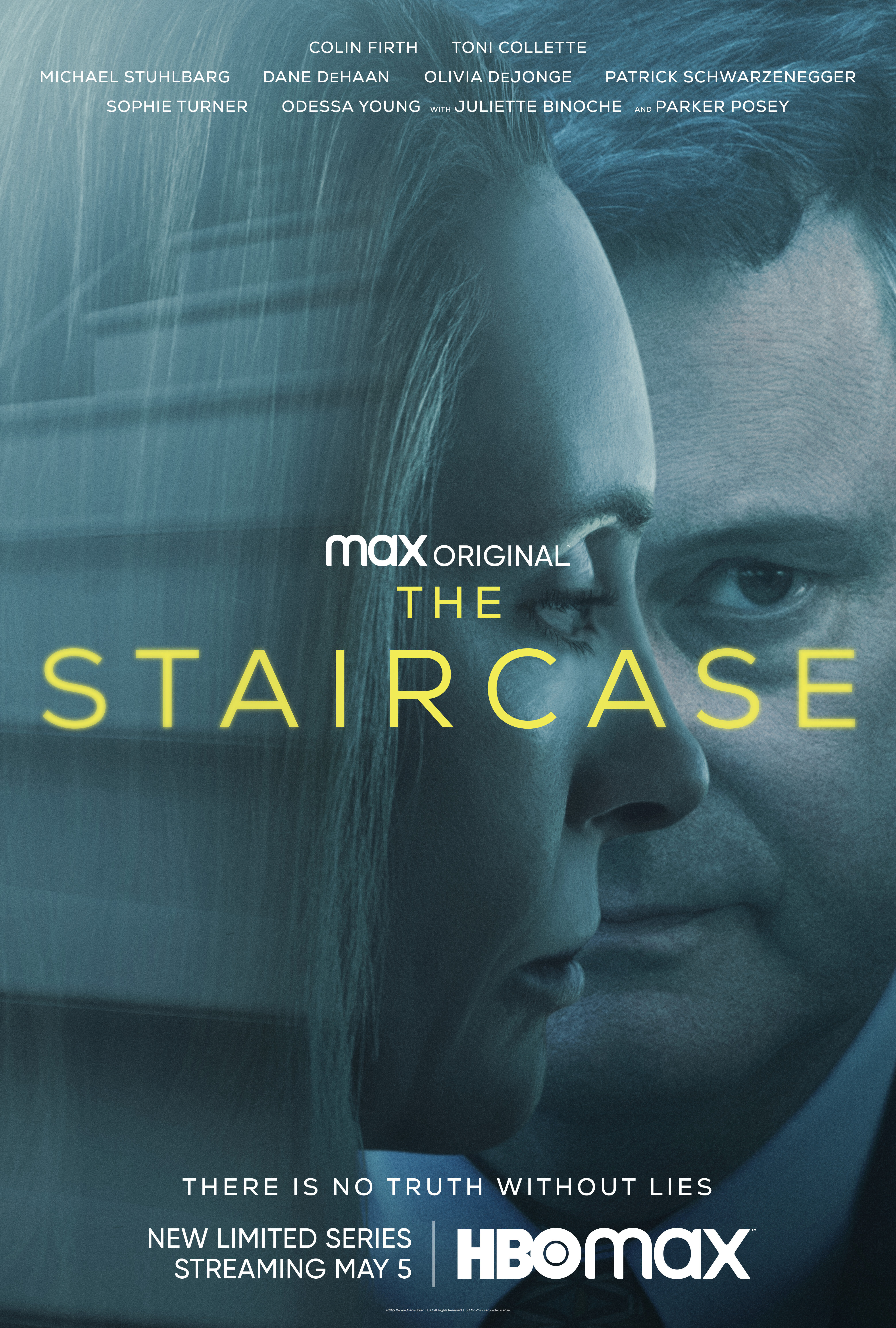
The Staircase2022
A true-crime series examining a death that may or may not have been murder. Like *The Iceman Tapes*, it sits with ambiguity and lets viewers assess someone's credibility in real time through interviews and evidence.
But It sprawls across thirteen episodes, and the central mystery remains unresolved in ways some find unsatisfying. The emphasis on courtroom procedure may bore viewers seeking psychological insight into the subject.
The Act of Killing2012
Both films trust interviews with killers to reveal something true about violence. Both assume that watching someone justify atrocity will tell you something about evil itself. But *The Act of Killing* is about collective institutional murder, and *The Iceman Tapes* is about an individual's compartmentalization.
Joshua Oppenheimer's documentary asks Indonesian death-squad leaders to recreate and re-enact their own murders on film. It's the inverse of *The Iceman Tapes*—instead of a killer confessing calmly, we watch killers perform their own monstrosity, gradually becoming aware of what they've actually done. Extraordinary and devastating.
But It's very long (more than two hours), and the re-enactments are surreal and sometimes campy in ways that could feel exploitative rather than clarifying. The open-ended structure and lack of traditional justice may frustrate viewers seeking resolution.

The Noise of Time
Both examine how humans live alongside violence. *The Iceman Tapes* shows a killer compartmentalizing his work from his family. *The Noise of Time* shows an artist compartmentalizing his conscience from his survival. The psychological mechanism is the same: performance and compartmentalization as a kind of sanity.
A fictional drama about Dmitri Shostakovich living under Stalin's terror, constantly aware that he might be arrested or executed. It shares *The Iceman Tapes*' interest in how someone functions within systems of violence—not as perpetrator but as victim-witness—and how creativity survives moral catastrophe. It's quiet and internally focused.
But It's a period biopic about a Russian composer, which is a very different register from true crime. It's also slow, melancholic, and entirely preoccupied with artistic integrity rather than crime or confession.
People
Cast
- Richard KuklinskiHimself
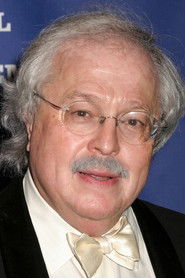 Michael BadenHimself
- Robert J. CarrollHimself
 Lee GrantNarrator
 Chuck ScarboroughHimself
- Barbara KuklinskiHerself
Directing
- Arthur GinsbergDirector
- Tom SpainDirector
Writing
- Richard KuklinskiWriter