
Film
The Hole
Other titles called The Hole: the 2001 film, the 2009 film.
- Drama
- Strange
- Slow-burning
Tsai Ming-liang's apocalyptic fable about two strangers separated by a hole in the floor during Taiwan's final days. As plague empties the world and rain never stops, they communicate through the gap with mounting intimacy and need. Glacially paced, visually ravishing, and deeply strange—for viewers who find beauty in stillness and isolation.
Should you watch it?
Watch it if you respond to films where long silences and small domestic gestures carry more feeling than any plot, and where a rainy apartment can feel like the whole world.
Skip it if you want momentum or a clear story engine, since this moves at a deliberate crawl, leans on quiet stretches, and often lets scenes simply sit without explaining themselves.
What it asks of you: It runs about ninety-five minutes but feels unhurried, with long held shots, sparse dialogue, and a patience that rewards viewers who let the mood settle rather than waiting for things to happen.
Not sure? Find tonight's pick in a minute.
If you liked this
Mulholland Drive2001
Surreal LA nightmare that scrambles identity and desire into something hypnotic. Like *The Hole*, it trusts you to sit with confusion and discomfort until meaning crystallizes—or doesn't.
But Three hours, nonlinear, deliberately opaque. If you need plot clarity or pace, this will frustrate you.

Come and See1985
Elem Klimov's merciless vision of war as apocalypse. Both films trap characters in worlds drained of hope while rain, decay, and separation become the real story.
But Genuinely harrowing. Not a film that comforts or affirms. Some scenes stay with you in ways that hurt.

Under the Skin2014
Slow-burn sci-fi about alien presence and human vulnerability. Like *The Hole*, it mines strangeness from isolation and physical proximity, with minimal dialogue and maximum dread.
But Alien landscape cinematography is gorgeous but glacial. The narrative is minimal; visual and sonic mood matter more than story.

Not sure tonight? Get a pick in a minute, starting from The Hole
The wildcard
Something you would not have found on your own.
Tokyo Story1953
Both trust stillness over incident. Both find profundity in spaces between people rather than in action or dialogue. Both believe cinema should watch, not explain.
Ozu's quiet portrait of family and time passing. No plague, no science fiction—but the same patient observation of connection, silence, and the space between people. Proof that *The Hole*'s aesthetic is timeless.
But Black and white, shot in static frames with no dramatic crescendo. Pure observation of ordinary life will bore anyone seeking conventional narrative.

More like this (8)
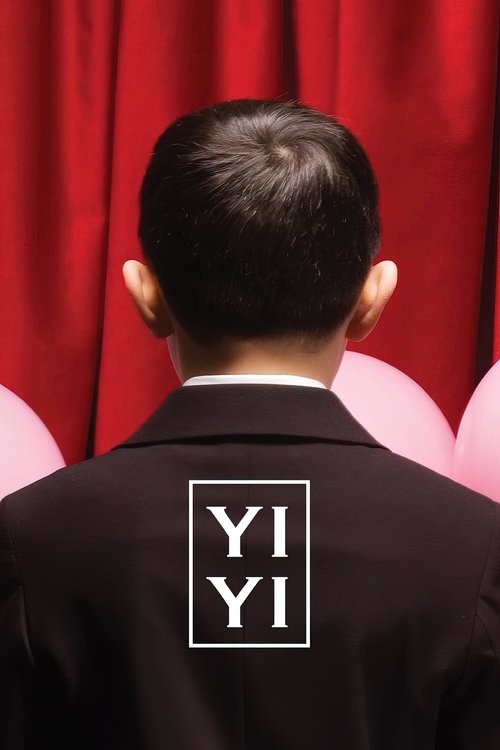
Yi Yi2000
Edward Yang's portrait of contemporary Taipei life—observant, digressive, full of small connections. A companion to Tsai's vision of the city, warmer but equally attentive to surfaces and secrets.
But Nearly three hours tracking overlapping family stories with no conventional climax. Requires patience and acceptance of loose threads.
Stalker1979
Andrei Tarkovsky's metaphysical journey into a mysterious zone mirrors *The Hole*'s exploration of desire and the unknowable. Hypnotic, philosophical, constructed from time and silence.
But Extremely long, extremely slow. Shot in muted colors with minimal action. Tests even patient viewers' endurance.

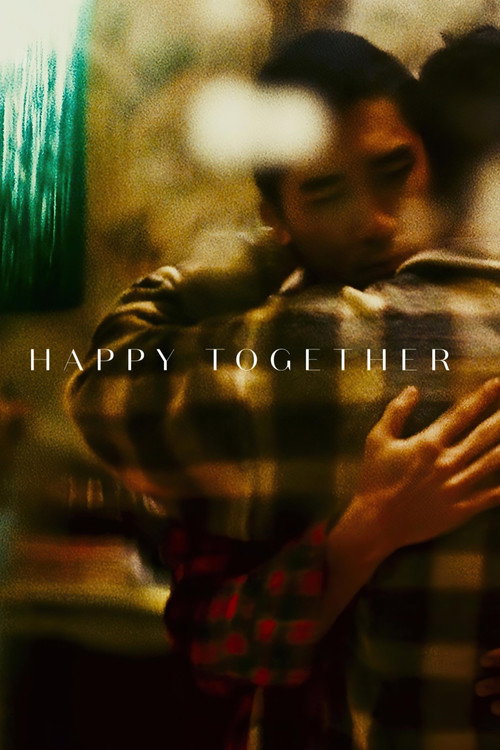
Happy Together1997
Wong Kar-wai's portrait of two men in Buenos Aires, confined by architecture and obsession. Visual extravagance containing emotional claustrophobia—desire and decay in intimate spaces.
But Deliberately artificial color grading and rapid cutting can feel stylish to the point of distraction. Some find it self-conscious.
The Turin Horse2011
Béla Tarr's apocalyptic duet between master and servant repeating rituals as the world ends. Rain, decay, and two people caught together—Tarr's version of *The Hole*'s vision.
But Black and white, repetitive, bleak. No redemption offered. Many viewers find it punishing rather than rewarding.

Synecdoche, New York2008
Charlie Kaufman's labyrinth of identity and grief. Like *The Hole*, it finds strangeness in ordinary relationships and locations, building worlds within worlds.
But Deliberately confusing and self-referential. Easy to feel lost; some see profundity, others see pretension.

In the Mood for Love2000
Wong Kar-wai's adjacent film about longing in confined Hong Kong apartment spaces. Visual poetry of proximity and distance—another meditation on desire caught in architecture.
But More beautiful than dramatic. Plot is thin; atmosphere and cinematography are everything. Some find it decorative.

A Ghost Story2017
Both use science fiction as a frame for exploring intimacy and mortality. Both compress vast ideas—plague, time, separation—into confined spaces and minimal dialogue.
David Lowery's intimate science-fiction film about time, presence, and loss. A man watches his house and life from beyond, contemplating centuries while rain falls. Minimal but devastating—*The Hole* for a different century.
But Deliberately paced, visually austere, emotionally heavy. Its central metaphor (a ghost under a sheet) will strike some as slight or precious.

Jeanne Dielman, 23, quai du Commerce, 1080 Bruxelles1976
Both are films about isolation and routine in confined spaces. Both refuse dramatic convention and instead build meaning through duration, repetition, and visual precision. Both demand the viewer become the film's collaborator.
Chantal Akerman's three-hour observation of a woman's domestic routine. It seems plotless until you realize the plot is time itself, rhythm, the space between actions. Shares *The Hole*'s faith that attention to small things reveals everything.
But Extended real-time sequences of cooking, cleaning, sex work. No music, minimal cutting. Many find it boring; supporters call it revolutionary. Legitimately difficult to sit through.

People
Cast
 Yang Kuei-meiThe Woman Downstairs
 Lee Kang-shengThe Man Upstairs
 Miao TianThe Customer at Market
- Hui-Chin LinNeighbor
- Lin Kun-hueiThe Kid
- Tong Hsiang-ChuThe Plumber
 Chen Shiang-Chyi(voice)
- Daphne Han(voice)
- Bo-Chin Wei(voice)
 Jacques Picoux(voice)
 Yee Chih-yen(voice)
 Lu Yi-ching(voice)
Directing
- Tsai Ming-liangDirector
Writing
- Pi-ying YangScreenplay
- Tsai Ming-liangScreenplay
Production
- Jiang Feng-ChytAssociate Producer
- Simon ArnalAssociate Producer
- Chiu Shun-ChingExecutive Producer
- Pierre ChevalierExecutive Producer
- Su-ming ChengExecutive Producer
- Peggy ChiaoProducer
- Shih-Fang WangProduction Manager