
Film
Austerlitz
- Slow-burning
Austerlitz captures visitors to the Memorial to the Murdered Jews of Europe in Berlin, observing them as they navigate the vast, disorienting maze of concrete slabs. Director Sergei Loznitsa watches without commentary—people posing for selfies, children playing, tourists consulting maps—creating a quietly devastating collision between casual tourism and the weight of remembrance. It's unsettling and meditative in equal measure.
If you liked this
Sans Soleil1983
Chris Marker's essayistic documentary about memory, travel, and how we process history through images. It shares Loznitsa's interest in how we encounter difficult truths and what we do with them when we think no one's watching.
But Deliberately fragmented and digressive; it requires patient, active watching rather than passive consumption.

Shoah1985
Claude Lanzmann's nine-hour interrogation of Holocaust memory—survivors, perpetrators, witnesses—refuses easy answers. Like Austerlitz, it's interested in how we speak about the unspeakable and what silence means.
But Extremely long and emotionally demanding. The pace is glacial. It can feel repetitive if you're not attuned to what Lanzmann is doing.

Night and Fog1956
Alain Resnais' 32-minute meditation on Auschwitz, built from archival footage and present-day photography. Essential viewing that influenced how documentary makers approach Holocaust remembrance, and feels like a spiritual predecessor to Austerlitz.
But Graphic archival imagery. The poem-narration can feel mannered to modern ears. Deliberately refuses narrative closure.

Not sure tonight? Get a pick in a minute, starting from Austerlitz
The wildcard
Something you would not have found on your own.
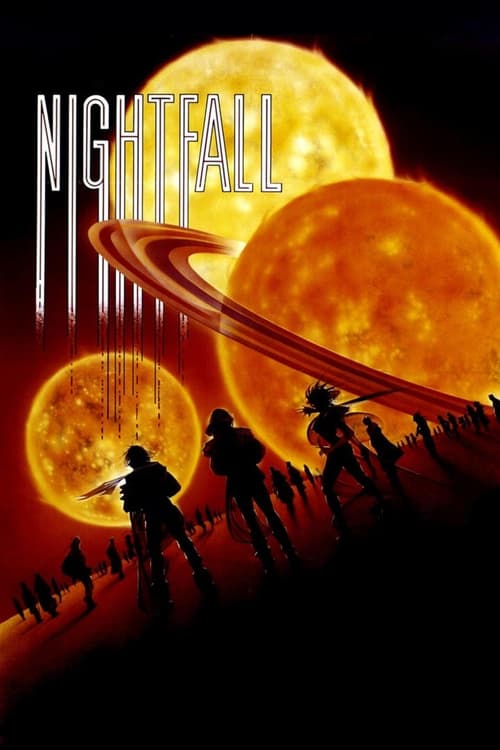
Nightfall1988
Same director, same philosophical approach: observing how societies relate to their past through architecture and public space rather than through narrative or explanation.
Sergei Loznitsa's own earlier work—a poetic documentary about the fall of the Soviet Union told through footage of monuments and public spaces being dismantled. It establishes his preoccupation with how history is physically present in urban landscapes and what happens when we stop knowing how to read those spaces.
But Requires some knowledge of Soviet history to fully resonate. Very meditative; essentially plotless.
More like this (2)
The Exam2011
Where Austerlitz observes tourists grappling with memorial space, this observes an individual grappling with citizenship and belonging in the same city. Both are about the gap between historical responsibility and lived experience.
A narrative feature about a woman preparing for a citizenship exam in Berlin. Quietly explores what it means to belong to a place and how national identity is constructed through knowledge, ritual, and collective memory—the flip side of Austerlitz's tourist gaze.
But Minimalist and slow-paced. The dramatic stakes are intimate and internal, not cinematic. Some will find it too subtle to engage with.
Come and See1985
Both are about the relationship between the viewer and historical trauma, but where Austerlitz studies detachment and tourism, Come and See destroys the possibility of detachment altogether. Together they bracket the question: how should we witness?
Elem Klimov's brutal, hallucinatory Soviet film about a child soldier during WWII. It's the visceral opposite of Austerlitz—not observing tourists at a memorial, but placing you inside the living horror that memorials try to contain. Essential counterpoint to any thinking about how we remember atrocity.
But Profoundly traumatizing and difficult to watch. Not recommended for anyone already in crisis. The film itself is almost weaponized in its emotional assault.

People
Directing
- Sergei LoznitsaDirector
Writing
- Sergei LoznitsaWriter