
Film
Marvin's Room
A quietly devastating family drama where a woman dying of leukemia reaches out to her estranged sister after two decades of silence, hoping for a bone marrow transplant. Meryl Streep and Diane Keaton anchor this chamber piece about regret, forgiveness, and whether it's ever too late to repair what we've broken. It's intimate, unsentimental, and gutting.
Should you watch it?
Watch it if you find yourself drawn to quiet family dramas where wry, bruised humour sits beside real grief, and you like watching seasoned actors trade small looks across a kitchen table.
Skip it if you want a story that moves forward briskly, since this is a gentle, talky piece where long stretches are about people sitting in rooms and remembering old wounds.
What it asks of you: Settle in for barely an hour and forty minutes of unhurried talk, where the mood stays low-key and patient rather than urgent, and attention pays off in glances.
Not sure? Find tonight's pick in a minute.
If you liked this
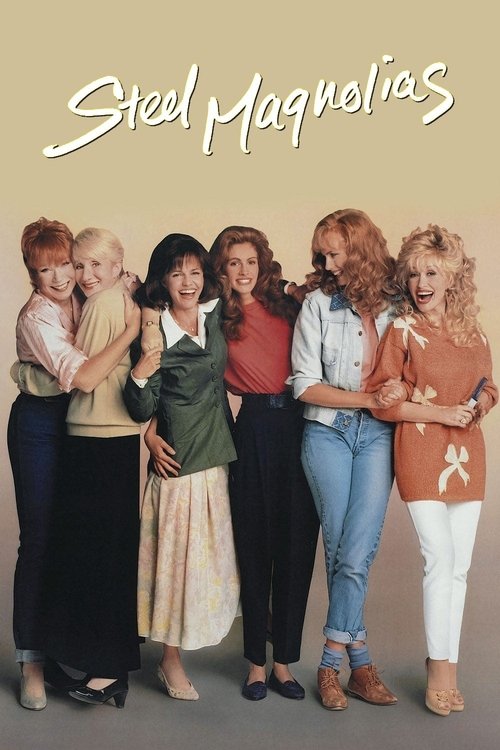
Steel Magnolias1989
A masterclass in ensemble drama where women's lives, relationships and mortality are treated with equal weight and gravity. Like Marvin's Room, it finds profound humanity in domestic spaces and refuses easy sentiment.
But The Southern Gothic texture and dialogue style feel dated now, and it swings toward melodrama in ways Marvin's Room carefully avoids.
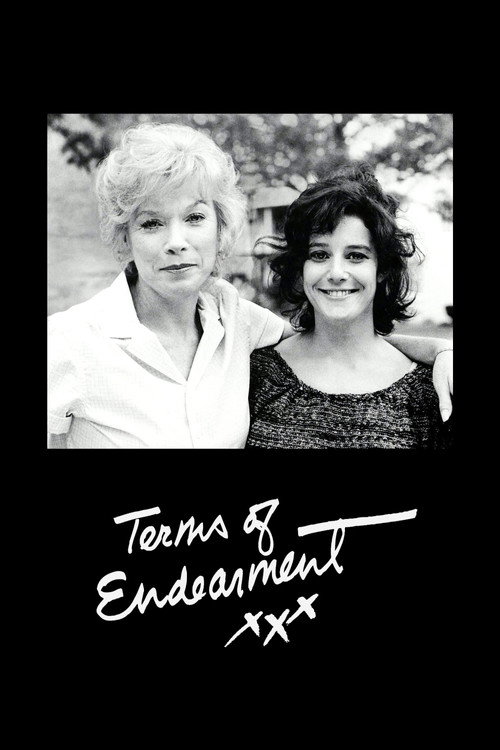
Terms of Endearment1983
Tracks the same emotional terrain—family estrangement, terminal illness, the possibility of grace—across decades. Shirley MacLaine and Debra Winger deliver performances of comparable depth and restraint.
But It's longer and busier, with subplot machinery that sometimes crowds out the quieter moments that make Marvin's Room so powerful.
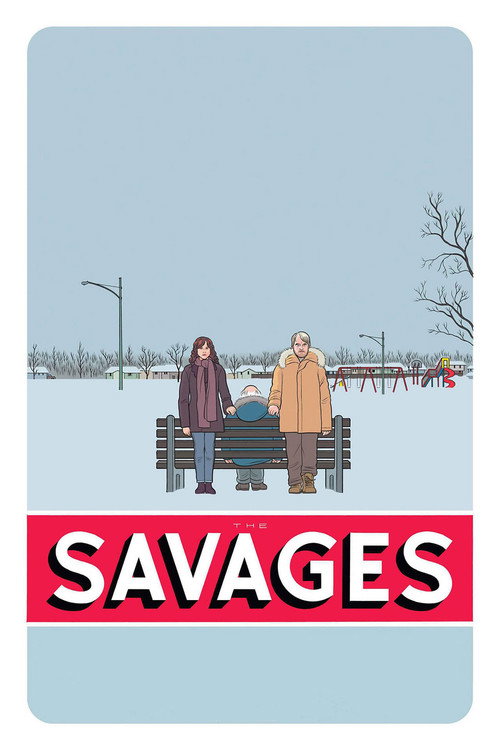
The Savages2007
Another Streep-adjacent meditation on adult siblings forced to confront each other while managing a parent's decline. It has the same unsentimental eye for how families actually function under stress.
But It's considerably darker and more abrasive; there's very little warmth to latch onto, which some find alienating.
Not sure tonight? Get a pick in a minute, starting from Marvin's Room
The wildcard
Something you would not have found on your own.
A Woman Under the Influence1974
Both films trust actors to reveal character through small behavioral choices rather than exposition. Both find the drama in the spaces between medical crises, where family members have to actually look at each other.
John Cassavetes's brutal, loving portrait of a woman in crisis and the family that contains her. Like Marvin's Room, it's about illness—here psychological rather than physical—as the catalyst for seeing people clearly, without mythology.
But It's physically and emotionally exhausting to watch, with long scenes of people talking over each other and breaking down. Not cathartic; abrasive.

More like this (8)
Ordinary People1980
Robert Redford's direction finds profound drama in family dinners and therapy sessions. Like Marvin's Room, it understands that the deepest wounds are often invisible and best expressed through silences.
But The '80s aesthetic and some of the psychological language feel quaint now, and the pacing can feel glacial to modern viewers.

Autumn in New York2000
A love story shadowed by mortality that shares Marvin's Room's refusal to sentimentalize illness or death. It's melancholic rather than maudlin, concerned with how people actually behave when time runs short.
But The romance feels thin at times, and the film occasionally leans on mood in ways that don't quite justify the emotional investment it's asking for.

The Hospital1971
Paddy Chayefsky's sardonic look at institutions, mortality, and the people trapped inside them. It's darker and funnier than Marvin's Room but shares its contempt for false comfort and its respect for complexity.
But It's deliberately cynical and hostile, which can feel exhausting; there's no warmth to balance the rage, and the satire occasionally overwhelms character.

About Schmidt2002
Jack Nicholson as a man confronting estrangement, legacy, and the possibility that he's lived wrong. It has Marvin's Room's dark humor and its willingness to let characters be unlikeable and still worth knowing.
But Schmidt himself is often cringe-inducing, and the film doesn't always make clear whether we should sympathize or judge him.

Sunshine1999
Three generations of a Hungarian Jewish family across a century. It shares Marvin's Room's tragic fatalism and its belief that family is something we're bound to even when we've failed each other profoundly.
But It's exhaustingly long and dense, spanning so much history that individual emotional beats can blur together.

The Straight Story1999
David Lynch's gentlest film about an aging man making peace with his brother. Slow, meditative, and radiant with forgiveness—it matches Marvin's Room's faith that reconciliation, however modest, matters.
But It's deliberately paced to the point of stasis; if you need plot momentum or conventional drama, this will feel like watching grass grow.

Tokyo Story1953
Both films believe that the small, unglamorous moments—eating meals, sitting in hospital rooms, moving through a day—are where the real truth of family lives. Neither film sentimentalizes what's happening.
An elderly couple visits their surviving son and meets his widow and grandson. Ozu's camera barely moves, dialogue is minimal, and yet the film captures every shade of loss, compromise, and the way families fold around grief.
But It requires patience with long static shots and silences. Some viewers experience it as gentle; others find it remote and cold.

The Wrestler2008
Both films center on a parent and adult child unable to bridge decades of distance, and both understand that the desire to repair things doesn't guarantee the ability to do it. The connection is earned through futility, not hope.
Mickey Rourke as a man estranged from his daughter, desperately trying to reach her before it's too late. It has Marvin's Room's tragic recognition that some gaps can't be closed in time, and that awareness of failure doesn't erase the failure.
But It's relentlessly bleak and offers no redemption. If you're looking for the emotional catharsis Marvin's Room provides, this will feel like punishment.

People
Cast
 Meryl StreepLee Wakefield Lacker
 Diane KeatonBessie Wakefield
 Leonardo DiCaprioHank Lacker
 Robert De NiroWallace "Wally" Carter
 Hume CronynMarvin Wakefield
 Gwen VerdonRuth Wakefield
 Hal ScardinoCharlie Lacker
 Dan HedayaRobert "Bob" Carter
 Margo MartindaleCharlotte Samit
 Cynthia NixonRetirement Home Director
 Kelly RipaCoral
 John CallahanLance
Directing
- Jerry ZaksDirector
- Ellen H. SchwartzFirst Assistant Director
- Anne RappScript Supervisor
Writing
- Scott McPhersonScreenplay
Production
- Craig GeringAssociate Producer
- John GuareAssociate Producer
- Ilene StargerCasting
- Adam SchroederCo-Producer
- Bonnie PalefCo-Producer
- David WisnievitzCo-Producer
- Meryl PosterExecutive In Charge Of Production
- Lori SteinbergExecutive Producer
- Tod Scott BrodyExecutive Producer
- Antoine DouaihyLocation Manager
- Jane RosenthalProducer
- Robert De NiroProducer
- Scott RudinProducer
Recommended by
Terms of Endearment, You're Not You, Stepmom, The Prince of Tides, My Life, Hope Springs, Another Woman