
Film
Quiet Rage: The Stanford Prison Experiment
- Social drama
- Very dark
A 1992 documentary examining Philip Zimbardo's infamous 1971 Stanford Prison Experiment, where college students assigned as guards and prisoners in a simulated jail descended into abuse within days. It's a bracing, uncomfortable look at how situation can override individual morality. Essential viewing for understanding institutional psychology and the fragility of our assumptions about human nature.
Should you watch it?
Watch it if you are drawn to the slow unpacking of a single unsettling idea, and you want to hear the person who ran the experiment explain his own reasoning in his own voice.
Skip it if you expect a dramatised retelling with actors in the cells; this is a documentary built around one man's account, so it rests on talk more than spectacle.
What it asks of you: Fifty minutes of close argument rather than plot; the pace is measured and the mood sober, so bring patience rather than a need for momentum.
Not sure? Find tonight's pick in a minute.
If you liked this
Obedience1962
Parallel psychological study that reveals how ordinary people follow authority even when causing harm. Equally unsettling and foundational to understanding compliance and moral abdication in systems.
But A short, dry archival film with minimal production value and difficult subject matter that lingers uncomfortably.
12 Angry Men1957
Explores how group dynamics, authority, and social pressure warp judgment in a high-stakes setting. A masterclass in how context shapes behaviour, told through gripping courtroom drama.
But It's a talking-heads film from 1957 with a theatrical pace that modern viewers sometimes find slow despite its tension.
The Act of Killing2012
Documentary where Indonesian death squad leaders recreate their mass murders. It probes the psychology of perpetrators and how ordinary people rationalize atrocity—an unflinching companion to Stanford's questions.
But Extremely disturbing, ethically fraught, and demands emotional stamina. Not for everyone, and some find its methods questionable.

Not sure tonight? Get a pick in a minute, starting from Quiet Rage: The Stanford Prison Experiment
The wildcard
Something you would not have found on your own.
Fyre2019
Like Stanford, it demonstrates how normal people participate in deception and exploitation when embedded in a system with authority figures and social pressure. The trap is just more seductive.
A documentary about charismatic con man Billy McFarland creating a fake festival. It's a modern case study in how persuasion, social proof, and hierarchy create complicity in a scam.
But Feels lighter and more gossipy than the weight Stanford carries. Some viewers resent how entertaining a story about fraud and exploitation becomes.

More like this (4)
The Stanford Prison Experiment2015
A narrative dramatization of the same 1971 study, bringing the emotional reality to life. Visceral and immediate in ways documentary footage cannot quite be.
But As a dramatization it takes interpretive liberties, and some psychologists dispute aspects of the original study's validity.
The Boy in the Striped Pyjamas2008
Narrative film exploring innocence confronting institutionalized evil. Moves the psychological questions from laboratory to historical atrocity with emotional weight.
But Some find it emotionally manipulative, and it simplifies Nazi history for dramatic effect.
Ghosts of Abu Ghraib2007
Documentary examining the real-world fallout of the Abu Ghraib torture scandal. Brings Stanford's theoretical warnings into documented, consequence-laden history.
But Contains descriptions and images of torture. Heavy subject matter without catharsis or clear resolution.

Come and See1985
Where Stanford asks 'how quickly does good become evil in an artificial system?', Come and See answers that question through the lived horror of real war. It's what Stanford feared, made visible.
A Belarusian war film showing a boy's descent from innocence into brutality. In 90 minutes it dramatizes what Stanford suggested: how situation and trauma unmake morality.
But Extremely graphic, nihilistic, and traumatizing by design. Not a film you watch for catharsis or hope. One of cinema's most brutal examinations of wartime dehumanization.

People
Cast
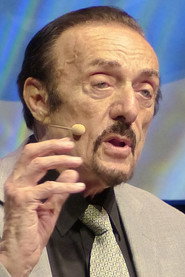 Philip ZimbardoHimself
Directing
- Ken MusenDirector