
Film
Minimalism: A Documentary About the Important Things
- Light-hearted
Joshua Fields Millburn and Ryan Nicodemus (The Minimalists) guide viewers through the philosophy and practice of owning less. Shot like a TED talk made visual, it explores minimalism across different lives—not austere monastery living, but deliberate reduction as freedom. For anyone feeling suffocated by stuff or curious whether less really feels like more.
Should you watch it?
Watch it if you enjoy warm, low-key documentaries that feel like a long conversation over coffee, where ordinary people talk candidly about clutter, money and what they actually value.
Skip it if you want a tightly argued case or hard data, since this is mostly personal testimony and gentle persuasion, and the central idea can feel repeated across its 79 minutes.
What it asks of you: Settle in for a relaxed, unhurried hour and a bit, with few stakes and no tension to chase, just a patient set of interviews you can drift in and out of.
Not sure? Find tonight's pick in a minute.
If you liked this
The True Cost2015
Examines the human and environmental cost of fast fashion's overconsumption. Pair it with Minimalism to understand not just why you should own less, but the moral weight of what you already do own.
But Heavy and occasionally guilt-inducing; the film doesn't always offer practical solutions, only problems.

Samsara2011
A wordless visual meditation on consumption, spirituality, and human excess across cultures. Stunning cinematography makes philosophy physical, showing rather than telling what minimalism responds to.
But No narrative, no dialogue, no plot. If you need someone to explain what you're watching, this will frustrate you.

The Minimalists: Less Is Now2021
The follow-up explores minimalism's evolution: relationships, meaning-making, activism. Deeper than the first film, less introductory, more about living the philosophy long-term.
But Assumes you've already bought into minimalism's core ideas; doesn't make the case from scratch like the original.
Not sure tonight? Get a pick in a minute, starting from Minimalism: A Documentary About the Important Things
The wildcard
Something you would not have found on your own.
Stalker1979
Both ask whether acquiring what we think we want actually satisfies us. Stalker suggests the wanting itself is the trap; Minimalism suggests we've been chasing the wrong things.
Tarkovsky's slow, hypnotic film about desire and the meaninglessness of material pursuits. A man guides others through a mysterious zone to find a room that grants wishes—and everyone discovers they already have everything they need.
But Soviet sci-fi from 1979; glacially paced, long, oblique. Requires patience and philosophical patience. It does not entertain, it occupies.

More like this (6)
Tidying Up with Marie Kondo2019
Practical companion piece focusing on method and emotion. Kondo's empathetic approach to letting go—thanking objects, honoring their purpose—adds psychological depth the documentary implies.
But Sometimes saccharine; the transformation-in-one-episode format glosses over how hard this actually is.
The Social Dilemma2020
Exposes how consumer culture and tech platforms are engineered to make you want more—endless scrolling, algorithmically curated desire. Essential context for understanding what minimalism resists.
But Dramatic re-enactments undercut the documentary evidence; the tech-bro confessions feel performative.
Everything Everywhere All at Once2022
A maximalist visual explosion that paradoxically asks what actually matters. By showing a universe of infinite choice and stuff, it discovers the weight that abundance carries.
But Chaotic, weird, genre-bending; if you want clarity and answers, this deliberately withholds them.
The Queen of Versailles2012
A real-life satire on excess: billionaires building a 90,000-square-foot mansion during the financial crash. Darkly funny and accidentally moving about what money can and cannot buy.
But Veers into schadenfreude; the subjects' troubles can feel like entertainment rather than cautionary tale.

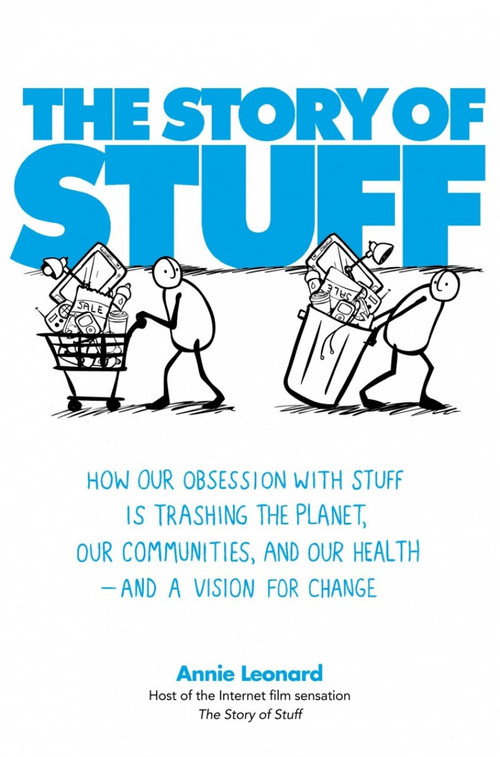
The Story of Stuff2007
Minimalism frames the solution as personal discipline; Story of Stuff names it as systemic problem. Together they answer: what do I do AND why do I need to?
Annie Leonard's 20-minute animated explainer on the production-consumption cycle. Punchy, clear, angry—it's where Minimalism's philosophy comes from, and it names the system, not just individual choice.
But Activist polemic, not balanced journalism. If you prefer nuance to clarity, it oversimplifies the economics.
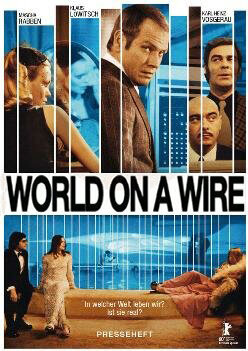
Welt am Draht1973
Minimalism asks 'do I need this?' World on a Wire asks 'is this even real?' Both suggest we're chasing shadows. One prescribes simplicity; the other questions whether choice exists at all.
Rainer Werner Fassbinder's two-part sci-fi series about simulated realities and the illusory nature of desire. Not about stuff, but about whether anything we want is real—a metaphysical version of Minimalism's question.
But German New Cinema, deliberately artificial, shot for TV in 1973. Looks stagey, moves slowly, revels in ideas over plot. You are watching cinema-as-philosophy, not cinema-as-escape.
People
Cast

- Ryan NicodemusSelf
- Dan HarrisSelf
- Joshua BeckerSelf
 Sam HarrisSelf
- Rick HansonSelf
- Jay AustinSelf
Directing
- Matt D'AvellaDirector
Production
- Joshua Fields MillburnProducer
- Matt D'AvellaProducer
- Ryan NicodemusProducer
Recommended by
Bigger Stronger Faster*, Abstract: The Art of Design, The True Cost, Cowspiracy: The Sustainability Secret, Silicon Cowboys, Hoarders, Tidying Up with Marie Kondo, Get Organized with The Home Edit, The Minimalists: Less Is Now, Rams, Tiny House Nation, Happy