
Film
In Search of Ancient Astronauts
A 1973 docudrama narrated by Rod Serling that asks whether ancient astronauts seeded human civilization. It treats wild speculation with the gravity of science, mixing real experts like Carl Sagan with pseudoarchaeology. Essential viewing if you want to understand how conspiracy thinking became mainstream entertainment, or if you're just fascinated by the specific texture of '70s metaphysical television.
Should you watch it?
Watch it if you enjoy a confident, hour-long pitch that treats a wild idea like a case file, with Rod Serling's narration doing the storytelling and a sense of 1970s TV wonder.
Skip it if you want evidence, expertise or a documentary that tests its claims, since it presents the theory as a sweeping argument and rarely pauses to weigh counterevidence.
What it asks of you: Under an hour of your attention, and a comfort with narration carrying most of the load, moving at the steady pace of a lecture rather than a thriller.
Not sure? Find tonight's pick in a minute.
If you liked this
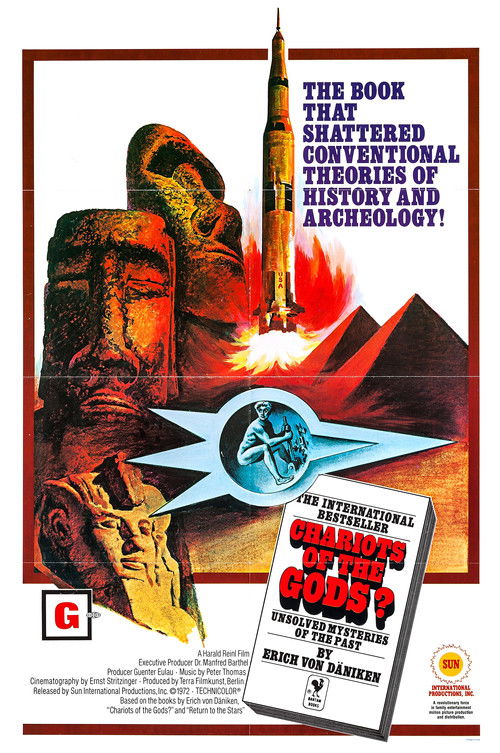
Chariots of the Gods1970
The original German documentary that inspired this version. Erich von Däniken's cosmic hypothesis presented with stunning visuals of ancient monuments and genuine archaeological enigma. Pure '70s occult wonder.
But The logic is circularity dressed as archaeology. Once you notice the leaps, they become all you can see.
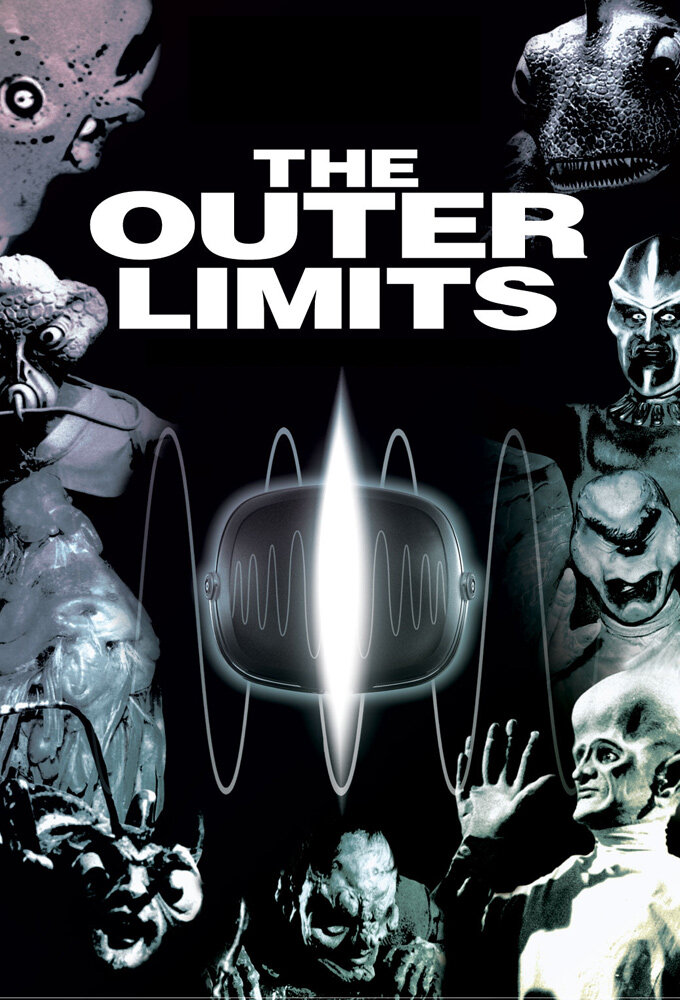
The Outer Limits1963
Anthology series that shares the documentary's fascination with space-age contact and ancient mystery, but filters it through science fiction drama. Same tone of cosmic unease, better storytelling.
But Feels quaint now. The production values are undeniably threadbare by today's standards.
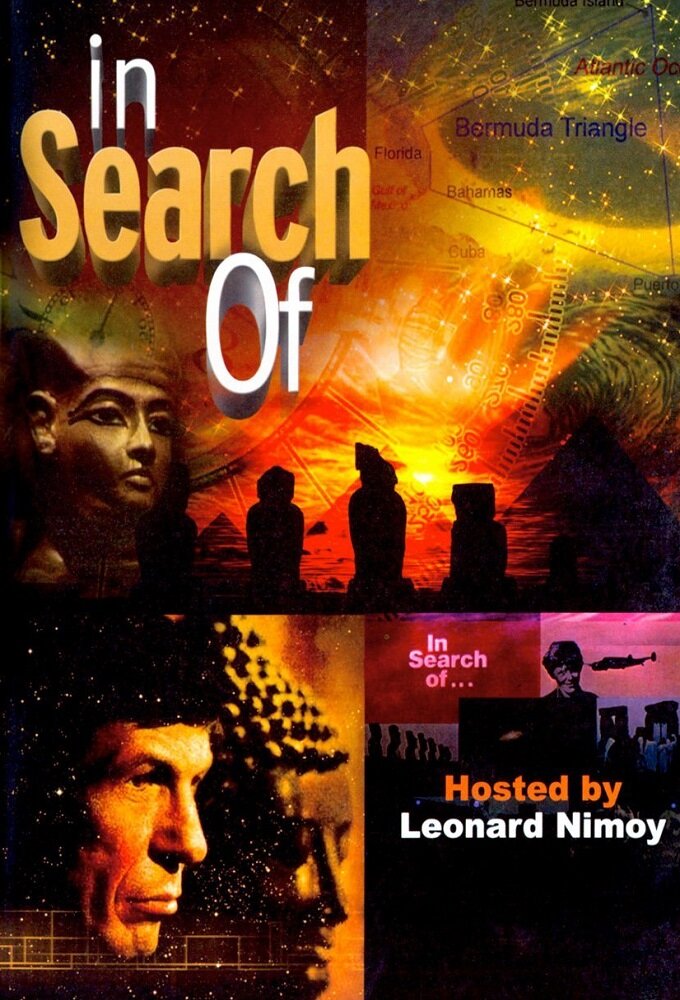
In Search of.....1977
Leonard Nimoy's series inherited this documentary's format and sensibility, applying the same cryptid-hunting energy to UFOs, bigfoot, and lost civilizations. It's what this approach was building toward.
But Genuinely silly. If you can't tolerate self-serious speculation about ghost ships, this will drive you up the wall.
Not sure tonight? Get a pick in a minute, starting from In Search of Ancient Astronauts
The wildcard
Something you would not have found on your own.
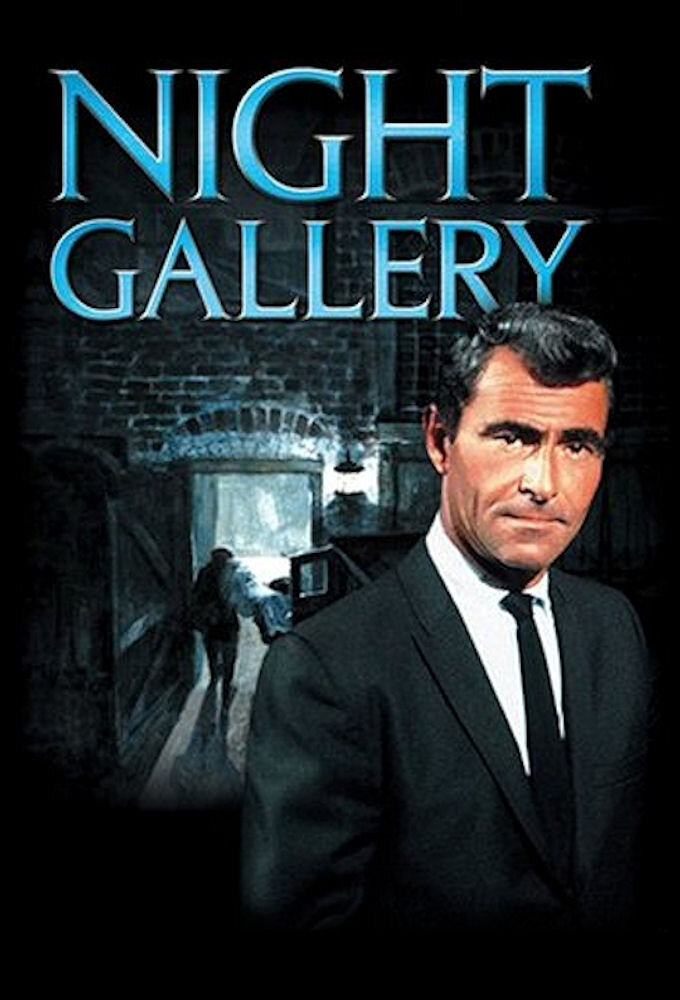
Night Gallery1969
Same narrator, same era, same fascination with the inexplicable—but Night Gallery treats the unknown as a source of dread rather than wonder. It's Serling exploring the shadow side of the cosmic mysteries he presented straight-faced in your film.
Rod Serling's darker anthology, where the cosmic and the mundane collide with real menace. It shares the documentary's sensibility—that mystery lurks beneath ordinary reality—but as art rather than argument. Serling's presence ties it directly to your film.
But Very uneven. Some segments are brilliant, others are padded filler. The horror doesn't always land.
More like this (8)
Cosmos1980
Carl Sagan—who appears in your documentary—made the definitive counterargument to ancient astronaut theory. Watch this to see how real science handles the same mysteries with evidence and wonder intact.
But It's a gentle refutation, which means it moves slowly and assumes good faith. Some find it preachy.
The Twilight Zone1959
Rod Serling's anthology series established the tone this documentary mimics: mystery, portent, the suggestion that reality is stranger than we admit. It's the DNA of speculative television.
But Some episodes are dated. The show's power is uneven, and you'll need patience for the slower, sillier ones.
Ancient Aliens2009
The spiritual heir to this documentary. If you want to see how the ancient astronaut hypothesis evolved and metastasized into cable-news form, here's the full genealogy. Endlessly watchable pseudoscience.
But It's cynical entertainment dressed as inquiry. The repetition becomes exhausting after a few episodes.
The X-Files1993
Captured the documentary impulse—the sense that authorities are hiding cosmic truth—and weaponized it into drama. Mulder's obsession with extraterrestrial contact is basically this film's thesis as character motivation.
But Nine seasons is a heavy commitment. The show's mythology becomes convoluted and, frankly, contradictory.
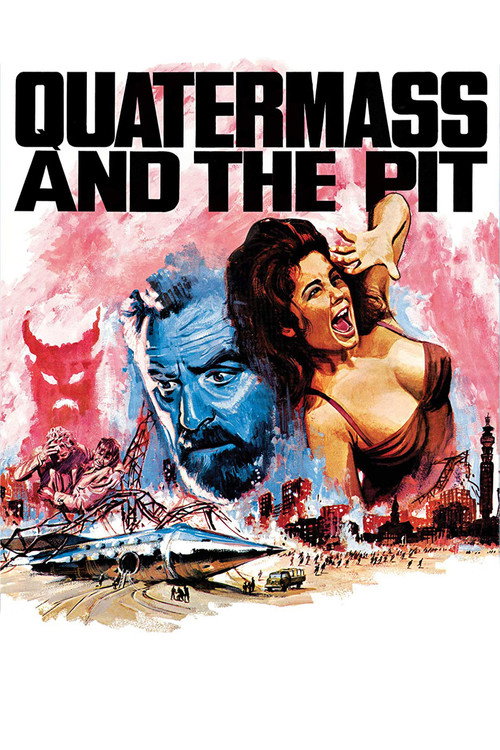
Quatermass and the Pit1967
British science-fiction horror that excavates an alien spacecraft beneath London. It shares the documentary's obsession with hidden cosmic history, but deploys the idea as genuine nightmare rather than speculation.
But The special effects are deliberately low-budget. If you need visual polish, you won't find it.
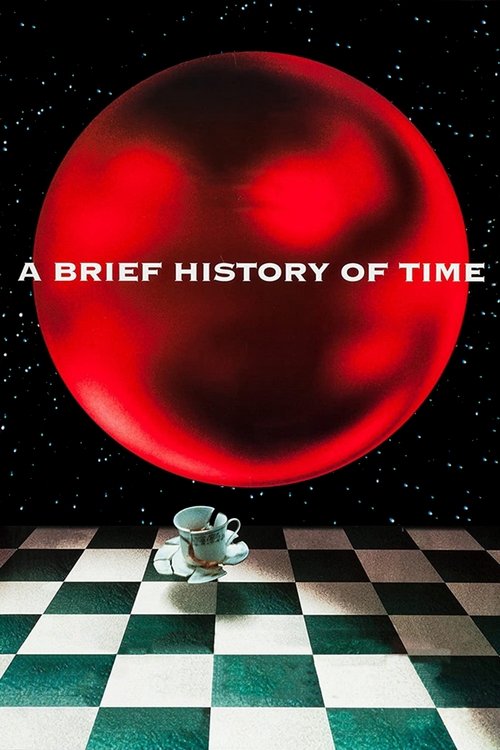
A Brief History of Time1991
Errol Morris's documentary about Stephen Hawking uses similar visual storytelling and cosmic speculation, but grounds it in actual physics. A meditation on how we understand the universe and our place in it.
But Dense and contemplative. It demands attention and doesn't reward passive watching.
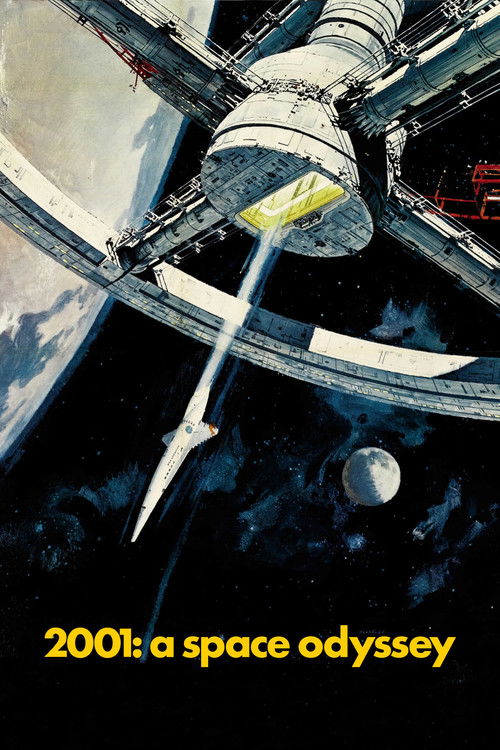
2001: A Space Odyssey1968
Both films are obsessed with the possibility of cosmic intervention in human development. But where your documentary asks 'did aliens build the pyramids?', Kubrick asks 'what is the meaning of transcendence?' One collects evidence; the other contemplates mystery.
Kubrick's masterwork asks the same question—are we alone?—but through philosophical abstraction rather than pseudoarchaeological argument. The monolith that appears throughout history is Kubrick's answer to ancient astronauts. Staggering cinema.
But The pacing is glacial and the dialogue is minimal. If you need narrative momentum or explanation, you will be frustrated.
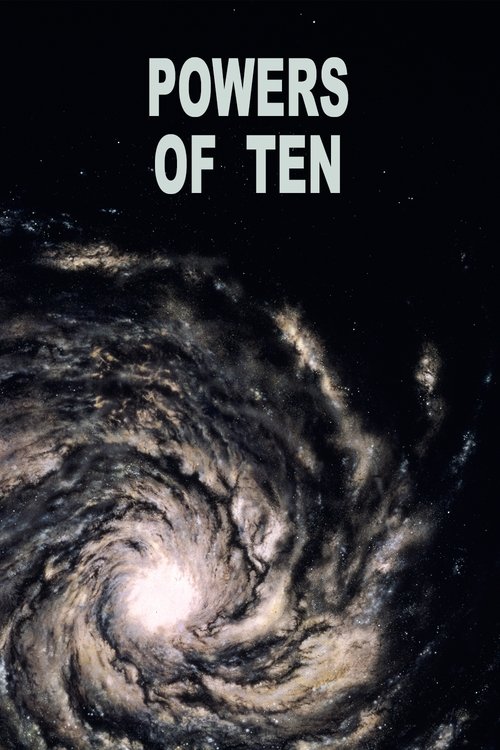
Powers of Ten1977
Both use spectacle and scale to provoke wonder about humanity's place in a larger cosmos. But where your documentary uses mysterious artifacts and speculation, Eames uses pure mathematics and visual clarity. Same awe, opposite approach to truth.
Charles and Ray Eames' nine-minute animation zooms from subatomic scale to galactic, placing humanity in a visual hierarchy of magnitude. It's the visual poetry version of what this documentary attempts: making you feel small in the face of cosmic scale.
But It's abstract and meditative, with no narrative or drama. If you want plot or characters, you're looking at the wrong film.
People
Cast
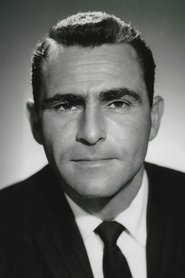 Rod SerlingNarrator
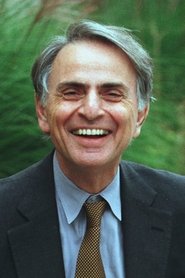 Carl SaganHimself
Directing
- Harald ReinlDirector
Writing
- Erich von DänikenBook
- Don RingeDialogue