
Film
Chariots of the Gods
Erich von Däniken's 1970 documentary asks whether ancient wonders—pyramids, Easter Island statues, cave art—were built with extraterrestrial help. Visually ambitious for its era, it presents a seductive pseudo-archaeological argument that plays like science fiction dressed as evidence. Compulsively watchable pseudoscience for anyone curious about how persuasive bad reasoning can be.
Should you watch it?
Watch it if you enjoy a confident, wide-eyed lecture on ancient monuments, the kind of 1970s armchair speculation that treats a stone carving like a puzzle box waiting to be opened.
Skip it if you want evidence weighed carefully, since the film presents its theories with breezy certainty and rarely pauses to test them against the archaeology it borrows from.
What it asks of you: It runs about ninety-two minutes and moves at a steady narrated clip, asking you to sit back and let one vivid location give way to the next without much interruption.
Not sure? Find tonight's pick in a minute.
If you liked this
Ancient Aliens2009
Picks up von Däniken's premise and runs with it across multiple seasons, updated with contemporary archaeology, interviews, and global mysteries. A natural evolution of the Chariots thesis, endlessly entertaining.
But Repetitive format and increasingly wild leaps in logic wear thin if you're looking for actual evidence rather than suggestive editing and raised eyebrows.
Cosmos1980
Carl Sagan's successor series tackles the same ancient mysteries but from a rigorously scientific angle, debunking von Däniken methodically while remaining intellectually generous. Visually spectacular and genuinely illuminating.
But If you came for aliens, the real science might feel like a letdown. Sagan was a better writer than entertainer for some viewers.
The Twilight Zone1959
Explores the same anxiety about visitors from beyond and hidden cosmic truths, but through fiction. Episodes like 'The Architects of Fear' scratch the same itch with better storytelling.
But Fifty years of TV formatting feels dated if you're used to modern pacing. Some episodes don't land.
Not sure tonight? Get a pick in a minute, starting from Chariots of the Gods
The wildcard
Something you would not have found on your own.
2001: A Space Odyssey1968
Both films ask whether humanity's leaps forward were externally guided. 2001 asks it with metaphysical seriousness; Chariots asks it with documentary conviction. One is a plea to wonder, one is a plea to believe—but they're siblings under the skin.
Kubrick's masterpiece engages the same question—did visitors shape human history?—but through pure cinema and philosophy rather than pseudoarchaeology. A genuine intellectual confrontation with cosmic origins and transformation.
But Glacially paced, virtually dialogue-free for long stretches, and deliberately evasive about meaning. Demands patience and active engagement; actively hostile to passive consumption.
More like this (3)
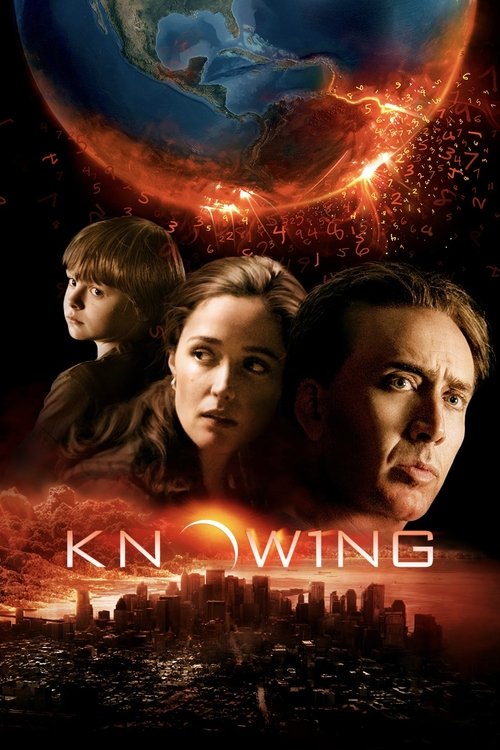
Knowing2009
Nicolas Cage thriller built on the idea that ancient texts contain warnings from cosmic visitors. Schlocky cosmic dread with genuine visual inventiveness in its finale.
But Wildly uneven tone and a third act that divides audiences sharply. The logic feels arbitrary once you think about it.
Stalker1979
Both are obsessed with the mystery of origins and human meaning in a cosmos indifferent to our need for answers. Where Chariots throws evidence at you, Stalker sits quietly with questions that have no answers.
Andrei Tarkovsky's meditative sci-fi masterpiece about pilgrims seeking truth in a mysterious zone of unknown origin. Shares Chariots' fascination with humanity confronting the incomprehensible, but as philosophical poetry rather than pop archaeology.
But Nearly three hours of philosophical languor. Long takes, minimal plot, Russian cinema pacing. You will feel every minute if you're not attuned to Tarkovsky's register.

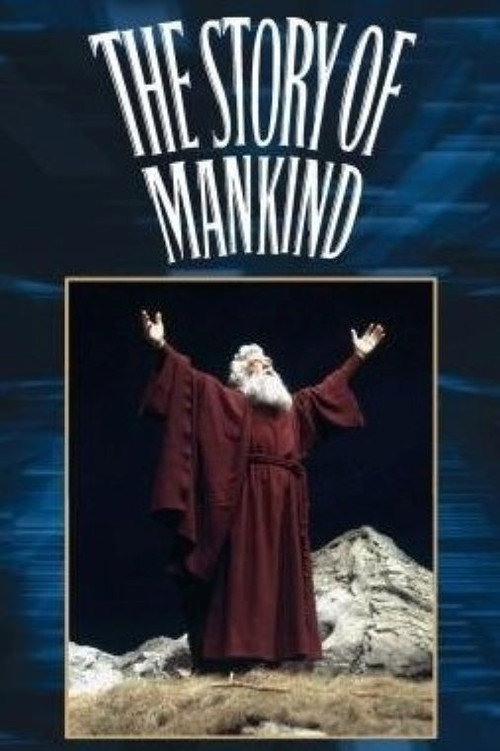
The Story of Mankind1957
Both are fundamentally about whether humanity's story is authored by forces beyond ourselves. Where von Däniken looks backward to ancient mysteries, this '57 fever dream looks forward to judgment from above—same anxiety, different direction.
A bizarre, nearly incomprehensible epic attempting to compress all human history into a single narrative, complete with an extraterrestrial debate about humanity's fate. Campy, ambitious, wildly uneven—a document of cinema and period thinking as fascinating as any actual mystery.
But Genuinely difficult to follow, stuffed with terrible acting and period kitsch, and utterly convinced of its own importance. An endurance test that doesn't quite deliver on its ambitions.
People
Cast
- Heinz-Detlev BockNarrator (voice)
- Klaus KindlerNarrator (voice)
- Christian MarschallNarrator (voice)

- Bruce JohansenNarrator (English-language version)
- Lee PajanNarrator (English-language version)
- Jean FontaineNarrator (English-language version)
Directing
- Charles M. WakefieldAssistant Director
- Harald ReinlDirector
Writing
- Erich von DänikenOriginal Story
- Utz UtermannWriter
Production
- Günther EulauLine Producer
- Manfred BarthelProducer
- Franz AchterUnit Manager
Recommended by
Ancient Aliens, Ancient Apocalypse, In Search of Ancient Astronauts, Weird or What?