
Film
Ramanujan
A biographical drama about the mathematical prodigy Ramanujan, from his struggles in poverty-stricken Tamil Nadu to his collaboration with Cambridge mathematician G. H. Hardy. It's a portrait of genius emerging against impossible odds, told with patience and visual beauty. For anyone moved by stories of transcendence through intellect, or curious about the life behind one of mathematics' most luminous names.
Should you watch it?
Watch it if you are drawn to quiet biographical portraits where the rigor of an idea matters as much as the people wrestling with it, and you don't mind a story that moves at the speed of careful thought.
Skip it if you want the mathematics to feel thrilling or the drama to escalate; this one is measured, often gentle, and its long running time can feel stretched by its unhurried scenes.
What it asks of you: Expect a long, patient sitting of nearly three hours, with slow stretches, intimate domestic moments, and a steady, reflective tone rather than sharp turns or constant momentum.
Not sure? Find tonight's pick in a minute.
If you liked this
The Man Who Knew Infinity2016
Another telling of Ramanujan's story, with Dev Patel in the lead and Jeremy Irons as Hardy. Glossier and more accessible, it frames the relationship between mentor and student as the emotional core, and the mathematics as almost secondary.
But Released just a year later, it risks feeling redundant. If you want the Indian perspective and cultural grounding, this American-inflected version may feel distanced.

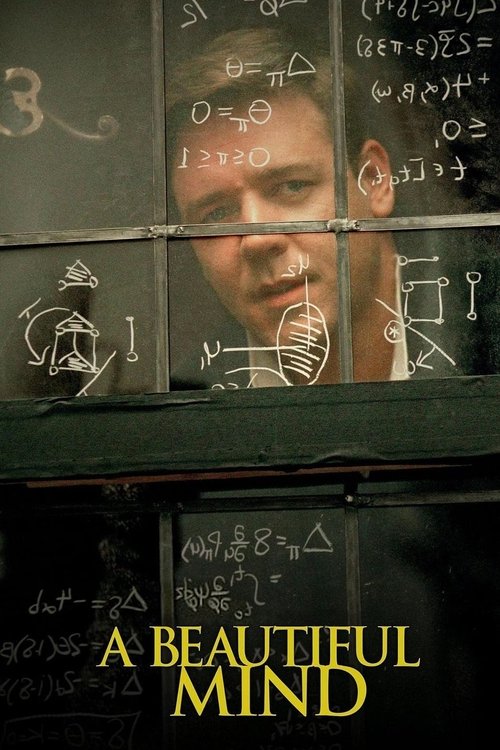
A Beautiful Mind2001
Russell Crowe as John Nash, another mathematician undone by his own mind. Like Ramanujan, it's about genius in isolation, but Nash's struggle is internal—mental illness rather than circumstance. Powerfully acted and genuinely moving.
But Veers into melodrama in ways that feel unearned. Some find it simplistic about both genius and mental health. Also three hours long.
The Imitation Game2014
Benedict Cumberbatch as Alan Turing, cracking the Enigma code while battling prejudice and his own nature. Same year as Ramanujan, same DNA—a singular mind, a historical moment, the cost of genius to the person living it.
But It takes historical liberties that historians have objected to. The dramatic tension sometimes overrides accuracy. And it's another 'brilliant outsider' story, which can feel familiar.

Not sure tonight? Get a pick in a minute, starting from Ramanujan
The wildcard
Something you would not have found on your own.
Kes1970
Both are about exceptional minds in circumstances determined to crush them. In Kes, escape is temporary and ultimately denied. In Ramanujan, escape is real but bought at a cost. Both ask: what is genius worth if the person who has it must be remade to be acceptable?
Ken Loach's film about a working-class Yorkshire boy who discovers a wild kestrel and finds, in that relationship, something like grace. No mathematics, no genius as the world measures it—but the same story at its core. Genius isn't always recognised by institutions. Sometimes it's just a boy who sees something others don't, and that seeing transforms him.
But Black and white, 1960s regional British cinema. Slow. Heartbreaking without resolution. The boy doesn't escape; the world doesn't change.

More like this (6)
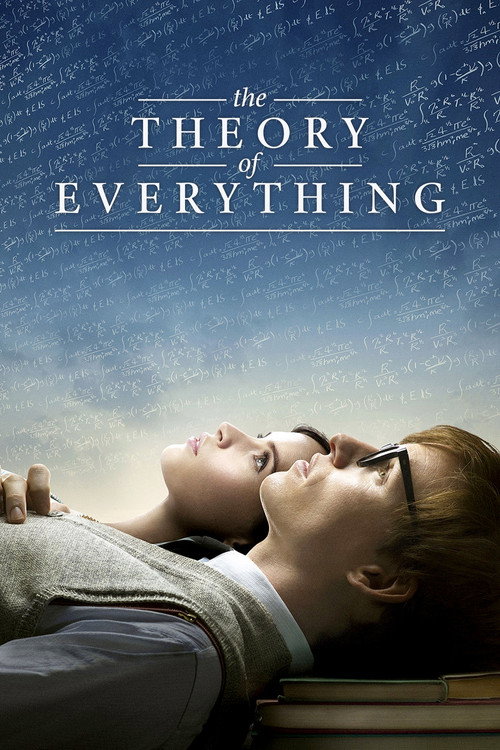
The Theory of Everything2014
Eddie Redmayne as Stephen Hawking across decades of his life. A gentler film than you might expect—less about the physics, more about love, determination, and the person inside the equations. Beautifully shot and unexpectedly intimate.
But Some find it saccharine. Hawking's actual life and marriage were far messier, and the film softens the edges considerably.
Oppenheimer2023
Christopher Nolan's epic about the physicist and the Manhattan Project. Far broader in scope than Ramanujan, but it shares the fascination with a towering intellect navigating power, morality, and the consequences of what they've created.
But Three and a half hours, fractured timeline, and Nolan's usual density. You have to surrender to the film entirely—it doesn't make concessions to impatience.

Slumdog Millionaire2008
Danny Boyle's film about an Indian boy from the slums competing on Who Wants to Be a Millionaire. Like Ramanujan, it's a story of transcendence through intellect and circumstance, and it finds beauty in India's streets and desperation.
But The poverty is aestheticised. Some feel the film is more interested in the romance of struggle than in the actual lives of struggling people. Also structurally manipulative.

Moneyball2011
Brad Pitt as Billy Beane, using mathematics and unconventional thinking to build a baseball team on a budget. The joy here is watching someone see patterns no one else sees. Less about human cost, more about the elegance of the solution itself.
But It's a sports film, which narrows its appeal. And it's more interested in being a crowd-pleaser than in moral complexity.

The Crown2016
If you want another portrait of a life constrained by duty, historical circumstance, and the weight of being exceptional. It's not about mathematics, but it understands the toll of being watched, judged, and expected to be perfect.
But Sprawling, sometimes slow, and its historical accuracy is hotly debated. The later seasons soften into soap opera. You need to want to live inside the show for five seasons.

Proof2005
Ramanujan asks what mathematics costs when you're poor and foreign. Proof asks what it costs when you're a woman and your father was a genius. Both are about minds in impossible positions, but Proof inverts the gender and asks about the cost of legacy rather than recognition.
Gwyneth Paltrow as Catherine, a young woman struggling with her father's legacy—he was a legendary mathematician, and now she's drowning in his notebooks, uncertain whether her own contributions are real or inherited delusion. It's cerebral, bitter, and utterly alive. Anthony Hopkins is heartbreaking.
But Claustrophobic and psychologically unsettling. The film doesn't let you settle into comfort. Math is almost incidental—this is about inheritance, self-doubt, and the weight of being someone's daughter.

People
Cast
- Abhinay VaddiSrinivasa Ramanujan
 Suhasini ManiratnamKomalatammal
 BhamaJanaki
 Nizhalgal RaviSrinivasa Raghavan
- Kevin McGowanG. H. Hardy
 AbbasPrasanta Chandra Mahalanobis
 Y. G. MahendranS. Narayana Iyer
 Sarath BabuDiwan Bahadur R. Ramachandra Rao I. C. S.
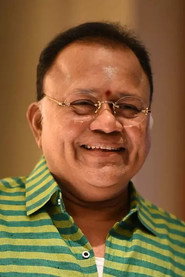 Radha RaviProf. Singaravelu Mudaliar
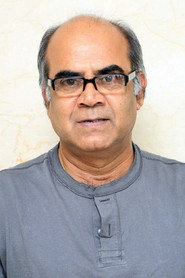 Thalaivasal VijaySathiyapriya Rayar
 KittySeshu Iyer
- AnmolYoung Srinivasa Ramanujan
Directing
- Gnana RajasekaranDirector
Writing
- Gnana RajasekaranScreenplay
- Gnana RajasekaranStory
Production
- Sharanyan NadathurProducer
- Sindhu RajasekaranProducer
- Srivatsan NadathurProducer
- Sushant DesaiProducer